Revell 1/72 Blohm & Voss BV 222 a.k.a. "Where am I gonna fit this thing?"
Posted: Tue Jul 12, 2016 9:48 am
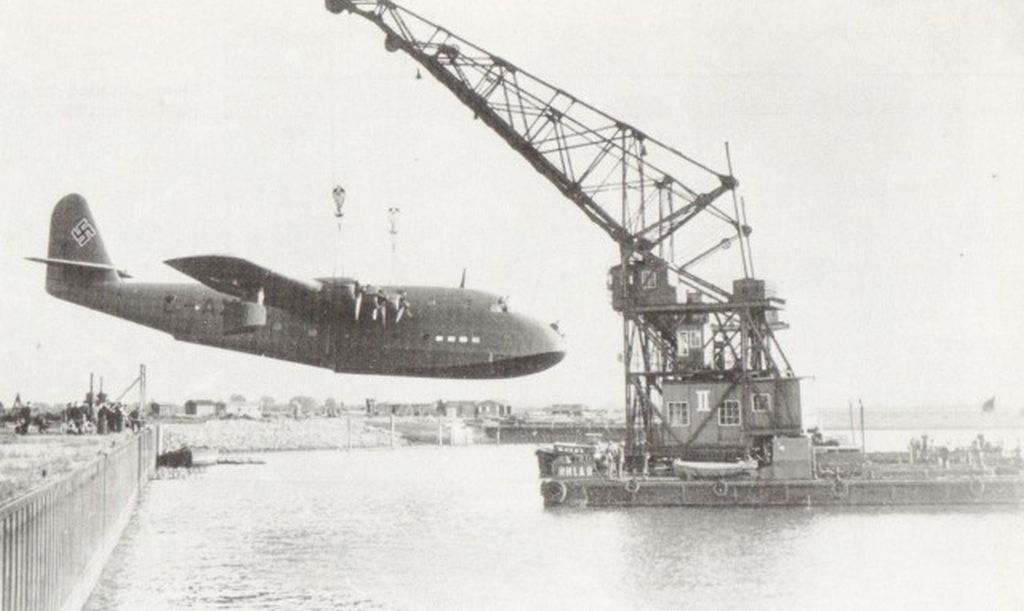
So I've made a big mistake, so to speak. Long story short the BV 222 was big, like really big. The already large B-29 measured 30m long and 43 wide, by contrast the BV 222 comes out at 37m by 46m. in 1/72 scale that makes for a big kit, around 50x63cm, and I have no idea where I'm gonna put it 


A little history on the thing shamelessly paraphrased from Wikipedia
Development
The BV 222, like the Fw 200 Condor, was originally a civilian aircraft pressed into military service. Initially designed by Dr. Richard Vogt for an order by Luft Hansa in 1938, construction began in 1938. V1 made its first test flight on 7 September 1940 under the registration D-ANTE with further trials continuing until December in order to correct a number of small issues. The V1 was then passed to Luftwaffe service with the registration CC+EQ later changed to X4+AH.
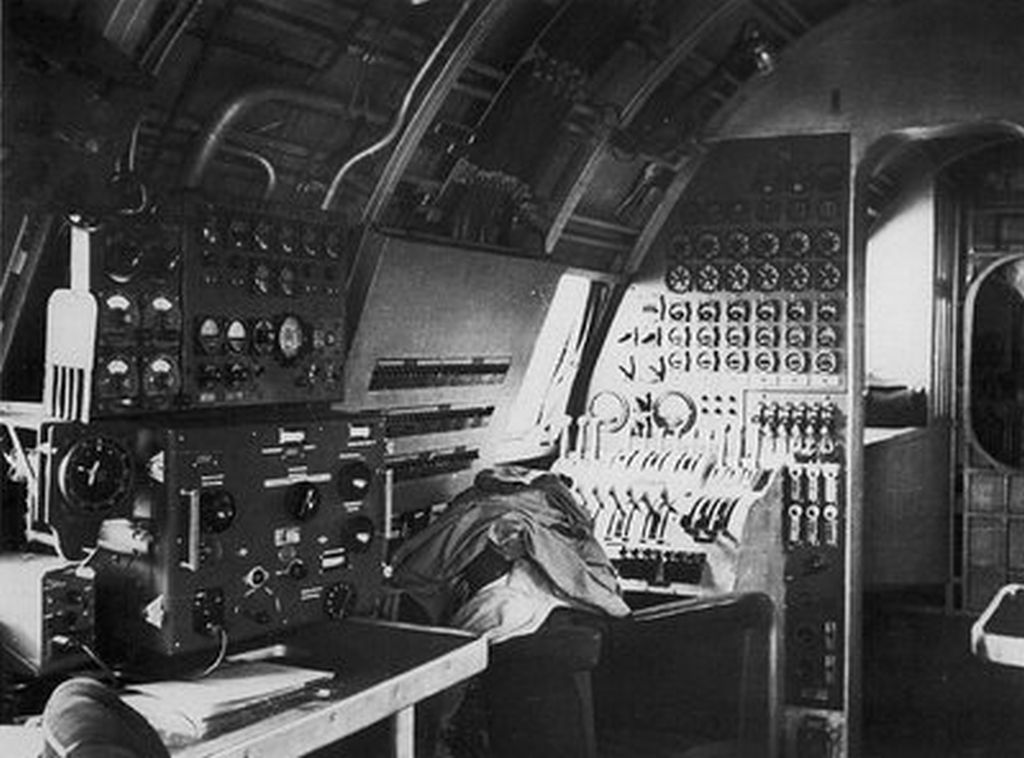
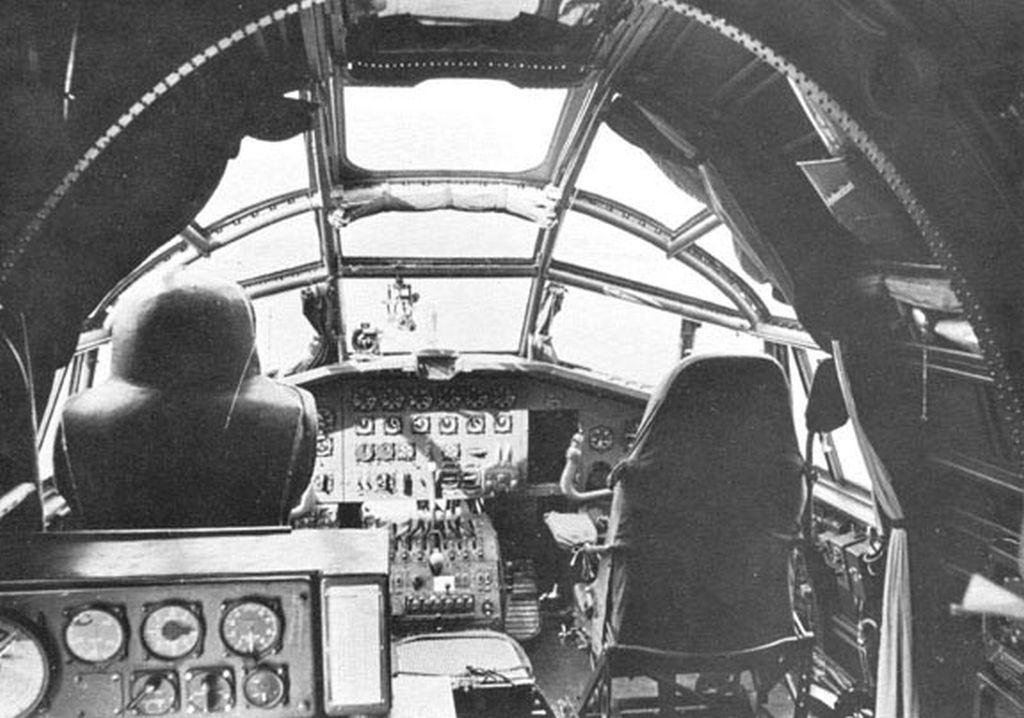
The type was noted for a long flat floor inside the cabin and a large square cargo door aft of the wing on the starboard side, with such a flat floor for the hull interior being a welcome novelty for that era. The usual balance floats for a flying boat design were ingeniously designed as a matching pair of retracting float units per side, which extended from beneath the wing's outer panels in "clamshell" fashion when fully extended, and fit fully flush with the wing panels' undersides when retracted.[2] Only 13 aircraft are thought to have been completed.
Originally powered by Bramo 323 Fafnir radial engines, later aircraft were powered by six 746 kW (1,000 hp) Jumo 207C inline two-stroke opposed-piston diesel engines. The use of diesels permitted refueling at sea by special re-supply U-boats. C-13 aircraft was a sole example fitted with Jumo 205C and later Jumo 205D engines.
Early aircraft were identified as V1 to V8. Production examples were designated C-09 to C-13
Operational History
V1 made seven flights between Hamburg and Kirkenes up to 19 August 1941, transporting a total of 65,000 kg (143,000 lb) of supplies and 221 wounded men, covering a distance of 30,000 km (19,000 mi) in total. After being overhauled at Hamburg, V1 was sent to Athens, from where it carried supplies for the Afrika Corps, making 17 flights between 16 October and 6 November 1941. The V1 was at this time unarmed, and was given an escort of two Bf 110 heavy fighters.
Following these flights, the V1 returned to Hamburg to have defensive armament fitted, comprising a 7.92 mm (.312 in) MG 81 machine gun in the hull, two turret-mounted 13 mm (.51 in) MG 131 machine guns, and four 7.92 mm (.312 in) MG 81s in waist mounts. The registration was changed to X4+AH at the same time and the V1 formed the basis for the new air transport squadron Lufttransportstaffel 222 (LTS 222). Between 1942 and 1943, the aircraft flew in the Mediterranean theatre, until in mid-February 1943 it sank following a collision with a submerged wreck while landing at Piraeus harbour.
The V2 (CC+ER) made its first flight on 7 August 1941, and after extensive testing was assigned to LTS 222 on 10 August 1942 as X4+AB. Since the aircraft was intended for long-distance overwater flights, in addition to the armament fitted to the V1 she received two rear-facing wing-mounted turrets with dual 13 mm (.51 in) MG 131s, accessed via the tubular wing spar which was 1 m (3 ft 3 in) in diameter.
In 1944, the V2 participated in Operation Schatzgräber ("Treasure Seeker"), the code name of a German weather station at Alexandra Land in the Arctic, whose sick crew needed to be evacuated. The BV 222 dropped a spare wheel for a Fw 200 which had sustained damage during landing near the station.
The V3 (initially DM+SD) first flew on 28 November 1941, and was transferred to LTS 222 on 9 December 1941 After V1's sinking, V3 returned to Hamburg where she was armed. She was destroyed along with V5 on 20 June 1943 at Biscarrosse by RAF de Havilland Mosquitos of No. 264 Squadron RAF.
V4, which had an altered height tail, was also assigned to LTS 222 for Africa flights.
V6 was shot down on 21 August 1942 on the Taranto to Tripoli route by a Bristol Beaufighter; V8 was shot down on the same route on 10 December 1942.
The V7 (TB+QL), which made its first flight on 1 April 1943, was fitted with six 746 kW (1,000 hp) Jumo 207C inline two-stroke diesel engines. With a takeoff weight of 50,000 kg (110,000 lb) and a range of 6,100 km (3,800 mi), it was intended as the prototype BV 222C.
Following the Invasion of Normandy in June 1944, the remaining BV 222 aircraft were transferred to KG 200.[5] Of these, C-09 was probably the BV 222 reported to have been strafed and destroyed by Hawker Typhoon aircraft of No. 439 Squadron RCAF on 24 April 1945 at Seedorf.,[6] while V7 and V4 were scuttled by their crews at Travemünde and Kiel-Holtenau airport respectively, at the end of the war.
C-10 was probably the BV 222 reported shot down southwest of Biscarosse on the night of 8 February 1944 by a Mosquito of No. 157 Squadron RAF.
One BV 222, V4, is said to have shot down a US Navy PB4Y Liberator of VB-105 (BU#63917) commanded by Lieutenant Evert, on October 22, 1943. Since the war this has often been mistakenly quoted as a BV 222 shooting down an Avro Lancaster.
Note: I've seen a few conflicting accounts of the armament on the early variants including inconsistencies within the kit itself. I've got a decent looking book coming that should hopefully shed a little light, but at the end of the day I'm not about to start rivet counting.
And now some photos and a video



[youtube]v-eL78Ti3KY[/youtube]
A little history on the thing shamelessly paraphrased from Wikipedia
Development
The BV 222, like the Fw 200 Condor, was originally a civilian aircraft pressed into military service. Initially designed by Dr. Richard Vogt for an order by Luft Hansa in 1938, construction began in 1938. V1 made its first test flight on 7 September 1940 under the registration D-ANTE with further trials continuing until December in order to correct a number of small issues. The V1 was then passed to Luftwaffe service with the registration CC+EQ later changed to X4+AH.
The type was noted for a long flat floor inside the cabin and a large square cargo door aft of the wing on the starboard side, with such a flat floor for the hull interior being a welcome novelty for that era. The usual balance floats for a flying boat design were ingeniously designed as a matching pair of retracting float units per side, which extended from beneath the wing's outer panels in "clamshell" fashion when fully extended, and fit fully flush with the wing panels' undersides when retracted.[2] Only 13 aircraft are thought to have been completed.
Originally powered by Bramo 323 Fafnir radial engines, later aircraft were powered by six 746 kW (1,000 hp) Jumo 207C inline two-stroke opposed-piston diesel engines. The use of diesels permitted refueling at sea by special re-supply U-boats. C-13 aircraft was a sole example fitted with Jumo 205C and later Jumo 205D engines.
Early aircraft were identified as V1 to V8. Production examples were designated C-09 to C-13
Operational History
V1 made seven flights between Hamburg and Kirkenes up to 19 August 1941, transporting a total of 65,000 kg (143,000 lb) of supplies and 221 wounded men, covering a distance of 30,000 km (19,000 mi) in total. After being overhauled at Hamburg, V1 was sent to Athens, from where it carried supplies for the Afrika Corps, making 17 flights between 16 October and 6 November 1941. The V1 was at this time unarmed, and was given an escort of two Bf 110 heavy fighters.
Following these flights, the V1 returned to Hamburg to have defensive armament fitted, comprising a 7.92 mm (.312 in) MG 81 machine gun in the hull, two turret-mounted 13 mm (.51 in) MG 131 machine guns, and four 7.92 mm (.312 in) MG 81s in waist mounts. The registration was changed to X4+AH at the same time and the V1 formed the basis for the new air transport squadron Lufttransportstaffel 222 (LTS 222). Between 1942 and 1943, the aircraft flew in the Mediterranean theatre, until in mid-February 1943 it sank following a collision with a submerged wreck while landing at Piraeus harbour.
The V2 (CC+ER) made its first flight on 7 August 1941, and after extensive testing was assigned to LTS 222 on 10 August 1942 as X4+AB. Since the aircraft was intended for long-distance overwater flights, in addition to the armament fitted to the V1 she received two rear-facing wing-mounted turrets with dual 13 mm (.51 in) MG 131s, accessed via the tubular wing spar which was 1 m (3 ft 3 in) in diameter.
In 1944, the V2 participated in Operation Schatzgräber ("Treasure Seeker"), the code name of a German weather station at Alexandra Land in the Arctic, whose sick crew needed to be evacuated. The BV 222 dropped a spare wheel for a Fw 200 which had sustained damage during landing near the station.
The V3 (initially DM+SD) first flew on 28 November 1941, and was transferred to LTS 222 on 9 December 1941 After V1's sinking, V3 returned to Hamburg where she was armed. She was destroyed along with V5 on 20 June 1943 at Biscarrosse by RAF de Havilland Mosquitos of No. 264 Squadron RAF.
V4, which had an altered height tail, was also assigned to LTS 222 for Africa flights.
V6 was shot down on 21 August 1942 on the Taranto to Tripoli route by a Bristol Beaufighter; V8 was shot down on the same route on 10 December 1942.
The V7 (TB+QL), which made its first flight on 1 April 1943, was fitted with six 746 kW (1,000 hp) Jumo 207C inline two-stroke diesel engines. With a takeoff weight of 50,000 kg (110,000 lb) and a range of 6,100 km (3,800 mi), it was intended as the prototype BV 222C.
Following the Invasion of Normandy in June 1944, the remaining BV 222 aircraft were transferred to KG 200.[5] Of these, C-09 was probably the BV 222 reported to have been strafed and destroyed by Hawker Typhoon aircraft of No. 439 Squadron RCAF on 24 April 1945 at Seedorf.,[6] while V7 and V4 were scuttled by their crews at Travemünde and Kiel-Holtenau airport respectively, at the end of the war.
C-10 was probably the BV 222 reported shot down southwest of Biscarosse on the night of 8 February 1944 by a Mosquito of No. 157 Squadron RAF.
One BV 222, V4, is said to have shot down a US Navy PB4Y Liberator of VB-105 (BU#63917) commanded by Lieutenant Evert, on October 22, 1943. Since the war this has often been mistakenly quoted as a BV 222 shooting down an Avro Lancaster.
Note: I've seen a few conflicting accounts of the armament on the early variants including inconsistencies within the kit itself. I've got a decent looking book coming that should hopefully shed a little light, but at the end of the day I'm not about to start rivet counting.
And now some photos and a video
[youtube]v-eL78Ti3KY[/youtube]


 Primed it yesterday (pics to come later today probs) but I had to drag a chair and make a makeshift table outside the house to be able to have the space without the compressor deafening everyone inside. Haven't used it many times and already considering replacing it with something else because it's so LOUD.


 ). The prop shaft with the round bit sticking out the top is held in by a little plastic split ring, but the end of the shaft requires a bit of trimming to fit over that stub sticking out the leading edge.


 ) or perhaps just areas the primer didn't adhere too well. But other than that the painting's done. After the touching up I'll get a gloss coat down and then it's on with all the decals. Then another gloss coat, weathering and a flat coat or two. I probably won't have time to do the whitewash and I kinda like it as is anyway, so I might just model it as the V2 without the winterising.


 ). I then took to the leading edges for some lightish chipping. From what I can tell from my references in the later years of the war they didn't see too much flight time so most weathering would just come from sitting in the fjords of Norway. Hence I didn't go too crazy but wanted it to look a little grimy and neglected. It worked, kinda


