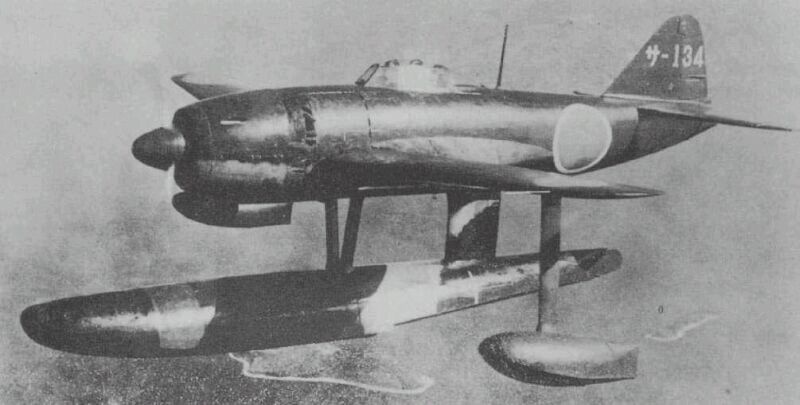
Hasegawa 1/72 N1K2-J Shiden Kai "George"
Posted: Thu Jul 28, 2016 8:29 pm
Hey Guys!
I have decided to join the GB with the Kawanishi N1K2-J Shiden Kai "George" - Japan's Last Fighter. I saw a documentary about this aircraft a while ago and I got really inspired to build a model of it.

Background
The N1K2-Ja Shiden Kai (Japanese for "Violet Lightning--Improved") was the best fighter used in significant numbers by the Japanese Navy during World War II. Known by the Allies as the "George," this maneuverable, heavily-armed fighter was a formidable opponent in the closing months of the war.
The Shiden Kai was considerably better than the Japanese Navy's most common fighter, the A6M Zero. With a top speed of 369 mph, the N1K2 was about 20 mph faster than the A6M Zero. The heavier Shiden Kai also possessed surprisingly good maneuverability due to a mercury switch that automatically extended the flaps during turns. These "combat" flaps created more lift, thereby allowing tighter turns. Moreover, its four 20 mm automatic cannon provided greatly increased firepower than earlier Japanese designs. Unlike the A6M Zero, the Shiden Kai could compete against the best late-war U.S. Navy and U.S. Army Air Forces fighters.
The N1K2-Ja was developed to counter high-flying B-29s. It first entered combat early in 1945, and over 400 were produced before the war ended.
Shiden Kai pilots scored several successes against low-flying, carrier-based U.S. Navy fighters. Even so, they did little to stop high-altitude B-29 attacks because of the N1K2's insufficient climbing ability and the considerable loss of horsepower and engine reliability above 21,000 feet. These B-29 raids seriously hindered Shiden Kai production by heavily bombing the plants building the fighter.
Service
The Shiden Kai primarily equipped the 343rd Kokutai, a unit composed of the Japanese Navy's best fighter pilots. Commanded by Capt. Minoru Genda, the mastermind of the Pearl Harbor attack, the 343rd Kokutai entered combat in March 1945 in the defense of the Japanese home islands.
Survivors
At least three Shiden Kai aircraft survive in American museums. One is at the National Museum of Naval Aviation in Pensacola, Florida.

The second N1K2-Ja (s/n 5312), a fighter-bomber variant equipped with wing mounts to carry bombs, is on display in the Air Power gallery at the National Museum of the United States Air Force, at Wright-Patterson Air Force Base near Dayton, Ohio. This aircraft was displayed outside for many years in a children's playground in San Diego, suffering considerable corrosion, and had become seriously deteriorated. In 1959 it was donated to the Museum through the cooperation of the San Diego Squadron of the Air Force Association. In October 2008 the aircraft was returned to display following an extensive eight year restoration. Many parts had to be reverse engineered by the Museum's restoration staff. Four different aircraft serial numbers were found on parts throughout the airframe, indicating reassembly from three different wrecks brought back to the U.S. for examination, or wartime assembly or repair from parts obtained from three different aircraft. Serial number 5312 was found in the most locations, and is the number now cited. The N1K2-Ja is painted as an aircraft in the Yokosuka Kokutai, an evaluation and test unit.
The third example is owned by the National Air and Space Museum but was restored by the Champlin Fighter Museum at Falcon Field, Mesa, Arizona, in return for the right to display the aircraft at Falcon Field for 10 years after restoration. It currently is on display at the National Air and Space Museum's Steven F. Udvar-Hazy Center
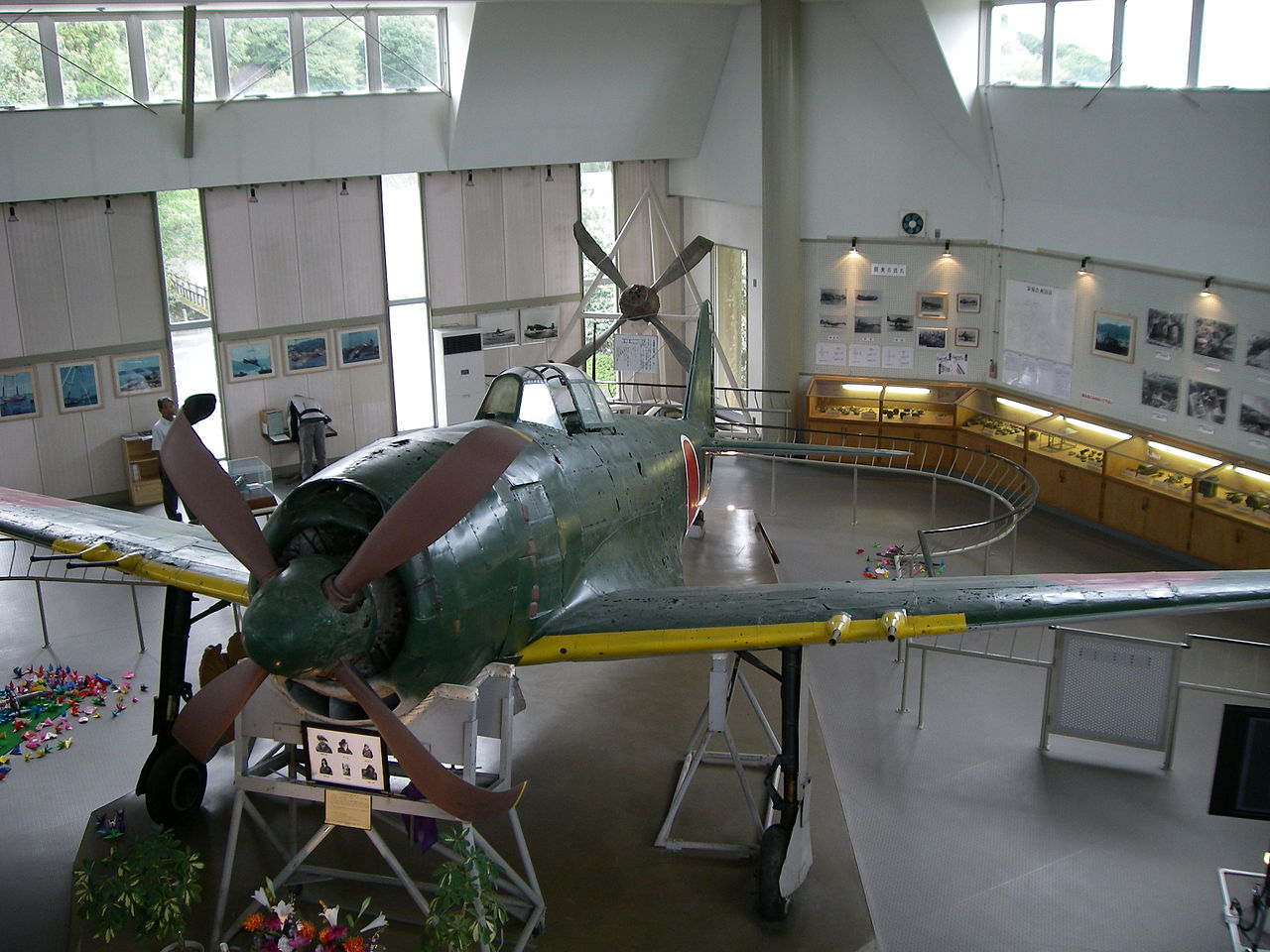
An authentic Shiden-Kai from the 343 squadron is displayed at a local museum in Shikoku, Japan. After the aircraft was damaged in battle, its pilot landed on July 24, 1945 in the waters of the Bungo Channel, but he was never found; by the time of the aircraft's recovery from the seabed in the 1970s, he could be identified only as one of six pilots from the 343 squadron who disappeared that day. Photographs of the six—including Takashi Oshibuchi, commander of the 701 Hikotai, and Kaneyoshi Muto—are displayed under the aircraft engine.
Specifications
Manufacturer: Kawanishi Kokuki
Type: Land-based fighter-interceptor
Crew: Pilot
Powerplant: One 1,990 hp Nakajima NK9H engine
Dimensions: Length: 30 ft., 7.9 in.
Height: 12 ft., 11.9 in.
Wingspan: 39 ft., 4.8 in.
Weight: Empty: 5,858 lb.
Gross: 10,714 lb.
Performance: Max Speed: 369 mph at 5,600 ft.
Cruise Speed: 230 mph
Climb Rate: 19,685 ft. in 7.3 min.
Ceiling: 35,300 ft.
Range: 1,066 miles.
Armament: Four Type 99 wing-mounted 20mm cannon
The Kit
To be able to complete the build within the timeframe and keep it a reasonable cost I have decided to build the 1/72 scale kit from Hasegawa #00136. Initially I was looking for 1/48 scale kits from Hasegawa, but I found them difficult (and/or expensive) to get hold of.
Boxart:
 20160728_201615 by Tommy Killander, on Flickr
Two sprues:
 20160728_202239 by Tommy Killander, on Flickr
 20160728_202253 by Tommy Killander, on Flickr
Instruction Manual, Decals, Clear part
 20160728_201914 by Tommy Killander, on Flickr
The build will be OOB, but I have added a mask set from Montex for the canopy. It's for a Aoshima kit, but it's OK to use on this kit too I think.
Cheers!

Tommy
I have decided to join the GB with the Kawanishi N1K2-J Shiden Kai "George" - Japan's Last Fighter. I saw a documentary about this aircraft a while ago and I got really inspired to build a model of it.
Background
The N1K2-Ja Shiden Kai (Japanese for "Violet Lightning--Improved") was the best fighter used in significant numbers by the Japanese Navy during World War II. Known by the Allies as the "George," this maneuverable, heavily-armed fighter was a formidable opponent in the closing months of the war.
The Shiden Kai was considerably better than the Japanese Navy's most common fighter, the A6M Zero. With a top speed of 369 mph, the N1K2 was about 20 mph faster than the A6M Zero. The heavier Shiden Kai also possessed surprisingly good maneuverability due to a mercury switch that automatically extended the flaps during turns. These "combat" flaps created more lift, thereby allowing tighter turns. Moreover, its four 20 mm automatic cannon provided greatly increased firepower than earlier Japanese designs. Unlike the A6M Zero, the Shiden Kai could compete against the best late-war U.S. Navy and U.S. Army Air Forces fighters.
The N1K2-Ja was developed to counter high-flying B-29s. It first entered combat early in 1945, and over 400 were produced before the war ended.
Shiden Kai pilots scored several successes against low-flying, carrier-based U.S. Navy fighters. Even so, they did little to stop high-altitude B-29 attacks because of the N1K2's insufficient climbing ability and the considerable loss of horsepower and engine reliability above 21,000 feet. These B-29 raids seriously hindered Shiden Kai production by heavily bombing the plants building the fighter.
Service
The Shiden Kai primarily equipped the 343rd Kokutai, a unit composed of the Japanese Navy's best fighter pilots. Commanded by Capt. Minoru Genda, the mastermind of the Pearl Harbor attack, the 343rd Kokutai entered combat in March 1945 in the defense of the Japanese home islands.
Survivors
At least three Shiden Kai aircraft survive in American museums. One is at the National Museum of Naval Aviation in Pensacola, Florida.
The second N1K2-Ja (s/n 5312), a fighter-bomber variant equipped with wing mounts to carry bombs, is on display in the Air Power gallery at the National Museum of the United States Air Force, at Wright-Patterson Air Force Base near Dayton, Ohio. This aircraft was displayed outside for many years in a children's playground in San Diego, suffering considerable corrosion, and had become seriously deteriorated. In 1959 it was donated to the Museum through the cooperation of the San Diego Squadron of the Air Force Association. In October 2008 the aircraft was returned to display following an extensive eight year restoration. Many parts had to be reverse engineered by the Museum's restoration staff. Four different aircraft serial numbers were found on parts throughout the airframe, indicating reassembly from three different wrecks brought back to the U.S. for examination, or wartime assembly or repair from parts obtained from three different aircraft. Serial number 5312 was found in the most locations, and is the number now cited. The N1K2-Ja is painted as an aircraft in the Yokosuka Kokutai, an evaluation and test unit.
The third example is owned by the National Air and Space Museum but was restored by the Champlin Fighter Museum at Falcon Field, Mesa, Arizona, in return for the right to display the aircraft at Falcon Field for 10 years after restoration. It currently is on display at the National Air and Space Museum's Steven F. Udvar-Hazy Center
An authentic Shiden-Kai from the 343 squadron is displayed at a local museum in Shikoku, Japan. After the aircraft was damaged in battle, its pilot landed on July 24, 1945 in the waters of the Bungo Channel, but he was never found; by the time of the aircraft's recovery from the seabed in the 1970s, he could be identified only as one of six pilots from the 343 squadron who disappeared that day. Photographs of the six—including Takashi Oshibuchi, commander of the 701 Hikotai, and Kaneyoshi Muto—are displayed under the aircraft engine.
Specifications
Manufacturer: Kawanishi Kokuki
Type: Land-based fighter-interceptor
Crew: Pilot
Powerplant: One 1,990 hp Nakajima NK9H engine
Dimensions: Length: 30 ft., 7.9 in.
Height: 12 ft., 11.9 in.
Wingspan: 39 ft., 4.8 in.
Weight: Empty: 5,858 lb.
Gross: 10,714 lb.
Performance: Max Speed: 369 mph at 5,600 ft.
Cruise Speed: 230 mph
Climb Rate: 19,685 ft. in 7.3 min.
Ceiling: 35,300 ft.
Range: 1,066 miles.
Armament: Four Type 99 wing-mounted 20mm cannon
The Kit
To be able to complete the build within the timeframe and keep it a reasonable cost I have decided to build the 1/72 scale kit from Hasegawa #00136. Initially I was looking for 1/48 scale kits from Hasegawa, but I found them difficult (and/or expensive) to get hold of.
Boxart:
20160728_201615 by Tommy Killander, on FlickrTwo sprues:
20160728_202239 by Tommy Killander, on Flickr20160728_202253 by Tommy Killander, on FlickrInstruction Manual, Decals, Clear part
20160728_201914 by Tommy Killander, on FlickrThe build will be OOB, but I have added a mask set from Montex for the canopy. It's for a Aoshima kit, but it's OK to use on this kit too I think.
Cheers!
Tommy