Macross Kits Guide
Posted: Thu Apr 20, 2017 9:52 pm
Jump to:
KITS (click here)
What with Paul's recent (maybe by the time of this post?) completion of his YF-19 from Macross Plus, I thought maybe a little guide might be in order to answer some of the questions I've seen on ISM for Macross. I loved watching Macross as a kid in part because it was some great story telling, but mainly due to the fantastic mechanical designs in the show. The kits are pretty fantastic as well and I encourage anyone who is interested to read on.

I'll break this up into parts. The rest of this post will be just about the kits and manufacturers so you know where to look. The next post will be some examples so you have a jumping off point to go find the style you want. The final post will be about the series and what it all means; just background stuff that you can look at if you're curious.
Who makes them?
Plastic Macross kits after 1990 or so are made primarily by two manufacturers: Bandai and Hasegawa. Prior to this other companies such as ARII produced kits and quality ranged from great to "meh." I'll cover these a little at the end because they aren't commonly found in the wild these days.
The thing to know about Macross as a series is that it took the idea of robots that can transform from the early Diaclone toys (what would become the Transformers in 1984) in the late 1970's and used it in a semi-serious war drama to great effect. This means that some kits are designed to change from a jet to a robot (and a third hybrid form) and back as this is the signature gimmick of the series. This is cool, but it also means that a kit can become much more complex to build and paint, not to mention less sturdy. However not all kits do this, some are locked into a single mode for a sturdier model with fewer parts.

In general Bandai kits will transform, Hasegawa kits do not. The licensing seems to be split between the two companies pretty evenly with new kit releases usually staggered or simultaneous depending on the whim of Studio Nue. If you are just looking to build a jet version find the Hasegawa release.


Most are made at 1/72 scale with a few kits getting a special 1/48 scale version. Some of the older kits were also made in 1/100 and 1/144 scale as well.
The Hasegawa versions build just like any other jet model kit and feature the expected quality of a normal Hasegawa kit--if a bit more simple. One bonus to you if you'd like to build one as a breather or mojo refresher is that the complexity is a bit lower than a comparable jet kit owing to the animation design, though as animation techniques advance this is becoming a little less true.
Bandai kits also tend to stick to the "cannon" material while the Hasegawa kits will often offer up dozens of "special editions" with what-if markings and occasionally a sci-fi riff on some real world air wings. All at the expected Hasegawa "special" prices.

Standard YF-19

Demonstrator

SVF-569 Lightnings
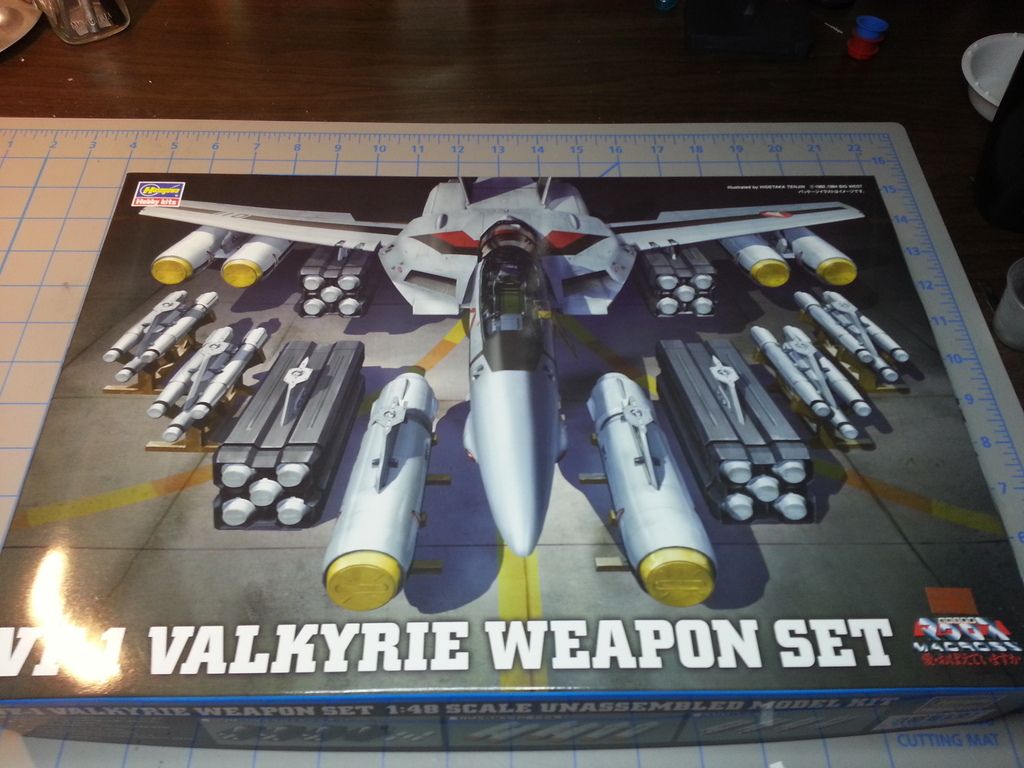
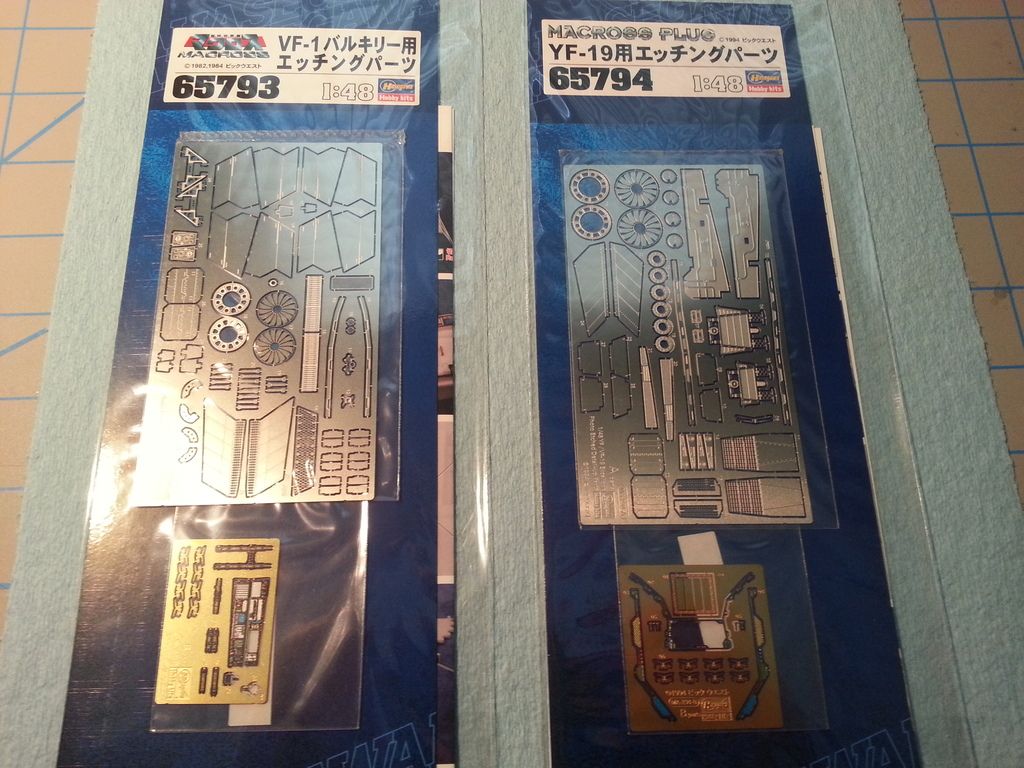
Hasegawa being who they are will also sell ordinance sets separately, as well as PE detail up sets.
Both manufacturers list Gunze/Sangyo Mr Color/Hobby paint call outs in the manuals so if you want an accurate paint job and don't have access to those you'll need to find a color converter chart.
KITS (click here)
What with Paul's recent (maybe by the time of this post?) completion of his YF-19 from Macross Plus, I thought maybe a little guide might be in order to answer some of the questions I've seen on ISM for Macross. I loved watching Macross as a kid in part because it was some great story telling, but mainly due to the fantastic mechanical designs in the show. The kits are pretty fantastic as well and I encourage anyone who is interested to read on.

I'll break this up into parts. The rest of this post will be just about the kits and manufacturers so you know where to look. The next post will be some examples so you have a jumping off point to go find the style you want. The final post will be about the series and what it all means; just background stuff that you can look at if you're curious.
Who makes them?
Plastic Macross kits after 1990 or so are made primarily by two manufacturers: Bandai and Hasegawa. Prior to this other companies such as ARII produced kits and quality ranged from great to "meh." I'll cover these a little at the end because they aren't commonly found in the wild these days.
The thing to know about Macross as a series is that it took the idea of robots that can transform from the early Diaclone toys (what would become the Transformers in 1984) in the late 1970's and used it in a semi-serious war drama to great effect. This means that some kits are designed to change from a jet to a robot (and a third hybrid form) and back as this is the signature gimmick of the series. This is cool, but it also means that a kit can become much more complex to build and paint, not to mention less sturdy. However not all kits do this, some are locked into a single mode for a sturdier model with fewer parts.

In general Bandai kits will transform, Hasegawa kits do not. The licensing seems to be split between the two companies pretty evenly with new kit releases usually staggered or simultaneous depending on the whim of Studio Nue. If you are just looking to build a jet version find the Hasegawa release.


Most are made at 1/72 scale with a few kits getting a special 1/48 scale version. Some of the older kits were also made in 1/100 and 1/144 scale as well.
The Hasegawa versions build just like any other jet model kit and feature the expected quality of a normal Hasegawa kit--if a bit more simple. One bonus to you if you'd like to build one as a breather or mojo refresher is that the complexity is a bit lower than a comparable jet kit owing to the animation design, though as animation techniques advance this is becoming a little less true.
Bandai kits also tend to stick to the "cannon" material while the Hasegawa kits will often offer up dozens of "special editions" with what-if markings and occasionally a sci-fi riff on some real world air wings. All at the expected Hasegawa "special" prices.

Standard YF-19

Demonstrator

SVF-569 Lightnings
Hasegawa being who they are will also sell ordinance sets separately, as well as PE detail up sets.


Both manufacturers list Gunze/Sangyo Mr Color/Hobby paint call outs in the manuals so if you want an accurate paint job and don't have access to those you'll need to find a color converter chart.


