Page 1 of 2

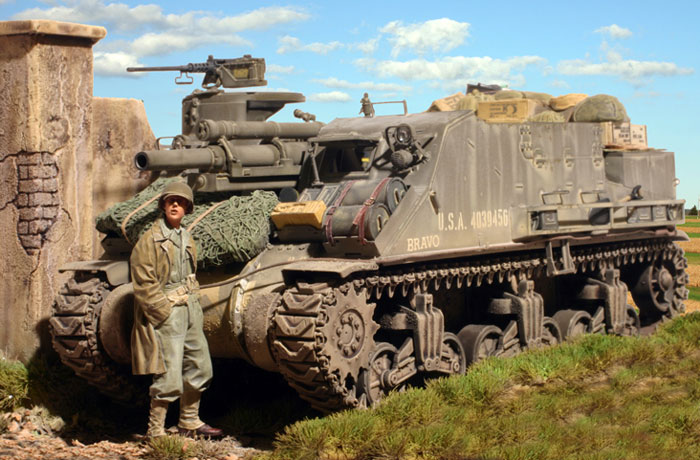
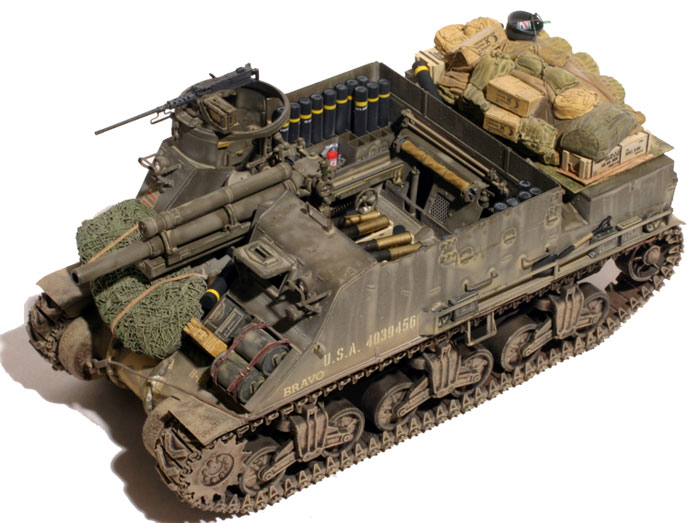
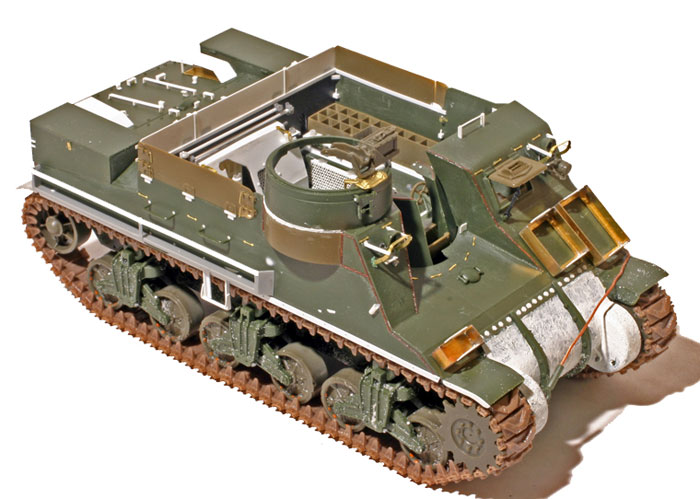
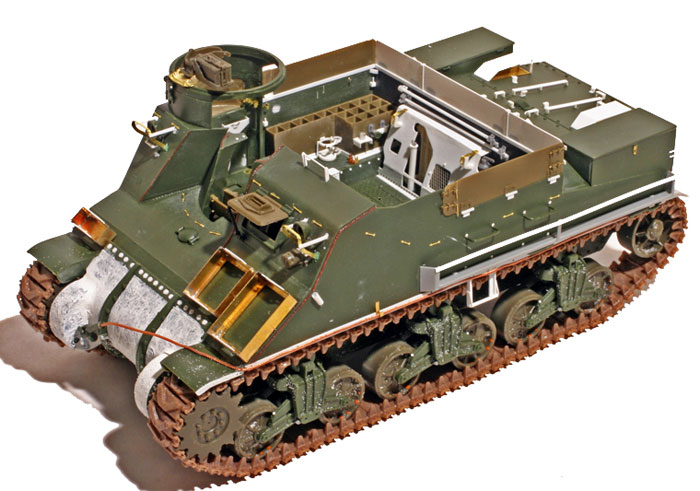
Pete's M7 "Priest"

Posted: Fri Jul 07, 2017 4:56 pm
by privatepete
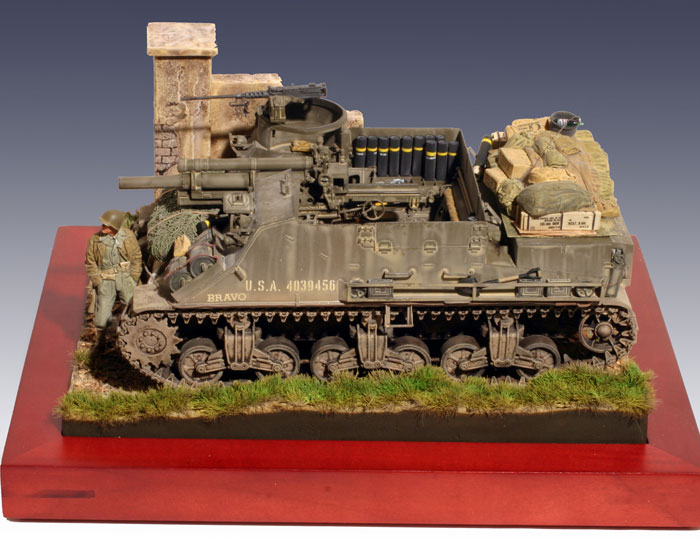
Hi I will be building a M7 "Priest" self propelled 105mm howitzer

Image

M7 Priest 105mm Walk Around

http://www.primeportal.net/artillery/se ... 7_walk.htm
http://www.primeportal.net/artillery/se ... walk_2.htm

http://www.primeportal.net/apc/adam_vukich/m7_priest/

Started with the lower hull, it had no detail at all so I added some rivets well a lot actually using a punch & die set
Image
Image
Image
Image
Image

Front sprocket and rear doors filters, replaced engine door handle with brass wire
Image

On to the (VVSS) suspension,made up units, thin down the skids, drilled the 4 missing return roller bracket holes in front face and 2 on the top, added 3x missing bolts from the bottom of the unit (there should be 6 you can not see the inner 3 when it's on the deck), added 4 missing skid bolts & 4 bolts for the top roller bracket 2 are under the roller
Image
Image
Image
Image
Image
Image
Image
ImageImage
Image
Image

The real thingall the bolts & holes

Image
Image
Image
Image

Thank you for looking :cheers2:

Re: M7 "Priest"

Posted: Sat Jul 08, 2017 1:11 am
by mincemeat
Ooh, I've got 4 of these in the Dragon variety. Looking forward to see what you do with it! :pop:

Re: M7 "Priest"

Posted: Sat Jul 08, 2017 8:25 pm
by privatepete
mincemeat wrote: Sat Jul 08, 2017 1:11 am Ooh, I've got 4 of these in the Dragon variety. Looking forward to see what you do with it! :pop:
Hi sorry I haven't replied about your uncle just slipped my mind, well what uncle love to hear his stories, I would be honored if you could put any of his picture in my build thread and any stories :cheers2:

Re: M7 "Priest"

Posted: Sat Jul 08, 2017 11:53 pm
by Gb64c
Doing the same kit same box art version, but doing waaaaaay less work and detail to mine. lol

Look forward to seeing your's completed

Re: M7 "Priest"

Posted: Sun Jul 09, 2017 10:53 am
by Stokesy44
Looking nice Pate

The bolts on the lower hull look pucker, they'll look superb once painted and all that detail gets picked out with dirt and washes etc.

Re: M7 "Priest"

Posted: Sun Jul 09, 2017 12:55 pm
by privatepete
Gb64c wrote: Sat Jul 08, 2017 11:53 pm Doing the same kit same box art version, but doing waaaaaay less work and detail to mine. lol

Look forward to seeing your's completed
Hi I think I saw it on Facebook, good luck with yours would like to see some pictures :th:

Re: M7 "Priest"

Posted: Sun Jul 09, 2017 1:00 pm
by privatepete
Stokesy44 wrote: Sun Jul 09, 2017 10:53 am Looking nice Pate

The bolts on the lower hull look pucker, they'll look superb once painted and all that detail gets picked out with dirt and washes etc.
Hello sir thank you, nearly drove me mad :wall: but had to be done,I never learn :lol:

Re: M7 "Priest"

Posted: Sun Jul 09, 2017 2:28 pm
by mincemeat
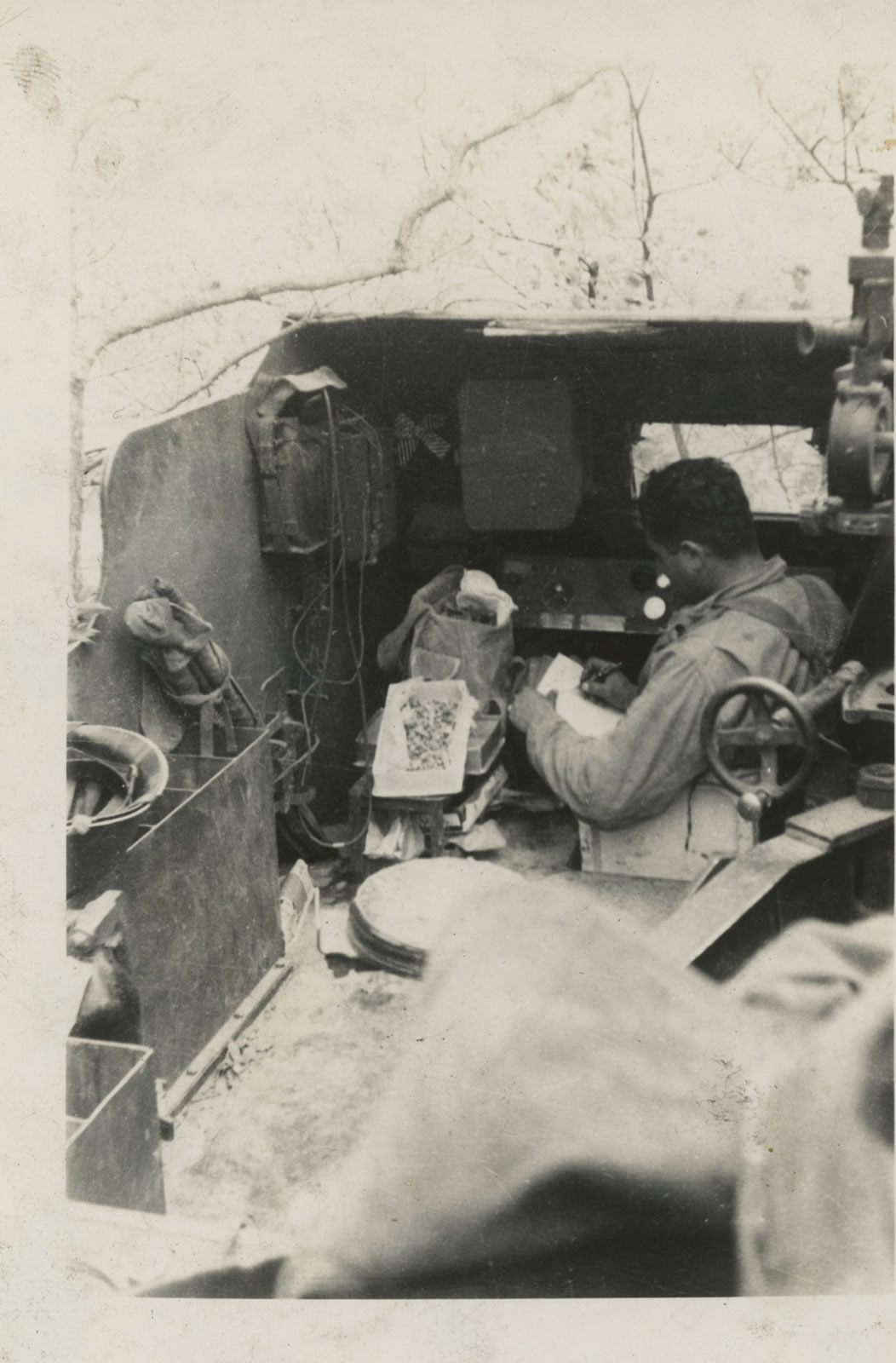
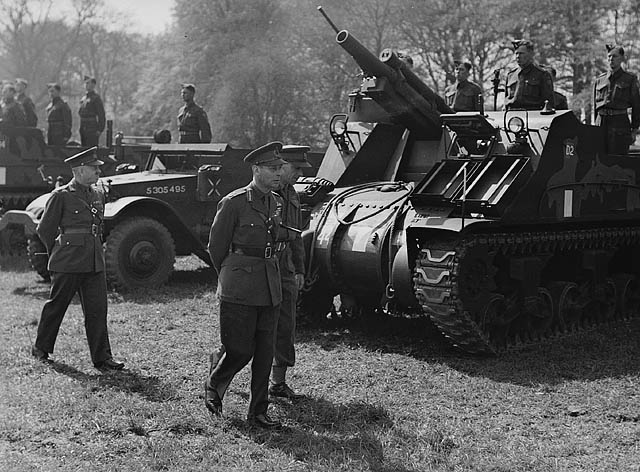
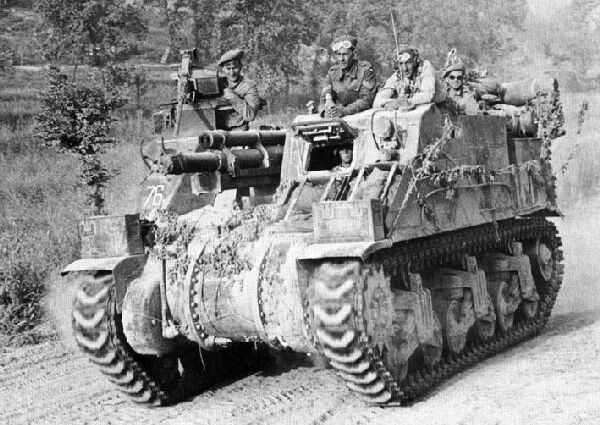
I'm not 100% on whether or not this is my Great Uncle's M7, but Italeri does have the correct placement of the front headlights, unlike the Dragon kit which has them too high. Look at how high the main gun is. In other M7 versions it is parallel to the driver's hatch. I just noticed this today! Perhaps my pic is an M7B2 and the kit is an M7B1. Does the kit have a double ring pulpit?

Imageimg20150703_09495349 by Iggy Pants, on Flickr

Re: M7 "Priest"

Posted: Sun Jul 09, 2017 7:23 pm
by privatepete
He was with the 12 Armored Div, 494th Field Artillery Battalion, B Battery. I'll be doing the other 3 others as his M7 at various times. I'll just have to take a guess at the vehicle number.

My Uncle is standing to the left.
Image

Again on the left....definitely lost a lot of weight.
Image

Re: M7 "Priest"

Posted: Sun Jul 09, 2017 9:37 pm
by AgentG
The build is looking good! Loving all the added details.

I love the photos. Truly the greatest generation!

I can relate to your uncle's weight loss. I went to Viet Nam a rock solid 180 pounds. Returned at 153.......Nowadays my left leg weighs 153 LOL!

G

Re: M7 "Priest"

Posted: Sun Jul 09, 2017 10:30 pm
by privatepete
mincemeat wrote: Sun Jul 09, 2017 2:28 pm I'm not 100% on whether or not this is my Great Uncle's M7, but Italeri does have the correct placement of the front headlights, unlike the Dragon kit which has them too high. Look at how high the main gun is. In other M7 versions it is parallel to the driver's hatch. I just noticed this today! Perhaps my pic is an M7B2 and the kit is an M7B1. Does the kit have a double ring pulpit?

Imageimg20150703_09495349 by Iggy Pants, on Flickr
Hi the top M7 has solid pressed convex spoke wheels and the one with your uncle in have welded open spoke wheels if that's any help, probably adds to the confusion sorry, still great photos and thank you for sharing :cheers2:

Re: M7 "Priest"

Posted: Sun Jul 09, 2017 11:43 pm
by mincemeat
AgentG wrote: Sun Jul 09, 2017 9:37 pm The build is looking good! Loving all the added details.

I love the photos. Truly the greatest generation!

I can relate to your uncle's weight loss. I went to Viet Nam a rock solid 180 pounds. Returned at 153.......Nowadays my left leg weighs 153 LOL!

G
Just a matter of clarification, my Great Uncle. :crazy:

Re: M7 "Priest"

Posted: Sun Jul 09, 2017 11:46 pm
by mincemeat
privatepete wrote: Sun Jul 09, 2017 10:30 pm

Hi the top M7 has solid pressed convex spoke wheels and the one with your uncle in have welded open spoke wheels if that's any help, probably adds to the confusion sorry, still great photos and thank you for sharing :cheers2:
:wtf: You're right, I'm confused. Can you share any examples?

Re: M7 "Priest"

Posted: Mon Jul 10, 2017 3:49 am
by digger303
mincemeat wrote: Sun Jul 09, 2017 2:28 pm I'm not 100% on whether or not this is my Great Uncle's M7, but Italeri does have the correct placement of the front headlights, unlike the Dragon kit which has them too high. Look at how high the main gun is. In other M7 versions it is parallel to the driver's hatch. I just noticed this today! Perhaps my pic is an M7B2 and the kit is an M7B1. Does the kit have a double ring pulpit?

Imageimg20150703_09495349 by Iggy Pants, on Flickr
I'm not 100 % cause I'm no expert, but isn't this pic a M7B2 which was produced late 45 and missed the war. Used later in the Korean conflict as the m37 with M24 chassis.
The gun was raised up to give more elevation and longer range.

As to the lights issue, I believe they were high up in the early production models ( not always in exact same place ), at time of the Normandy landings some were midway and by the time production was finishing they were low down. Your Uncles m7 to me looks like they maybe half way with the top of the light level with the bottom of the parapet.
I got this info from a book by Steven Zaloga. If you want I can send some pic's by email.

Re: M7 "Priest"

Posted: Mon Jul 10, 2017 9:10 am
by privatepete
mincemeat wrote: Sun Jul 09, 2017 11:46 pm
privatepete wrote: Sun Jul 09, 2017 10:30 pm

Hi the top M7 has solid pressed convex spoke wheels and the one with your uncle in have welded open spoke wheels if that's any help, probably adds to the confusion sorry, still great photos and thank you for sharing :cheers2:
:wtf: You're right, I'm confused. Can you share any examples?
Pressed convex spoke roadwheel
Image
Image


Welded spoke roadwhee on your Great Uncles M7
Image
Image

Re:"Pete's M7 "Priest"

Posted: Mon Jul 10, 2017 9:55 am
by privatepete
digger303 wrote: Mon Jul 10, 2017 3:49 am I'm not 100% on whether or not this is my Great Uncle's M7, but Italeri does have the correct placement of the front headlights, unlike the Dragon kit which has them too high. Look at how high the main gun is. In other M7 versions it is parallel to the driver's hatch. I just noticed this today! Perhaps my pic is an M7B2 and the kit is an M7B1. Does the kit have a double ring pulpit?

Imageimg20150703_09495349 by Iggy Pants, on Flickr
I'm not 100 % cause I'm no expert, but isn't this pic a M7B2 which was produced late 45 and missed the war. Used later in the Korean conflict as the m37 with M24 chassis.
The gun was raised up to give more elevation and longer range.

As to the lights issue, I believe they were high up in the early production models ( not always in exact same place ), at time of the Normandy landings some were midway and by the time production was finishing they were low down. Your Uncles m7 to me looks like they maybe half way with the top of the light level with the bottom of the parapet.
I got this info from a book by Steven Zaloga. If you want I can send some pic's by email.
[/quote]

Cheers Ian,i think you are right,there seems to be, lets say different options on building this one I'm renaming my build to "Pete's M7 "Priest" it's Peter Low meets Steven Zaloga kit bash :boom: :lol: :lol: so we probably end up with a M/M/7/7a MK2000 :lol: :lol: if I get within 10% of "SZ" version I'll be doing very very well :bow::
Please if you have any info it would be gratefully received :th:
I have found this out from Steven Zaloga book
Image
Description

Academy's new kit of the M7 105mm HMC comes nearly two decades after the Italeri kit. Academy attempts to portray an earlier configuration of the Priest compared to the Italeri kit which depicts the less common 1944 production version. Unfortunately, the Academy kit is a mish-mash of early 1942, intermediate 1943, and late 1944 production features.
Image
On the good side, Academy has fixed the dimensional problems with their M3 Lee medium tank suspension, and have generously provided two sets of outer bogie covers. This will prove useful to anyone contemplating a correction of their earlier M3 kit. Quite honestly, this feature alone makes the kit worthwhile as it provides the first decent set of early M3-style medium tank suspension bogies in plastic. Not to go go too giddy in delight, the bogie assembly is still sloppy, with a fair amount of filling needed on the top of the bogie. The track is stiff vinyl and not up to current standards. The kit also provides the "M4" heavy bogie assembly and both spoked and stamped road-wheels, so the kit is very useful if for no other reason than as a source of Sherman suspension bits.
Image
The lower hull provides a proper riveted configuration and a typical three-piece differential housing. The differential housing is OK, though without the characteristic casting marks.

The upper hull is a mixed bag depicting the rare initial configuration without the vent covers on the top engine deck, and the initial rear plate without the cut-out for the exhaust stubs. This configuration was limited to the first hundred or so production vehicles, some of which may have been rebuilt with vent covers prior to dispatch to the British 8th Army in North Africa. In the event, this configuration is extremely rare, which means that for most vehicles it will be necessary to cut the rear plate and add the vent openings and covers on the back deck for the vast majority of 1942-43 production M7. The kit provides the standard top-opening stowage bins on the rear hull top, not the initial style with side opening doors compatible with the early hull configuration. The method of attaching the front and rear fenders is not ideal especially considering the poor detail on both components
Image

The fighting compartment interior is a mixed bag. Academy has changed the firewall to the early/intermediate bulkhead style. Unfortunately, the detail is very poor, especially the cover over the oil radiators. The driver's compartment is better than the Italeri kit and provides a better three-piece transmission. The rest of the interior, unfortunately, appears to have been inspired by the Italeri kit and not by careful research. The stowage configuration is wrong in many respects. For example, the driver's compartment has the later style instrument panel and misses most of the other stowage typical of either early or intermediate configurations. The configuration on the right side shows the 200 round MG ammo stowage of the 1944 production vehicles, not the 100 round stowage of the 1942-43 vehicles. The kit comes with a nice assortment of 105mm ammunition transport tubes, unfortunately they are molded in a simplified fashion so that that Academy has skipped depicting the typical "egg-carton" stowage configuration of the ammo bins. Academy has introduced some modest improvements to the 105mm howitzer such as a one-piece slide mold barrel and gun tube. On the other hand, the breech and breech-block remain the simplified configuration as shown in the old Italeri kit. Sad to say, this kit will do little to enhance Academy's reputation for accuracy after a rash of mediocre kits like their M3 Stuart, M3 Lee, and M551 Sheridan.
Image

I had an old Italeri M7 kit in my basement which I was planning to convert into a 1943 configuration M7, so I sacrificed this for many parts to upgrade the Academy kit including much of the 105mm howitzer as the old Italeri kit has sharper details. I recently finished a Tasca M4A1 and had a buch of suspnesion parts left over such as roadwheels, ideler wheels and drive sprockets, and I used these as the detail is better than the Academy kit. I spent a lot of time re-detailing the fighting compartment. The rear stowage is primarily from the excellent Blast resin after-market set, modified to fit this kit. The crewman is the recent Alpine release, and it is a first-class bit of sculpting and molding. I configured my model to depict one of the 14th Armored Field Artillery, 2nd Armored Division vehicles in France in 1944 with their characteristic additions such as the hull stowage racks. A detailed article on this project will appear in Military Modelling magazine along with an accompanying piece on early British use of the Priest by Peter Brown.

:cheers2:

Re: Pete's M7 "Priest"

Posted: Mon Jul 10, 2017 10:26 am
by privatepete
Hi any information on radio /antenna location in or on the M7 would be greatly appreciated too :cheers2:

Re: Pete's M7 "Priest"

Posted: Mon Jul 10, 2017 11:31 am
by digger303
privatepete wrote: Mon Jul 10, 2017 10:26 am Hi any information on radio /antenna location in or on the M7 would be greatly appreciated too :cheers2:
Got some pic's of that, not all were fitted with radio's. They were not all the same either.

Re: Pete's M7 "Priest"

Posted: Mon Jul 10, 2017 4:50 pm
by privatepete
Back to the build

The floor, control's/dash,tran's casing f/fenders
Image
Image
Image
Image

Barrel support carrier, barrel, plus a lot of parts :x

Image
Image
Image
Image
Image
Image
Image
Image
Image

Thank you for looking :cheers2:

Re: Pete's M7 "Priest"

Posted: Mon Jul 10, 2017 5:16 pm
by privatepete
On to the side superstructure

Added some rivets to the hinges still more to do, made some new handles using brass wire, removed all 36 of the moulded tie downs will replace with PE ones, cut out plastic grill replaced with brass mesh, drilled dust/mud flap holes f/r, cleaned up some of parts to go on inside
Image
Image
Image
Image

Thank you for looking, back to M51 build for a while :cheers2:

Re: Pete's M7 "Priest"

Posted: Tue Jul 11, 2017 2:11 am
by mincemeat
Dang Pete! That's some info! Thanks! Have any experience or opinion on the the Dragon kits? I have two early production kits and two mid production kits.

https://www.scalemates.com/kits/138658- ... -m7-priest

https://www.scalemates.com/kits/132746- ... priest-hmc

Re: Pete's M7 "Priest"

Posted: Tue Jul 11, 2017 9:03 am
by privatepete
Radio & Antenna Location M7

Image

Image

(Equipped with a No19 wireless)

The Cdn Priests had No. 19 w/t mounted behind the driver.

There was only one antenna, usually mounted on the front above and to the left of the driver's visor.

Image

Image

Re: Pete's M7 "Priest"

Posted: Tue Jul 11, 2017 11:12 am
by privatepete
mincemeat wrote: Tue Jul 11, 2017 2:11 am Dang Pete! That's some info! Thanks! Have any experience or opinion on the the Dragon kits? I have two early production kits and two mid production kits.

https://www.scalemates.com/kits/138658- ... -m7-priest

https://www.scalemates.com/kits/132746- ... priest-hmc
Hi I like Dragon kits and would love to get my hands on a M7 but every time I find a cheaper one I've haven't got any money, reading the reviews they both seem okay I hope you post your build and if it turns out like the Whippet which was great by the way, good luck when you get around to it :th:

Re: Pete's M7 "Priest"

Posted: Wed Jul 12, 2017 3:15 am
by mincemeat
Thanks Pete! The Whippet has been on hiatus. I just moved the family 1200 miles, so hopefully I can get stuff unpacked and building again soon. Been learning a lot on this thread. Keep it up and can't wait to see more M7 progress!

Re: Pete's M7 "Priest"

Posted: Wed Jul 12, 2017 4:01 pm
by privatepete
mincemeat wrote: Wed Jul 12, 2017 3:15 am Thanks Pete! The Whippet has been on hiatus. I just moved the family 1200 miles, so hopefully I can get stuff unpacked and building again soon. Been learning a lot on this thread. Keep it up and can't wait to see more M7 progress!
Good luck with the move to you and the family, if I moved 1200 miles in the UK I would have very wet feet :lol: :lol:

Re: Pete's M7 "Priest"

Posted: Wed Jul 12, 2017 4:32 pm
by privatepete
Hi as you can see I'v been look stuff up

First I removed the instrument panel and relocated it to under the drivers hatch, fitted radio made telephone/headset. and added some of the wiring

Image
Image
Image
Image
Image
Image

Added sling to rifles used masking tap

Image

Added some missing details to the gun, drilled 3 hole in the floor 2 become slots

Image
Image

Added all the tie downs, 8 x handles made from brass wire

Image
Image

Thank you for looking :cheers2:

Re: Pete's M7 "Priest"

Posted: Wed Jul 12, 2017 10:36 pm
by Kevthemodeller
Some great stuff going on their Pete :th:

Re: Pete's M7 "Priest"

Posted: Thu Jul 13, 2017 6:51 am
by privatepete
Kevthemodeller wrote: Wed Jul 12, 2017 10:36 pm Some great stuff going on their Pete :th:
Thanks Kev, I'm still trying to make at least one half decent build, I'm struggling these days lost the old mojo in the modeling department need some thing new to do instead :cheers2:

Re: Pete's M7 "Priest"

Posted: Thu Jul 13, 2017 8:29 am
by Kevthemodeller
Looks all ok to me Pete, like the radio detail :th: something I did on my last build found it very satisfying especially the research.

I've been so busy of late not had much in the way of bench time plus all the hot weather which doesn't promote sitting indoors. I'm about to start my next project hopefully this weekend......watch this space :cheers2:

Re: Pete's M7 "Priest"

Posted: Thu Jul 13, 2017 4:31 pm
by privatepete
Hi got a bit more done

Fitted gun platform/floor, added side rivets
Image
Image

Fitted all 4 sides, engine deck rear fenders, 2 stowage bin, tow hook
Image
Image
Image
Image

Fitted ammo bins and made missing return flanges + rivets
Image
[Image
Image
Image
Image

Thank you for looking :cheers2:

Re: Pete's M7 "Priest"

Posted: Sat Jul 15, 2017 1:13 am
by mincemeat
Really starting to look the part now!

Re: Pete's M7 "Priest"

Posted: Sat Jul 15, 2017 3:25 pm
by privatepete
Got some more done to the M7

Cut the side skirt into 3 sections, and cut the centre part length way, removed the bolt heads and drill hole in there place
Image
Image

Got this lot from the spares box
Image

Fitted tools, tarpaulin roll
Image
Image
Image
Image
Image
Image
Image
Image
Image
Image

Thank you looking :cheers2:

Re: Pete's M7 "Priest"

Posted: Sat Jul 15, 2017 4:16 pm
by TommyKillander
Excellent work with the detailing. Radio operators station looks great!

:cheers2:
Tommy

Re: Pete's M7 "Priest"

Posted: Sat Jul 15, 2017 5:44 pm
by privatepete
TommyKillander wrote: Sat Jul 15, 2017 4:16 pm Excellent work with the detailing. Radio operators station looks great!

:cheers2:
Tommy
Cheers Tommy much appreciated :cheers2:

Re: Pete's M7 "Priest"

Posted: Sat Jul 15, 2017 5:47 pm
by privatepete
mincemeat wrote: Sat Jul 15, 2017 1:13 am Really starting to look the part now!
I'm getting there slowly :cheers2:

Re: Pete's M7 "Priest"

Posted: Mon Jul 17, 2017 2:27 pm
by privatepete
Hi finished the build stage

Added spare track to storage boxes and made the steel strep retainers longer, added a small tarpaulin roll to one, made top grab handle
Image
Image

Made the m/gun and added ammo belt
Image
Image

Made the 105mm ammo stowage fibreboard tubes from leftover sprues they don't come in the kit, fitted step ring to the sides
Image

Added Jerry cans,small stowage, 2 x hinges
Image
Image
Image
Image

Thank you for looking :cheers2:

Re: Pete's M7 "Priest"

Posted: Mon Jul 17, 2017 3:57 pm
by Nev
Nice work going to say my prayers to get as good mate :cheers2:

See what I did :bow::

Re: Pete's M7 "Priest"

Posted: Mon Jul 17, 2017 4:07 pm
by ElCapitan
Great work so far Pete!

Re: Pete's M7 "Priest"

Posted: Mon Jul 17, 2017 5:49 pm
by privatepete
Nev wrote: Mon Jul 17, 2017 3:57 pm Nice work going to say my prayers to get as good mate :cheers2:

See what I did :bow::
Thanks mate and yes I did, can you say one for me as I'm about to paint it :cheers2:

Re: Pete's M7 "Priest"

Posted: Mon Jul 17, 2017 5:54 pm
by privatepete
ElCapitan wrote: Mon Jul 17, 2017 4:07 pm Great work so far Pete!
Cheers Rob still the painting to come!

Re: Pete's M7 "Priest"

Posted: Mon Jul 17, 2017 6:28 pm
by Stokesy44
All that detail work is going to look superb under paint and weathering :th: :th:

Re: Pete's M7 "Priest"

Posted: Mon Jul 17, 2017 7:12 pm
by privatepete
Stokesy44 wrote: Mon Jul 17, 2017 6:28 pm All that detail work is going to look superb under paint and weathering :th: :th:
Thank you kind sir I have packed a bit in to this one, but we will have to keep your fingers crossed and say a prayer or two it paint time :cheers2:

Re: Pete's M7 "Priest"

Posted: Tue Jul 18, 2017 2:46 am
by mincemeat
Woo! Looks great, one thing though. Since German's were called "Jerry" in WWII, should the gas cans be called "Joe cans" for the Americans and Brits, "Josef cans" for the Soviets, and "François cans" for the Frenchies? :think: Maybe it'll catch on.

Re: Pete's M7 "Priest"

Posted: Tue Jul 18, 2017 10:22 am
by privatepete
mincemeat wrote: Tue Jul 18, 2017 2:46 am Woo! Looks great, one thing though. Since German's were called "Jerry" in WWII, should the gas cans be called "Joe cans" for the Americans and Brits, "Josef cans" for the Soviets, and "François cans" for the Frenchies? :think: Maybe it'll catch on.
Thank you very much, you got me thinking (that is always dangerous :crazy: ) how much do we know about the humble "Jerry Can" ???

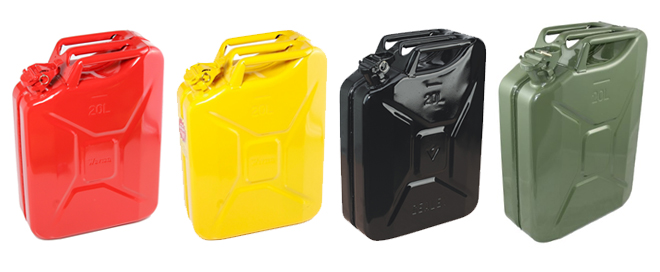
The WWII Jerrycan

Let’s look at one of these truly important historic carry products, the Jerrycan. Originally called “Wehrmacht-Einheitskanister” (German for “armed forces unit canister”) it was developed in Germany in the 1930’s for military use. Wars are won and lost with resources. One of the most important resources being fuel. That fuel must be efficiently stored and transported to aide the soldiers and war machines on the front lines. No fuel and the tanks don’t roll. No tanks and the war is lost.
Image
Image
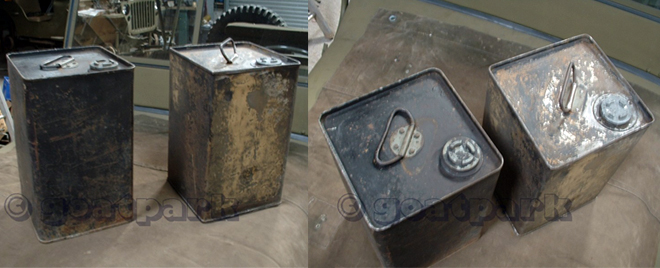
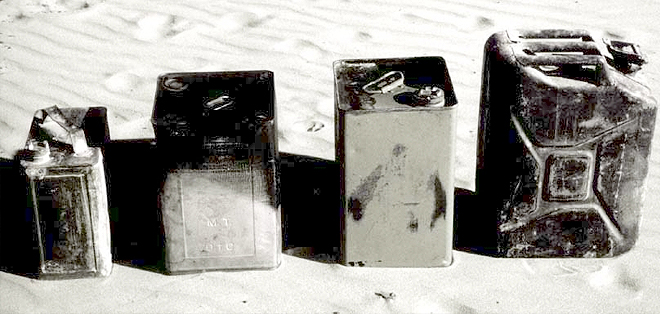
In order to truly appreciate the Jerrycan (a nickname coined by US forces, as “Jerry” was a slang term for Germans), we need to first look at the Allied Forces 4-gallon fuel canisters. To put it simply, they were failures. They were made of several panels of thin (easily-punctured) flat mild-steel plates, which were welded together part by part (costly and time-consuming). They would often leak around these long welded lines, and these fuel leaks would often cause vehicle fires…clearly not ideal. To access the liquid contents, you needed a wrench to remove the cap, which was a separate piece.
Image
Plus you’d need a funnel to fill it and a spout to pour it. That’s four required parts, not including the can itself. Not very efficient. Among all these issues, the handle was a single strip of bent steel, which wasn’t comfortable for a soldier to carry over distances (while dodging bullets and land mines). So poorly designed and manufactured, most were only able to be used once; they were then being modified for stoves or filled with soil and used as makeshift sandbags.
Image
They were aptly nicknamed “flimsies” (a single can would be called a “flimsy”).

The Germans on the other hand created a carry masterpiece. The 20-liter/5.3-gallon (that’s 24.5% more volume than the Allied version) was radically different and superior in many ways.
Image
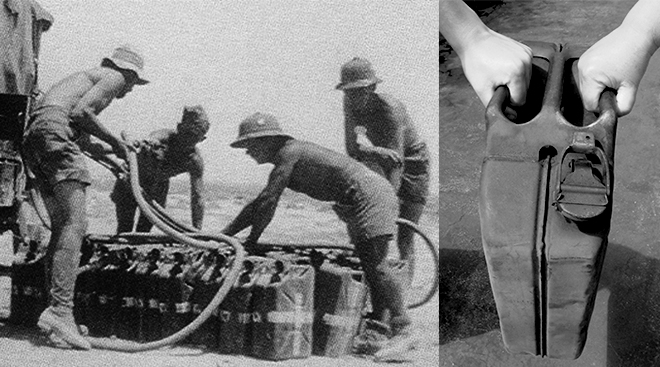
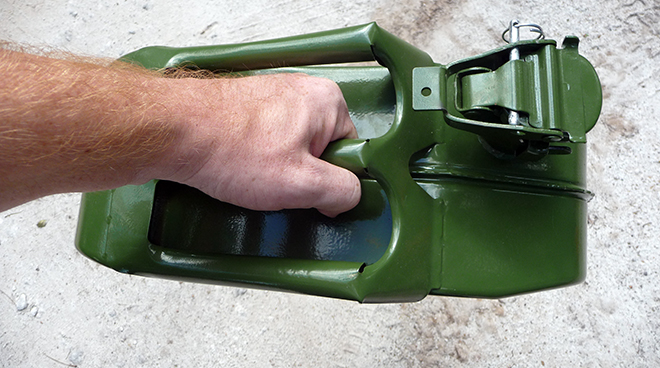
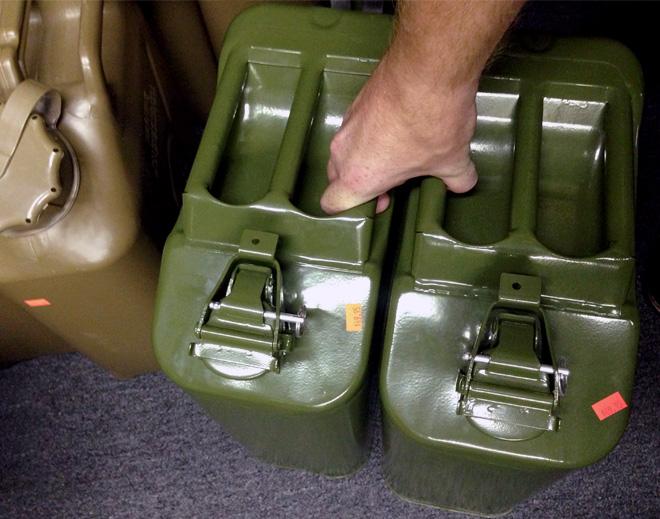
First, it had three comfortable rounded stamped handles. This allowed the cans to be passed down the line from one soldier to the next to the next in bucket-brigade fashion, as one soldier would use the far-sided handle to hand over the exposed free handle on the other far side, rapidly and easily exchanging hands down the line.
Image
One soldier could use the single center handle to comfortably carry a single can with each hand, while maintaining their balance walking over the battlefield’s rough terrain.
Image
If the soldier was strong, they could grab the two edge handles of two cans that were next to each other with one hand. Thus, allowing them to carry four filled Jerrycans at once. If they weren’t so buff, they could still carry four empty cans without any problem. Full or empty, it would have been impossible for one soldier to carry four flimsies – the Jerrycan allowed for both.
Image
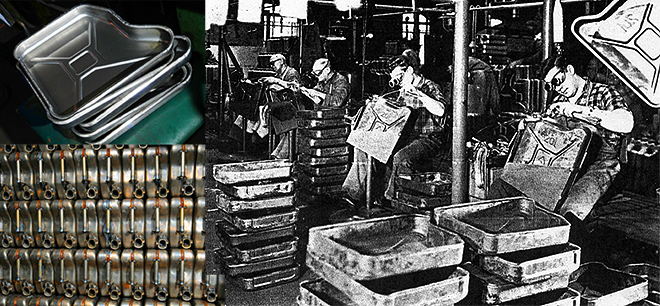
Additionally, the way the Jerrycans were constructed was from two pieces of stamped steel which interlocked together, requiring only one weld around the “equator”. There was even a plastic liner sandwiched in between these two parts for added security. Thus, preventing leaks and making the overall manufacturing process cheaper, easier and faster.
Image
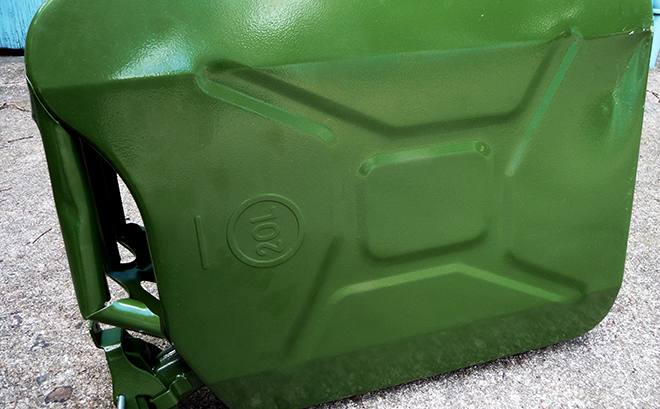
As part of the stamping process, they added in ridges or indentations, which increased the structural rigidity of the cans and allowed for expansion and contraction of the liquids during fluctuations in temperature. Genius.
Image
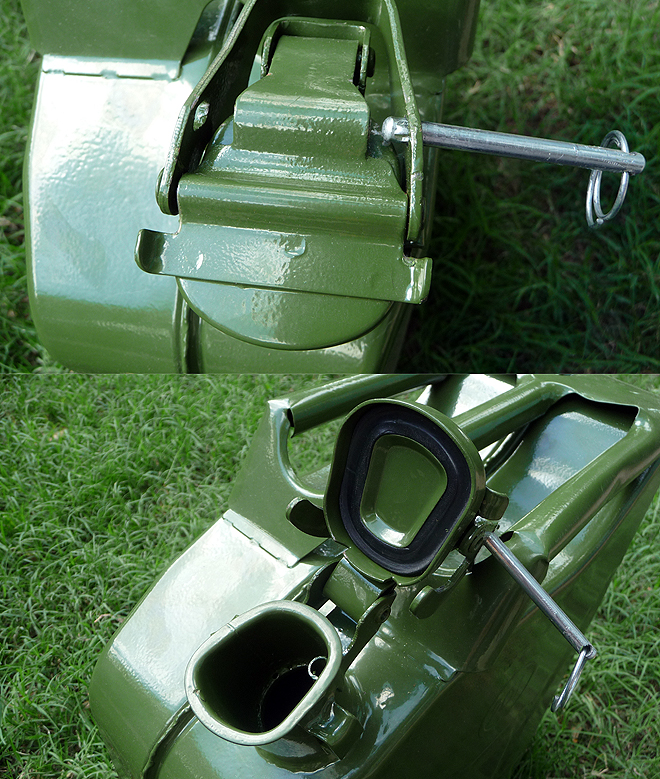
Where the Allied version was 5 parts total, the Jerrycan was one complete unit, requiring no tools to access the contents. The cam-lever lid mechanism was integrated, so it couldn’t be misplaced. Even the aluminium ring pin (used to keep the lid mechanism locked with an airtight seal) was integrated with a welded detent, so it couldn’t be fully removed (or lost), as finding this tiny part out in the field would be quite difficult.
Image
As an added bonus, differently coloured cans made it easy for soldiers to rapidly identify the contents (fuel vs oil vs water, etc). Lastly, aesthetically speaking, the Jerrycan looks incredible – especially when sitting next to one of the poorly-built flimsies. Maybe that counts for some kind of morale boost? Probably not.
Image
The Jerrycan was such a superior product that Allied Forces eventually recognised the incredible design and then reverse engineered the canister for their own use, successfully producing countless units to aid in their wartime efforts. Though WWII has long since passed, the Jerrycan is still used (and even produced by the tens of thousands) today by organisations like the United Nations and NATO.
Image
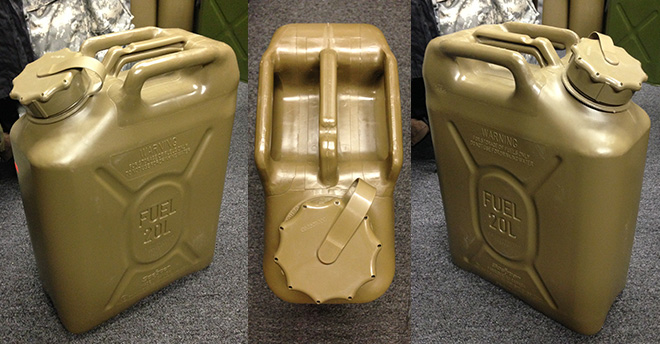
With advancements in manufacturing since WWII, some cans are plastic (often referred to as “Jerryjugs”, shown above). If you’re as big of a carry nut as we are (and we suspect you might be) and want to own a piece of this carry history, you can find new and original Jerrycans and Jerryjugs for purchase relatively cheap.

Thank you for looking :cheers2:

Re: Pete's M7 "Priest"

Posted: Tue Jul 18, 2017 12:35 pm
by digger303
brilliant Pete...thanks enjoyed that. What a massive job refilling them all.
Only forgot One little thing which underlines your point. The Germans recognizing the importance of what they created regarded them as a military secret until the out break of war when of course everyone got a look at them.

Re: Pete's M7 "Priest"

Posted: Tue Jul 18, 2017 2:32 pm
by privatepete
digger303 wrote: Tue Jul 18, 2017 12:35 pm brilliant Pete...thanks enjoyed that. What a massive job refilling them all.
Only forgot One little thing which underlines your point. The Germans recognizing the importance of what they created regarded them as a military secret until the out break of war when of course everyone got a look at them.
Hi Ian will this do you know I like a bit of history

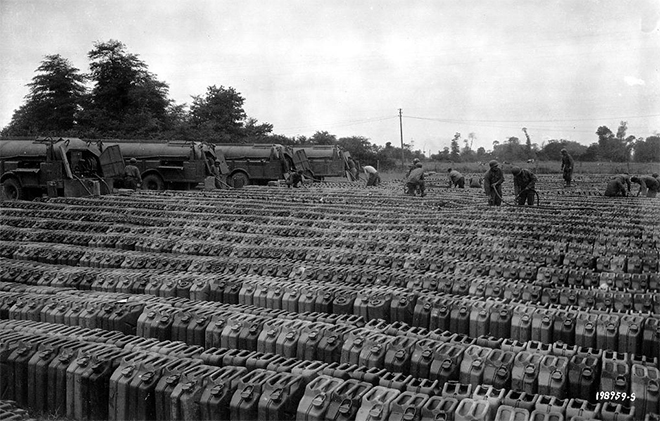
During World War II the United States exported more tons of petroleum products than of all other war materiel combined. The mainstay of the enormous oil and gasoline transportation network that fed the war was the oceangoing tanker, supplemented on land by pipelines, railroad tank cars, and trucks. But for combat vehicles on the move, another link was crucial—smaller containers that could be carried and poured by hand and moved around a battle zone by trucks.

Hitler knew this. He perceived early on that the weakest link in his plans for blitzkrieg using his panzer divisions was fuel supply. He ordered his staff to design a fuel container that would minimise gasoline losses under combat conditions. As a result the German army had thousands of jerrycans, as they came to be called, stored and ready when hostilities began in 1939.

The jerrycan had been developed under the strictest secrecy, and its unique features were many. It was flat-sided and rectangular in shape, consisting of two halves welded together as in a typical automobile gasoline tank. It had three handles, enabling one man to carry two cans and pass one to another man in bucket-brigade fashion. Its capacity was approximately five U.S. gallons; its weight filled, forty-five pounds. Thanks to an air chamber at the top, it would float on water if dropped overboard or from a plane. Its short spout was secured with a snap closure that could be propped open for pouring, making unnecessary any funnel or opener. A gasket made the mouth leak proof. An air-breathing tube from the spout to the air space kept the pouring smooth. And most important, the can’s inside was lined with an impervious plastic material developed for the insides of steel beer barrels. This enabled the jerrycan to be used alternately for gasoline and water.

Early in the summer of 1939, this secret weapon began a roundabout odyssey into American hands. An American engineer named Paul Pleiss, finishing up a manufacturing job in Berlin, persuaded a German colleague to join him on a vacation trip overland to India. The two bought an automobile chassis and built a body for it. As they prepared to leave on their journey, they realised that they had no provision for emergency water. The German engineer knew of and had access to thousands of jerrycans stored at Tempelhof Airport. He simply took three and mounted them on the underside of the car.

The two drove across eleven national borders without incident and were halfway across India when Field Marshal Goering sent a plane to take the German engineer back home. Before departing, the engineer compounded his treason by giving Pleiss complete specifications for the jerrycan’s manufacture. Pleiss continued on alone to Calcutta. Then he put the car in storage and returned to Philadelphia.

Back in the United States, Pleiss told military officials about the container, but without a sample can he could stir no interest, even though the war was now well under way. The risk involved in having the cans removed from the car and shipped from Calcutta seemed too great, so he eventually had the complete vehicle sent to him, via Turkey and the Cape of Good Hope. It arrived in New York in the summer of 1940 with the three jerrycans intact. Pleiss immediately sent one of the cans to Washington. The War Department looked at it but unwisely decided that an updated version of their World War I container would be good enough. That was a cylindrical ten-gallon can with two screw closures. It required a wrench and a funnel for pouring.

That one jerrycan in the Army’s possession was later sent to Camp Holabird, in Maryland. There it was poorly redesigned; the only features retained were the size, shape, and handles. The welded circumferential joint was replaced with rolled seams around the bottom and one side. Both a wrench and a funnel were required for its use. And it now had no lining. As any petroleum engineer knows, it is unsafe to store gasoline in a container with rolled seams. This ersatz can did not win wide acceptance.

The British first encountered the jerrycan during the German invasion of Norway, in 1940, and gave it its English name (the Germans were, of course, the “Jerries”). Later that year Pleiss was in London and was asked by British officers if he knew anything about the can’s design and manufacture. He ordered the second of his three jerrycans flown to London. Steps were taken to manufacture exact duplicates of it.

Two years later the United States was still oblivious of the can. Then, in September 1942, two quality-control officers posted to American refineries in the Mideast ran smack into the problems being created by ignoring the jerrycan. I was one of those two. Passing through Cairo two weeks before the start of the Battle of El Alamein, we learned that the British wanted no part of a planned U.S. Navy can; as far as they were concerned, the only container worth having was the Jerrycan, even though their only supply was those captured in battle. The British were bitter; two years after the invasion of Norway there was still no evidence that their government had done anything about the jerrycan.

My colleague and I learned quickly about the jerrycan’s advantages and the Allied can’s costly disadvantages, and we sent a cable to naval officals in Washington stating that 40 percent of all the gasoline sent to Egypt was being lost through spillage and evaporation. We added that a detailed report would follow. The 40 percent figure was actually a guess intended to provoke alarm, but it worked. A cable came back immediately requesting confirmation.

We then arranged a visit to several fuel-handling depots at the rear of Montgomery’s army and found there that conditions were indeed appalling. Fuel arrived by rail from the sea in fifty-five-gallon steel drums with rolled seams and friction-sealed metallic mouths. The drums were handled violently by local laborers. Many leaked. The next link in the chain was the infamous five-gallon “petrol tin.” This was a square can of tin plate that had been used for decades to supply lamp kerosene. It was hardly useful for gasoline. In the hot desert sun, it tended to swell up, burst at the seams, and leak. Since a funnel was needed for pouring, spillage was also a problem.

Allied soldiers in Africa knew that the only gasoline container worth having was German. Similar tins were carried on Liberator bombers in flight. They leaked out perhaps a third of the fuel they carried. Because of this, General Wavell’s defeat of the Italians in North Africa in 1940 had come to naught. His planes and combat vehicles had literally run out of gas. Likewise in 1941, General Auchinleck’s victory over Rommel had withered away. In 1942 General Montgomery saw to it that he had enough supplies, including gasoline, to whip Rommel in spite of terrific wastage. And he was helped by captured jerrycans.

The British historian Desmond Young later confirmed the great importance of oil cans in the early African part of the war. “No one who did not serve in the desert,” he wrote, “can realise to what extent the difference between complete and partial success rested on the simplest item of our equipment—and the worst. Whoever sent our troops into desert warfare with the [five-gallon] petrol tin has much to answer for. General Auchinleck estimates that this ‘flimsy and ill constructed container’ led to the loss of thirty per cent of petrol between base and consumer. … The overall loss was almost incalculable. To calculate the tanks destroyed, the number of men who were killed or went into captivity because of shortage of petrol at some crucial moment, the ships and merchant seamen lost in carrying it, would be quite impossible.”

After my colleague and I made our report, a new five-gallon container under consideration in Washington was cancelled. Meanwhile the British were finally gearing up for mass production. Two million British jerrycans were sent to North Africa in early 1943, and by early 1944 they were being manufactured in the Middle East. Since the British had such a head start, the Allies agreed to let them produce all the cans needed for the invasion of Europe. Millions were ready by D-day. By V-E day some twenty-one million Allied jerrycans had been scattered all over Europe. President Roosevelt observed in November 1944, “Without these cans it would have been impossible for our armies to cut their way across France at a lightning pace which exceeded the German Blitz of 1940.”

In Washington little about the jerrycan appears in the official record. A military report says simply, “A sample of the jerry can was brought to the office of the Quartermaster General in the summer of 1940.”

Re: Pete's M7 "Priest"

Posted: Wed Jul 19, 2017 2:16 am
by digger303
That did wonderfully....I like bite size pieces of history especially of the little known.

Re: Pete's M7 "Priest"

Posted: Wed Jul 19, 2017 5:31 am
by privatepete
digger303 wrote: Wed Jul 19, 2017 2:16 am That did wonderfully....I like bite size pieces of history especially of the little known.
Cheers Ian I didn't know about it bing a military secret, It's amazing what you can lean with a little digging around, I wonder what's next ?

Re: Pete's M7 "Priest"

Posted: Wed Jul 19, 2017 5:54 am
by digger303
privatepete wrote: Wed Jul 19, 2017 5:31 am
digger303 wrote: Wed Jul 19, 2017 2:16 am That did wonderfully....I like bite size pieces of history especially of the little known.
Cheers Ian I didn't know about it bing a military secret, It's amazing what you can lean with a little digging around, I wonder what's next ?
The modern metal jerry cans don't have that plastic liner ( didn't know ww2 ones did ) after a while they crack with the constant expansion and contraction. A plastic liner would be a big improvement.

Re: Pete's M7 "Priest"

Posted: Thu Jul 20, 2017 2:51 am
by mincemeat
What a wonderful bit of history on a seemingly innocuous and ubiquitous piece of equipment. Just goes to show that everything has a story no matter how small. Thanks for putting that together!