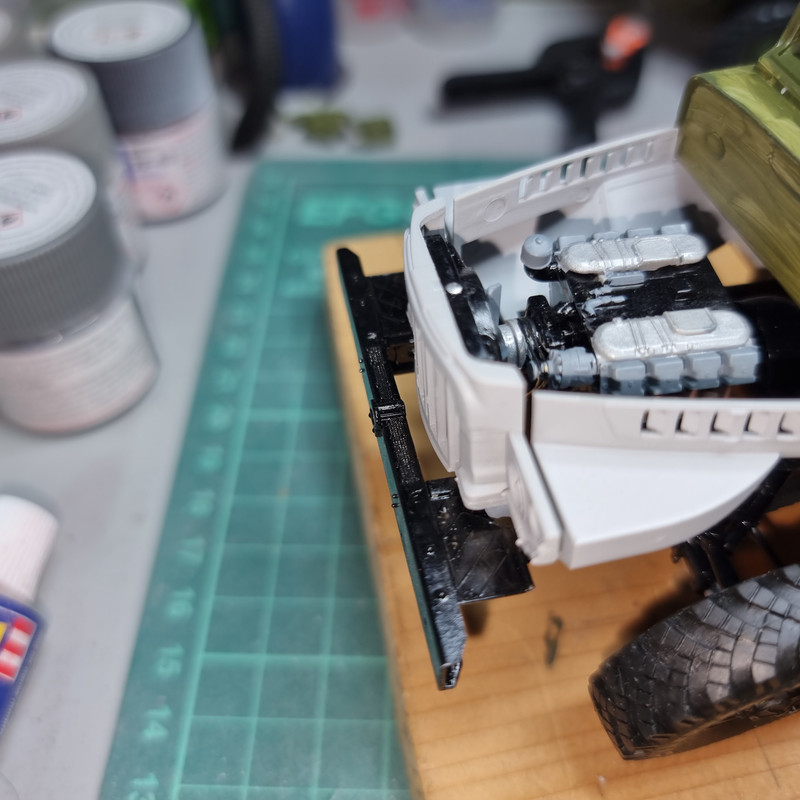
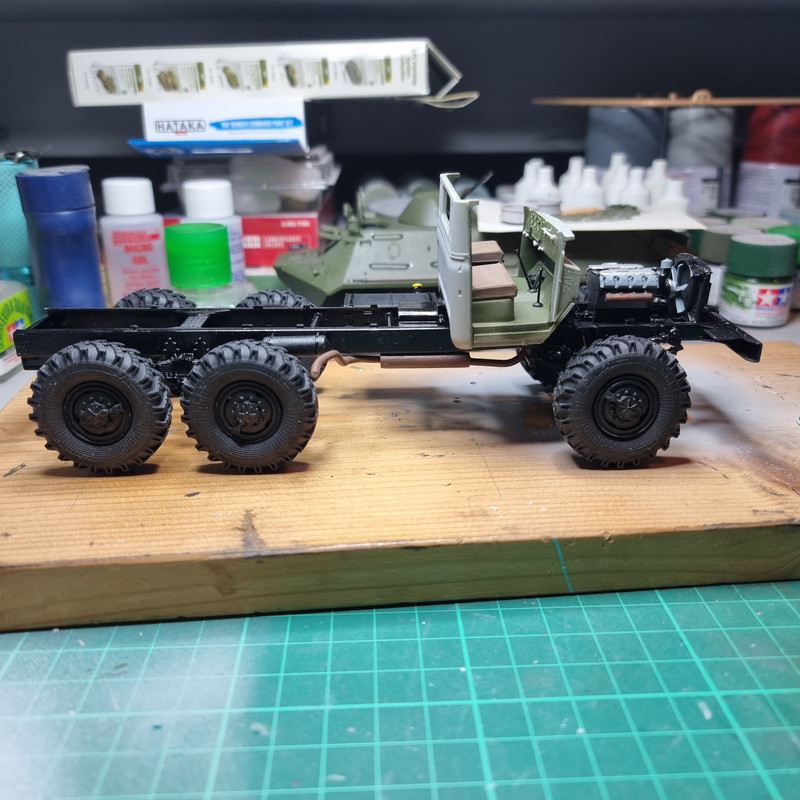
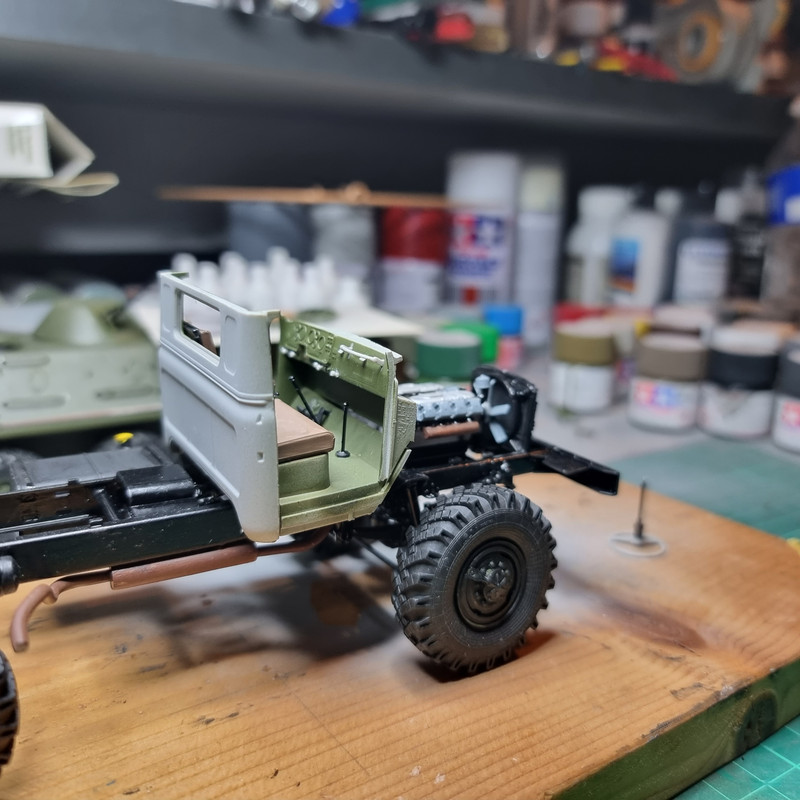
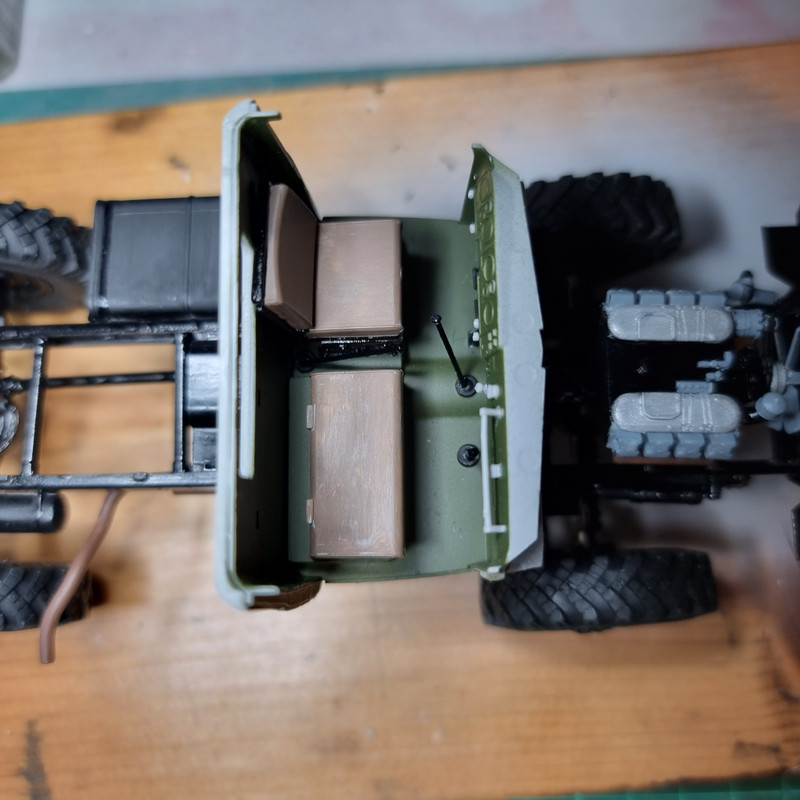
Soviet D30 Howitzer + Ural 370D
Posted: Wed Nov 30, 2022 10:46 pm
Time for another project....
First up is the Soviet D30 howitzer - a potted (but still rather long) history of which reads thus:
"The 122-mm howitzer D-30 (Soviet ID is 2A18) is a Soviet howitzer that first entered service in 1960. It is a robust piece that focuses on the essential features of a towed field gun suitable for all conditions. The D-30 has a maximum range of 15.4 kilometers, or over 21 km using rocket-assisted projectile ammunition.
Distinctive features of the D-30 include its low mobile mounting and above-barrel recoil system. The three-legged mobile mount is unusual for field artillery, with stabilizers that are clamped together for towing and deployed when in action. A large tow linkage is fixed to the muzzle; in transport the barrel serves as a trail.
Compared to the M-30, the new howitzer had a significantly longer 35 calibre gun barrel, just short of being a gun-howitzer by Soviet definition. Like other guns of the period, it had a high efficiency muzzle brake; this improved muzzle velocity by 175 m/s to a total of 650 m/s for HE, and raised maximum range by 3,500 m beyond the similar M-30. Maximum range was 2 km better than the 76 mm M1942 at 15.3 km. Weight increased by 650 kg over the M-30, to 3,150 kg; the D-30 is over twice the weight of the 76mm M1942. Accuracy improved, with mean error at about 10 km dropping from 35 m with the M-30 to just 21 m.
Effective stabilisation length is a fundamental aspect of a gun mount, and legs 120° apart need to be longer than those with a smaller angle. The D-30's design minimises this problem in several ways. Trunnions are close to the ground, as a result of placing the recoil system and cradle above the barrel. The trunnions are also at the very rear of the breech; this maximises the recoil space when firing at higher elevation angles. Their rearward position also pushes the recoiling element forward on the mount, maximizing relative rearward span of the stabilizers and so stability during recoil. Additionally there is a very efficient muzzle brake, which absorbs about half the recoil. There is no mechanism to reduce recoil length as the angle of elevation increases.
Some of the design decisions have a price. The muzzle brake produces about twice the overpressure in the area around the gun that is acceptable to Western armies, and is the reason it is often seen being fired with a long lanyard, which reduces rate of fire. Furthermore, the maximum elevation angle is restricted to 18° (early versions) or 22° (later versions) when the breech is over a trail leg. This is enforced by a mechanical cam that prevents the piece firing for about 60% of the total top traverse, and limits range to about 12 km, with full maximum range only possible in the central arc of about 48° between each pair of legs. The extreme rearward location of the trunnions means the elevating mass is unbalanced, requiring a strong balancing mechanism to enable manual elevation. To do this, the D-30 uses compression balancing gears.
A central jack is powered by hand-operated hydraulics. This jack is lowered while the wheels are raised to permit two of the stabiliser legs to be swung 120° rearwards. The mounting is then lowered and the ends of the legs spiked to the ground. This mounting provides for quick traversing to fire in any direction.
The pair of large tires are suspended on a single trailing arm; maximum towing speed is 60 km/h on the road. As was normal in Soviet designs, the tyres were filled with foam. Initially, the D-30 had no brakes and no seat for the layer—non-essential luxuries.
A sliding block breech was adopted instead of the M-30's pre-1914 screw pattern, giving a slight increase in the rate of fire. It is a semi-automatic vertical sliding block breech, with a tied jaw; the block moves down to open and opens automatically ejecting the empty cartridge case as the recuperator forces the gun tube back into battery after a round is fired. The design is closely related to those of breeches on other Soviet post–World War II guns and howitzers.
The non-reciprocating sights are standard Soviet pattern, designed for one-man laying. Included are a direct fire anti-tank telescope, a panoramic periscopic indirect-fire sight (dial sight) in a reciprocating mounting, an angle of sight scale, and a range drum for each charge engraved with the range (distance) scale. The elevation leveling bubble is mounted on the dial sight mount. The range drum enables the standard Soviet technique of semi-direct fire when the piece is laid visually on the target and the range set on the range drum.
Soviet 122 mm howitzers used different ammunition to 122 mm guns, although there was some compatibility. In the case of ammunition for the D-30, the standard 122 mm howitzer shell weight of 21.8 kg was retained, with a metal cartridge case holding variable propelling charges. Cartridge and shell are loaded separately; this means that the shells have to be hand-rammed by a man to the right of the breech with a ramming rod. The D-30 could fire the older M-30 ammunition; however, new shells were also introduced, eventually including a rocket-assisted projectile with a range of 21.9 km. The M-30's range of propelling charges, comprising base and eight increments, was replaced by a new set comprising base and four increments; single base propellant was retained. A more effective High Explosive (HE) shell was developed, as well as smoke, illumination and chemical filled projectiles.
In keeping with Soviet doctrine, the anti-tank role is important; there is a HEAT shell capable of penetrating 460 mm of steel armour plate.
The maximum rate of fire of the D-30 is 6–8 rounds per minute, and about 75 rounds per hour. There is disagreement as to whether this maximum rate of fire is achievable for indirect fire. Based on reloading speeds of similar guns using separate charges, solo re-laying, and given a stable emplacement, semi-automatic breech and no long lanyard, (examples are the 25-pdr. and 105mm L118), and assuming concurrent lay adjustment during reloads, then it probably is when in the hands of a competent detachment. However, 5-6 rounds per minute may be more realistic with a poorly trained gun crew.
The D-30 is noted for simplicity of maintenance by its users; reputedly there are no special tools, all jobs can be done with a wrench and large hammer. "
Now the kit.
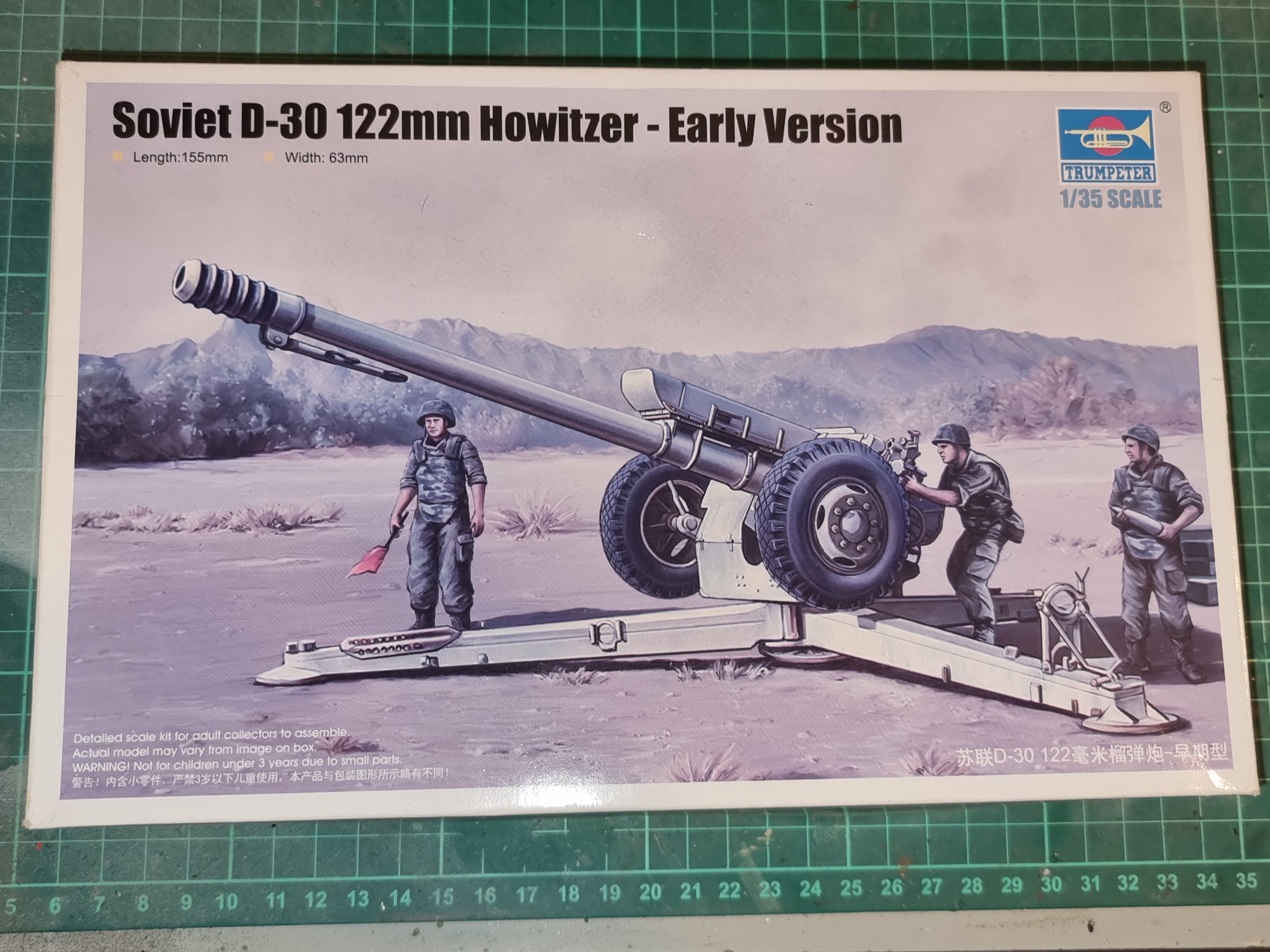
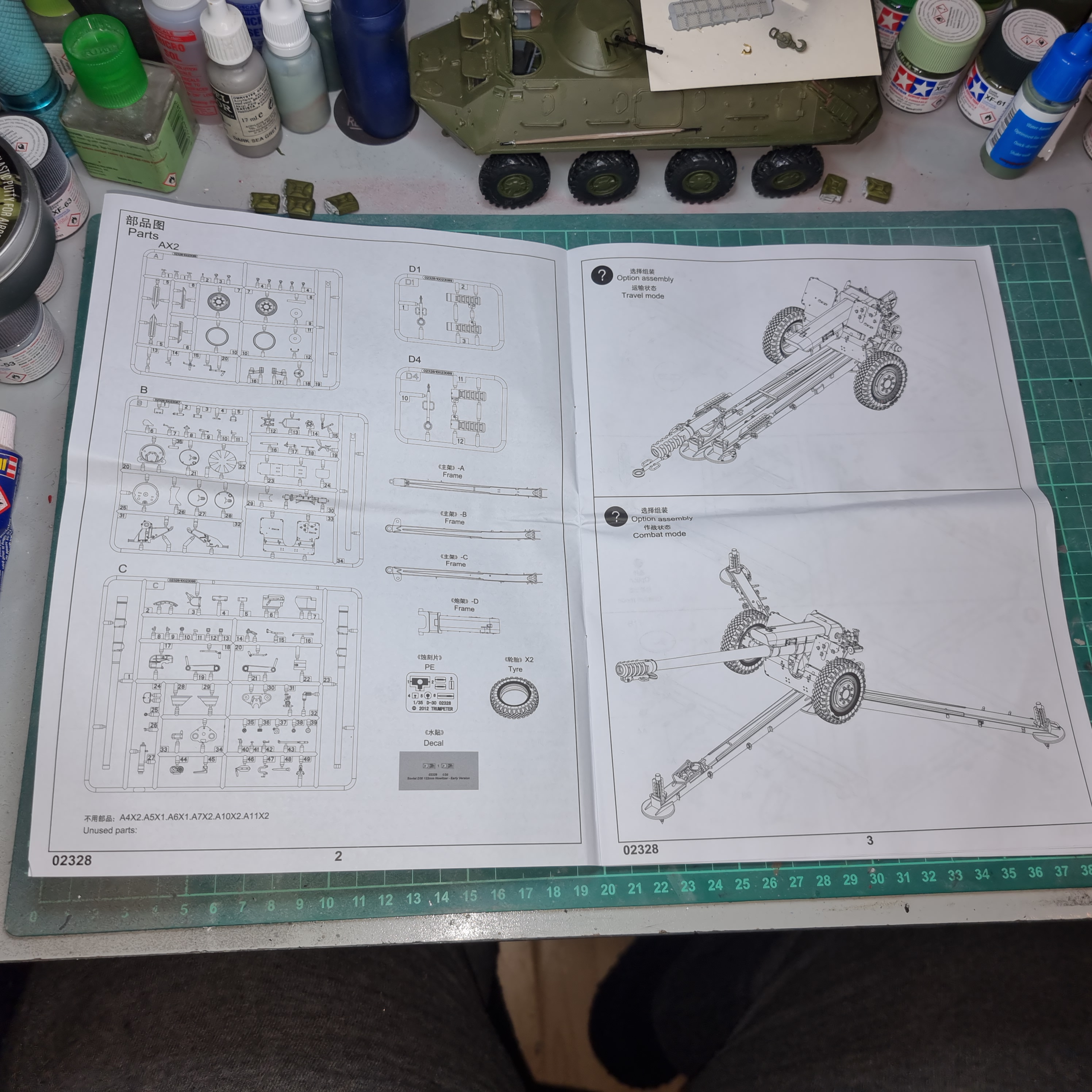
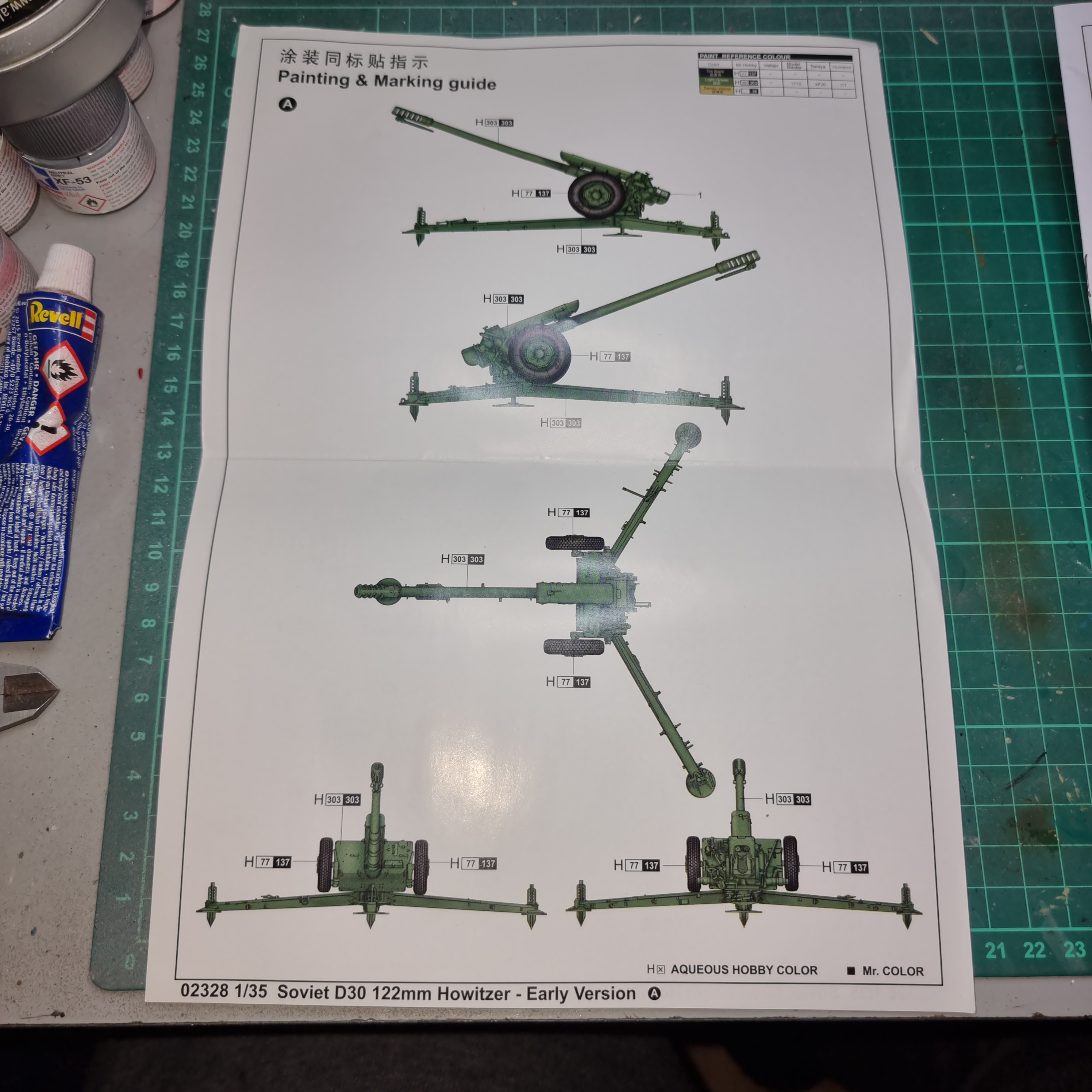
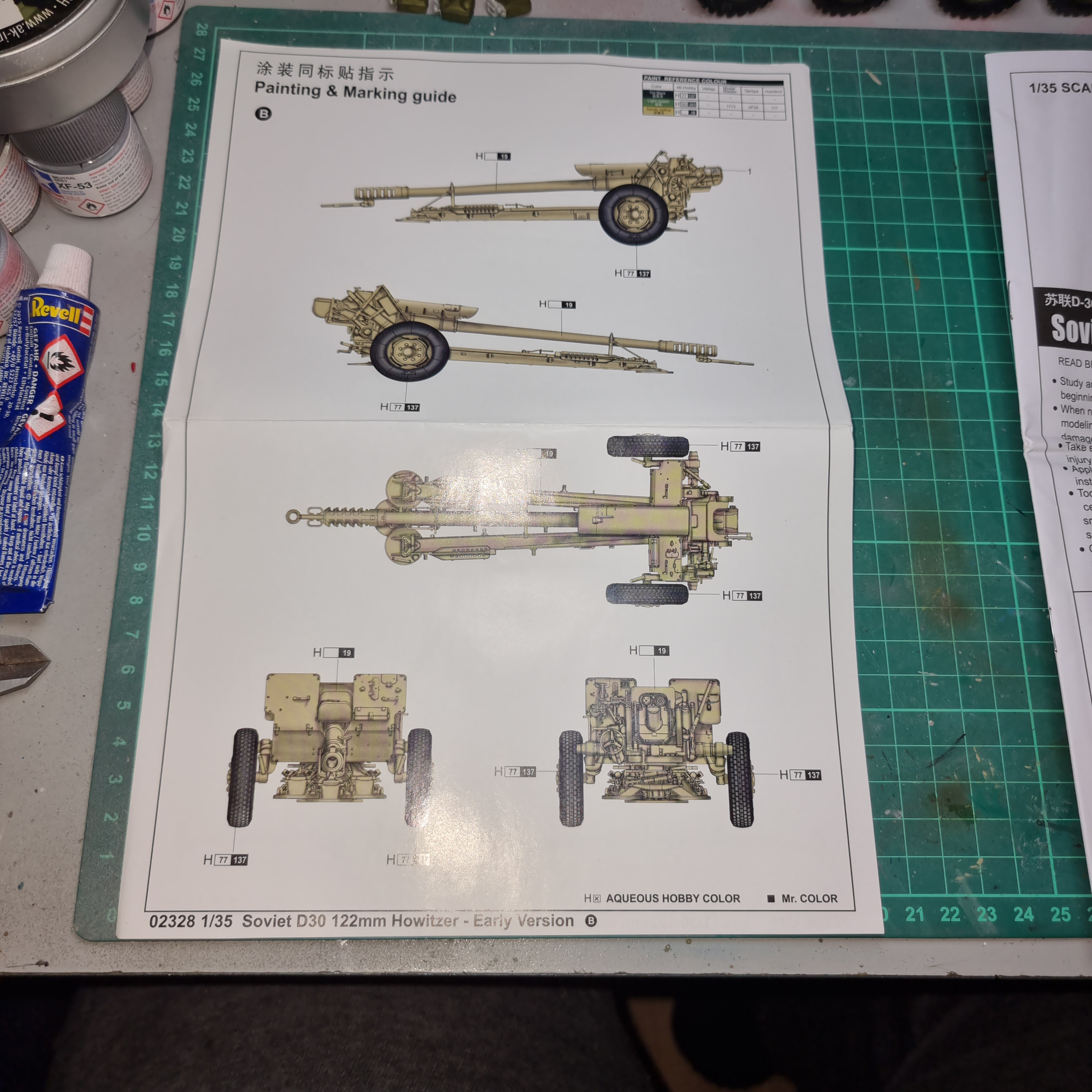
This is one of Trumpeters offerings and represents the early version of the D30. It gives the option of building the gun in either transport or combat configuration - I will be hoing for the latter one. The paint schemes are either the standard 4BO Green or tthe sand colour used by the 40th Army in Afghanistan.
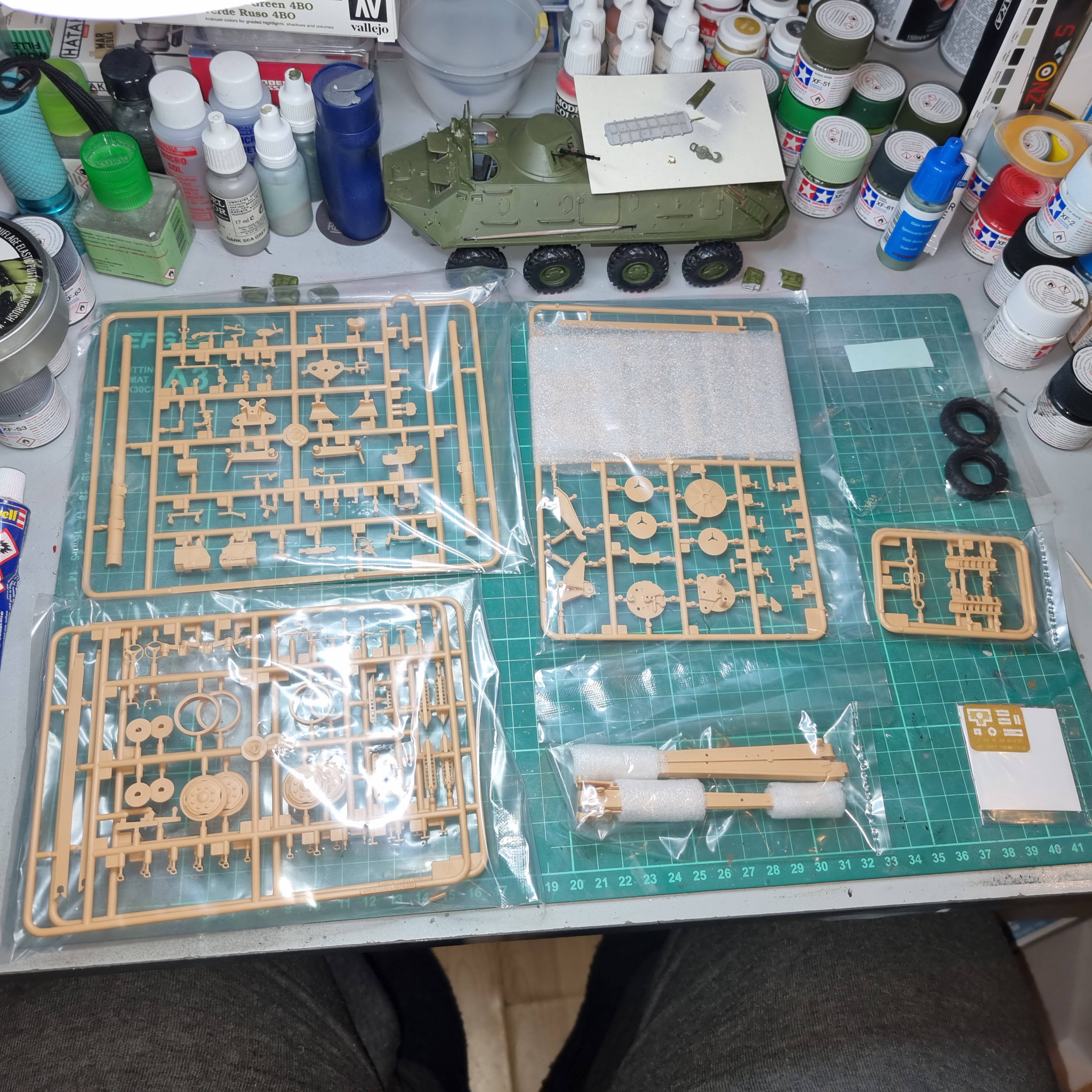
The box contains 5 sprues - 2 x A, 1x B, 1 x C and 1 x D, a pack containing the trail legs, a pack of tyres, , a small pack of PE, decals, instructions and painting guide.
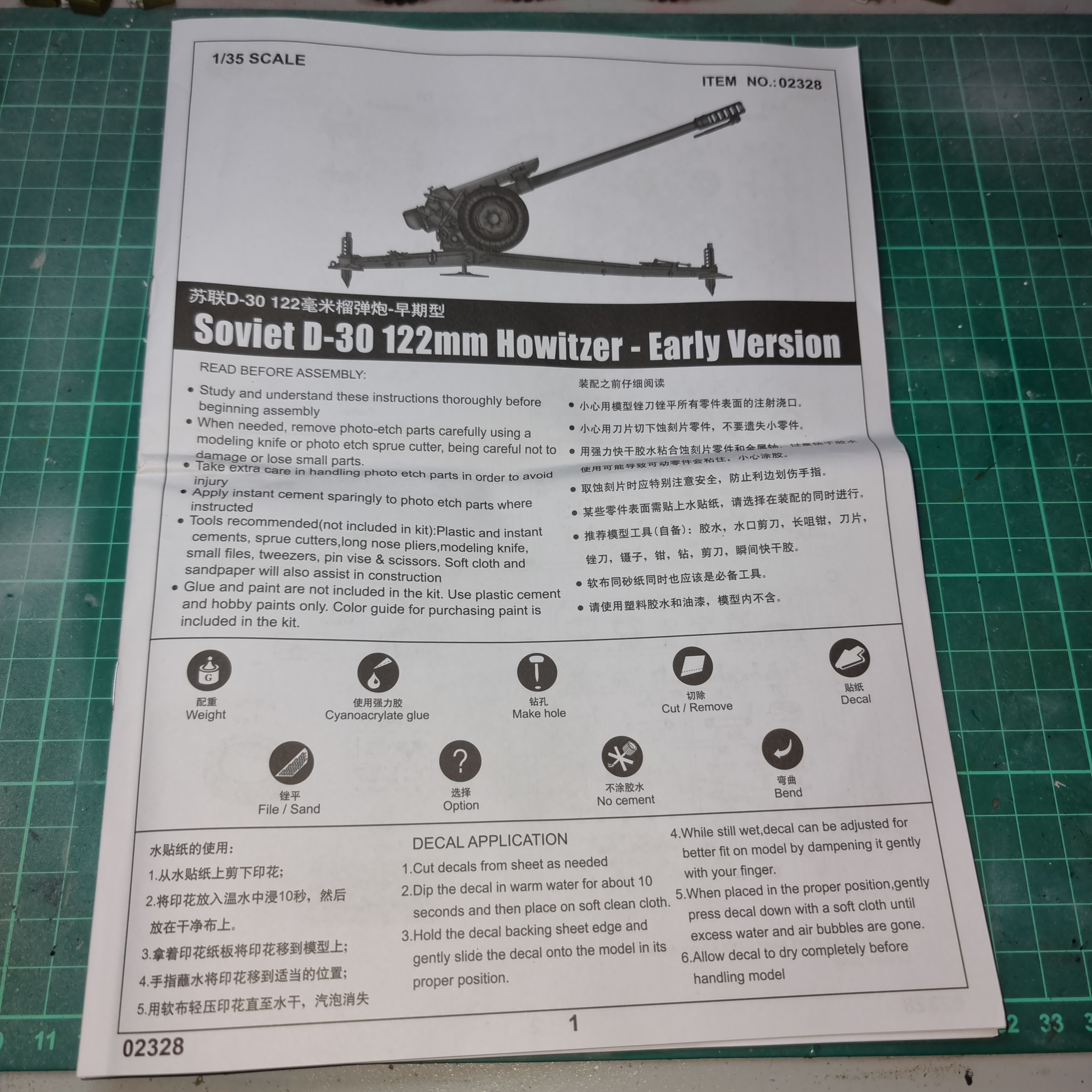
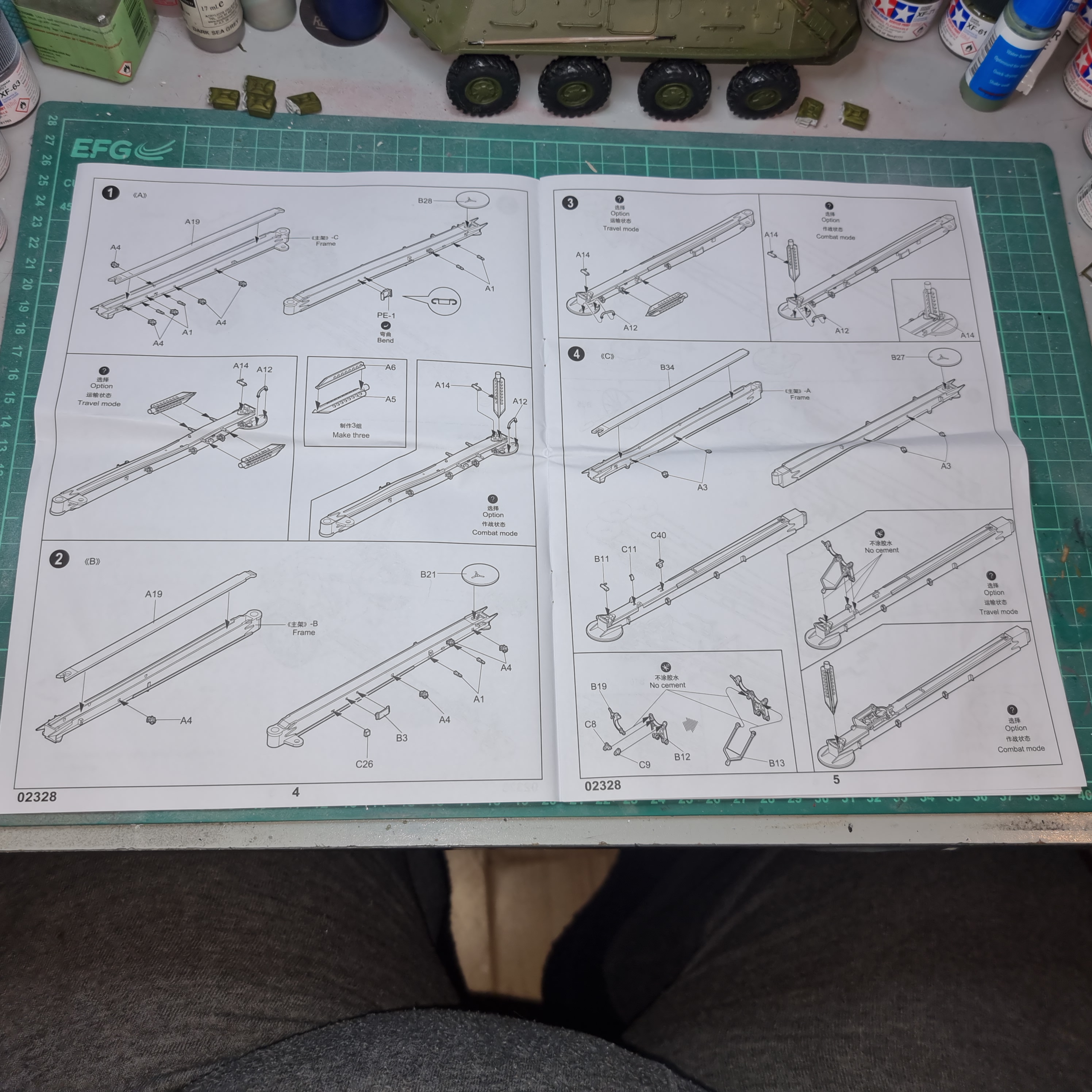
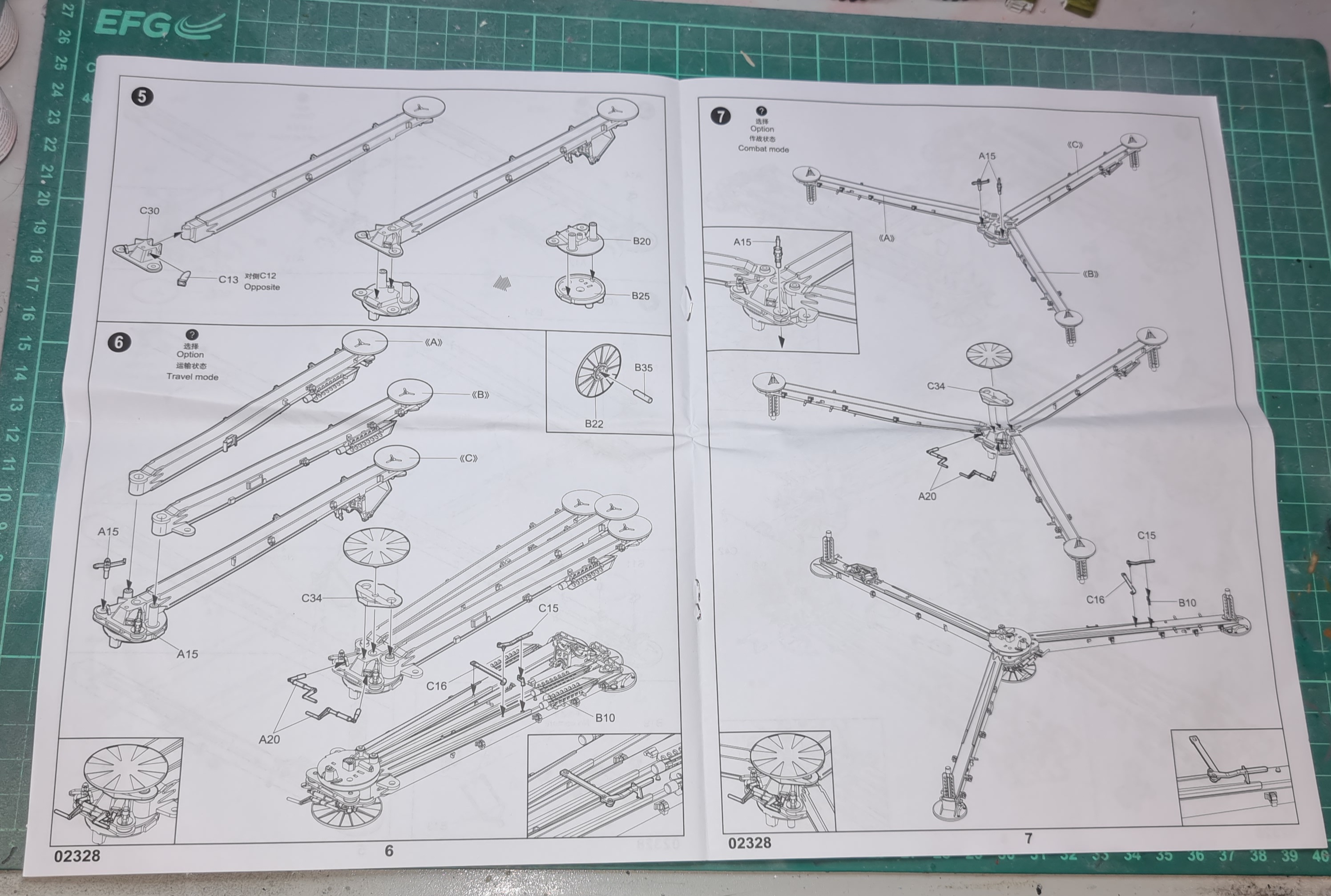
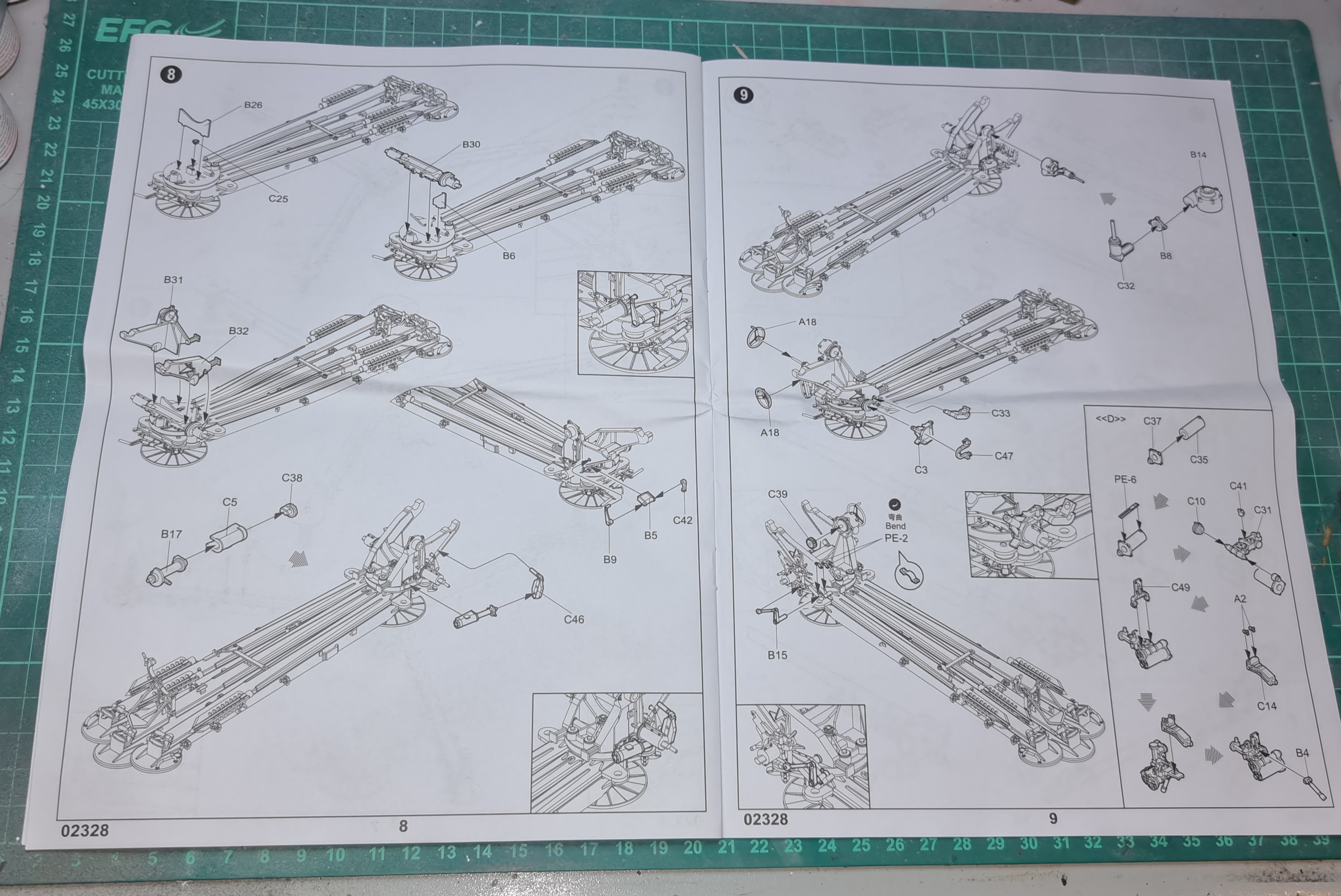
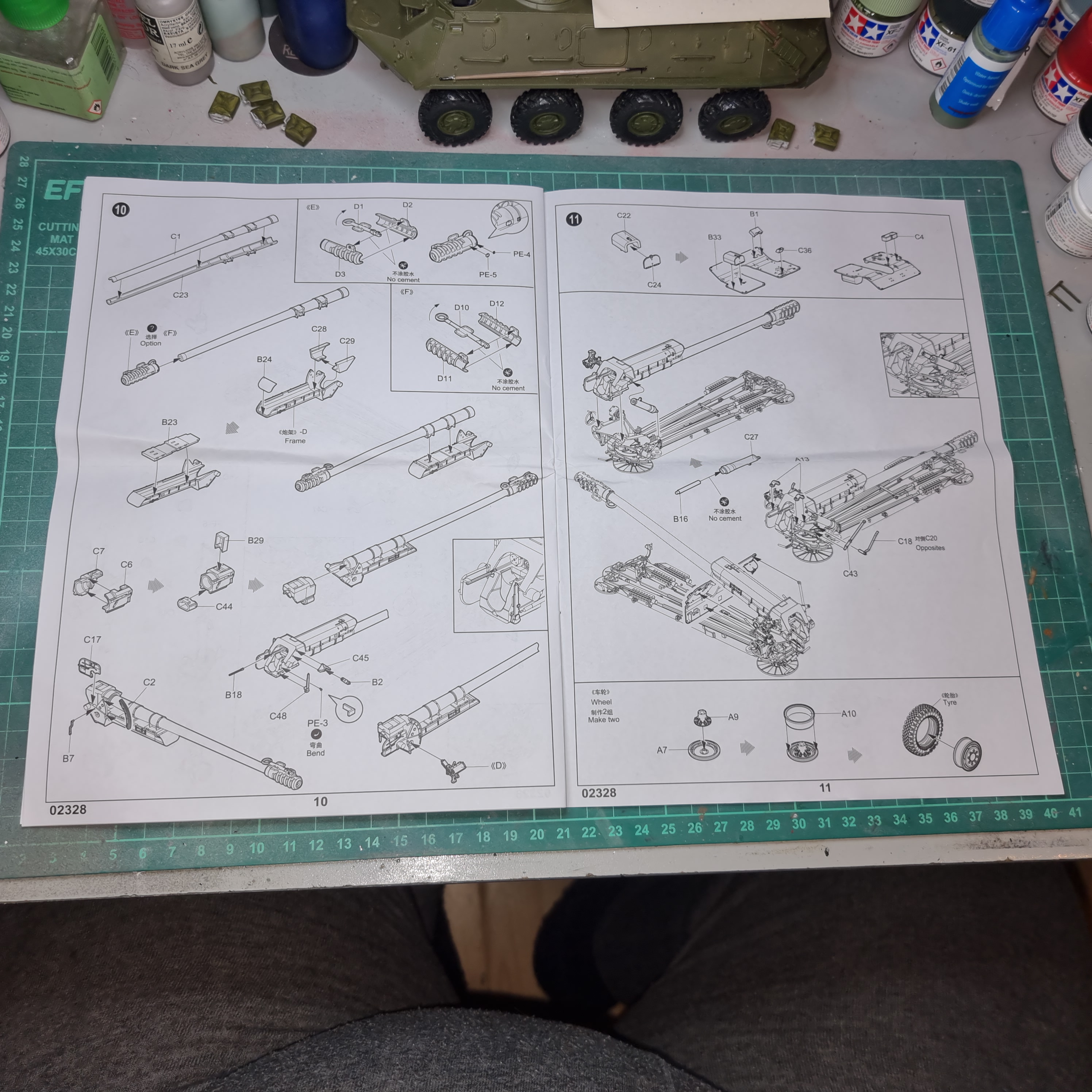
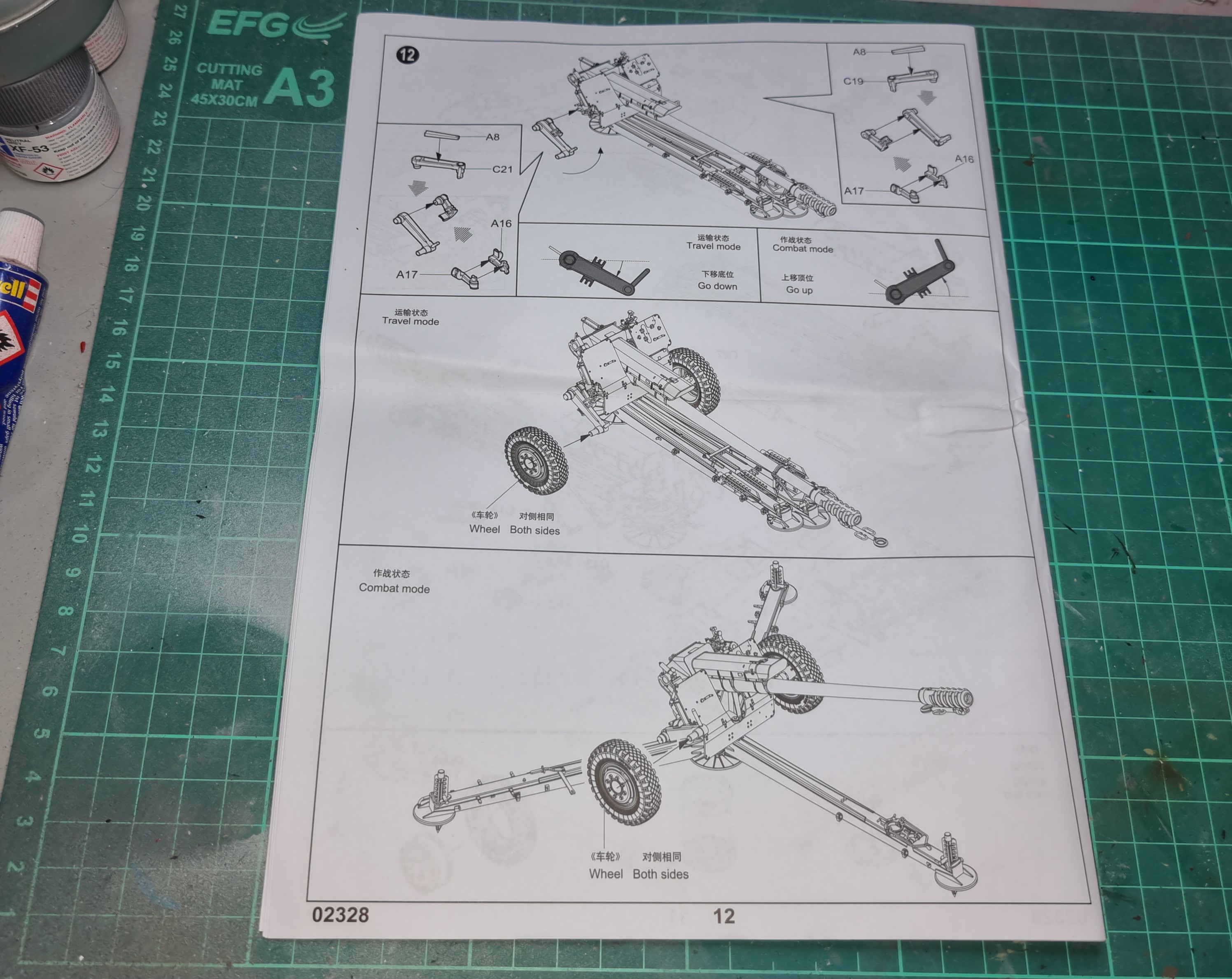
For so small part count the instruction book at first look formidable but a carefull.scan shows that its two books in one - one for transport mode, one for combat mode.
The build
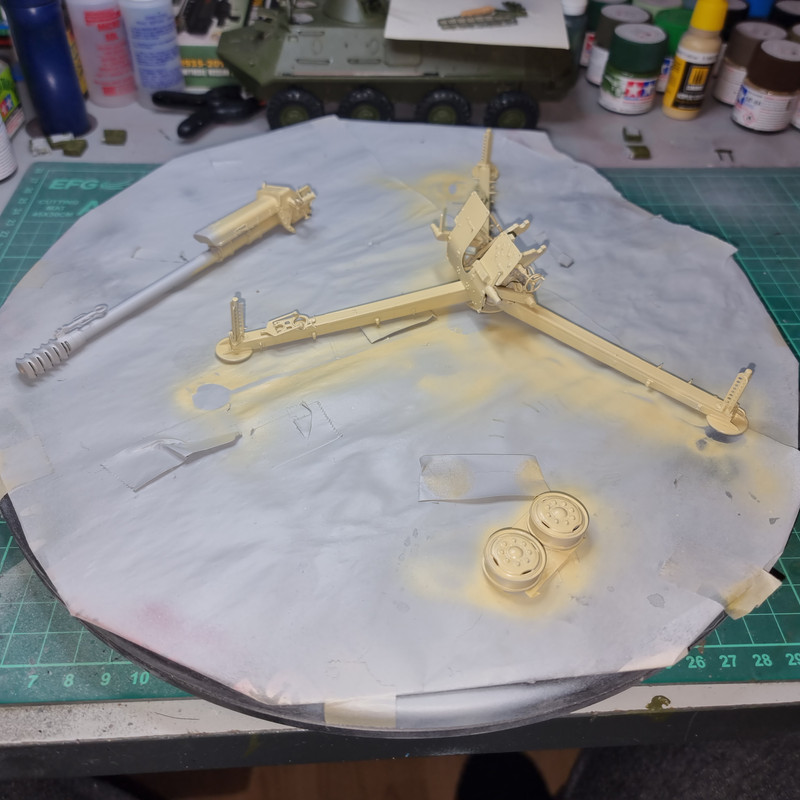
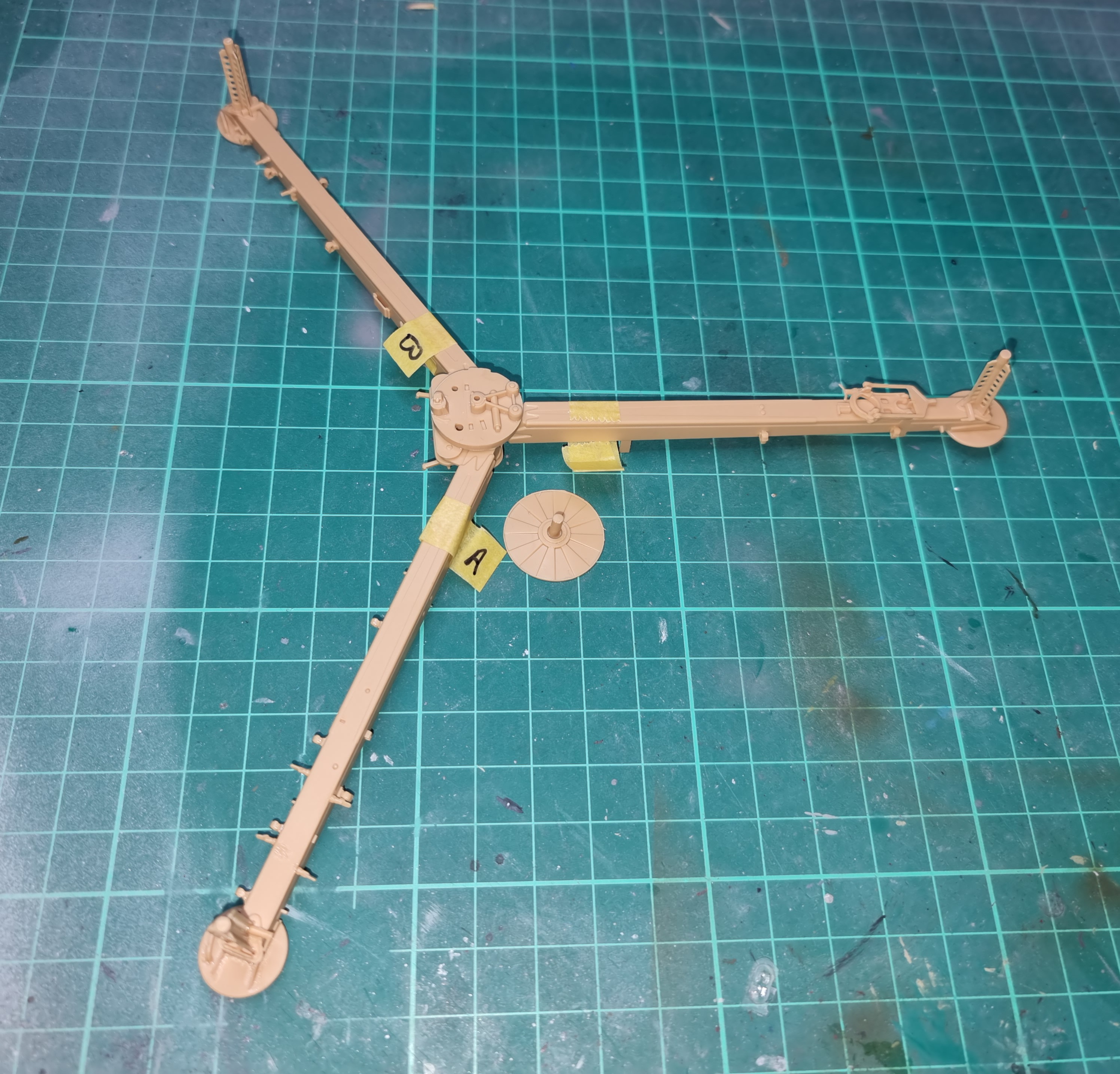
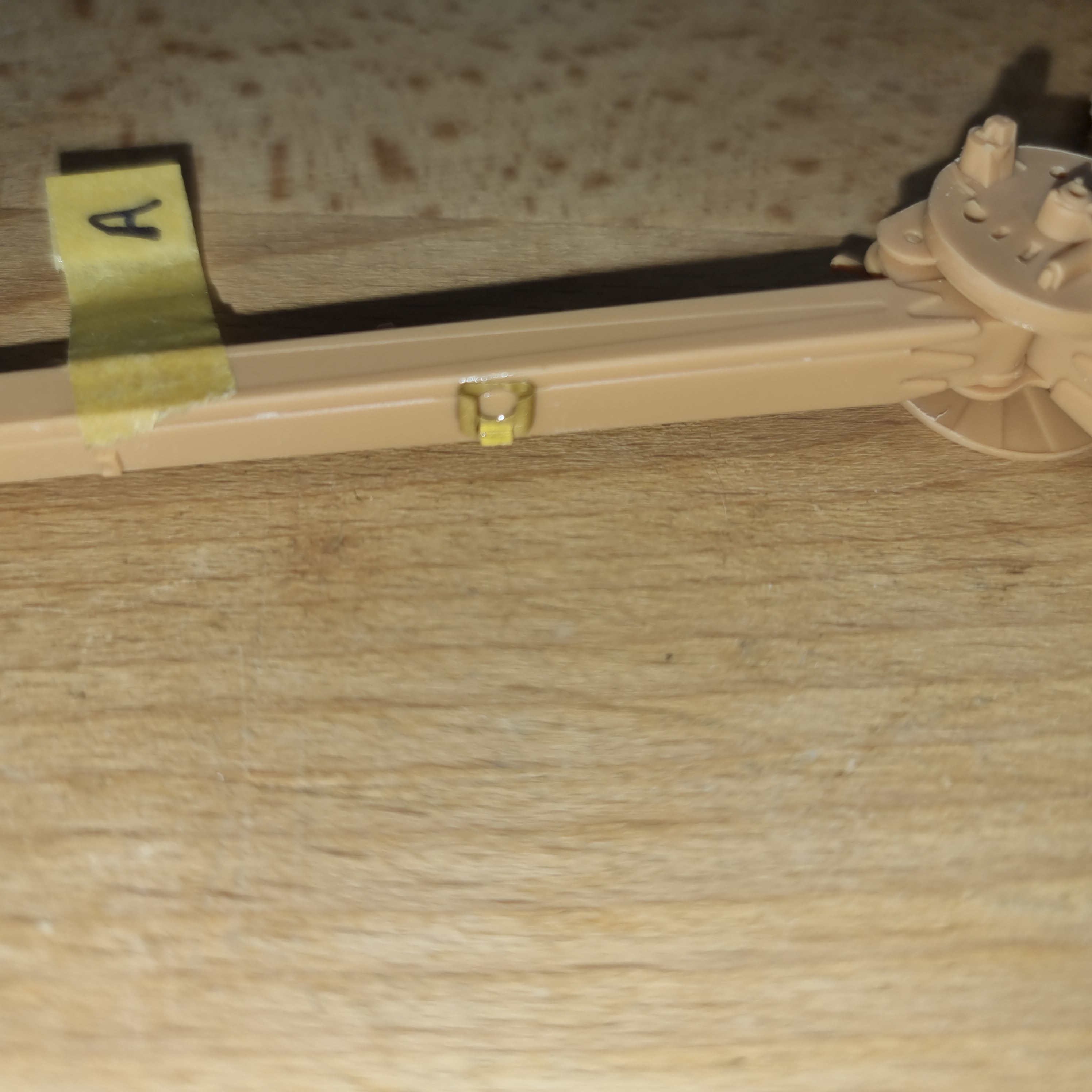
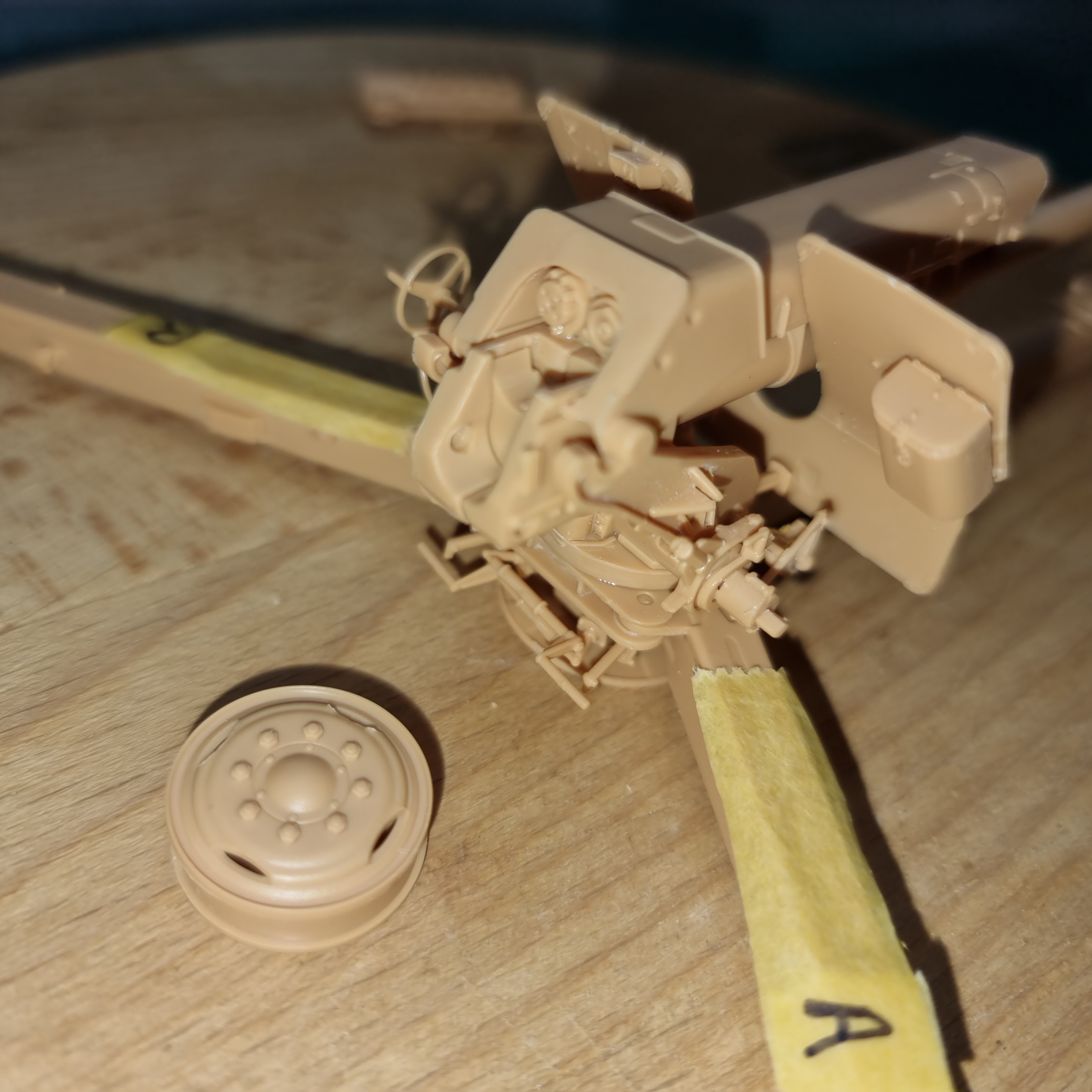
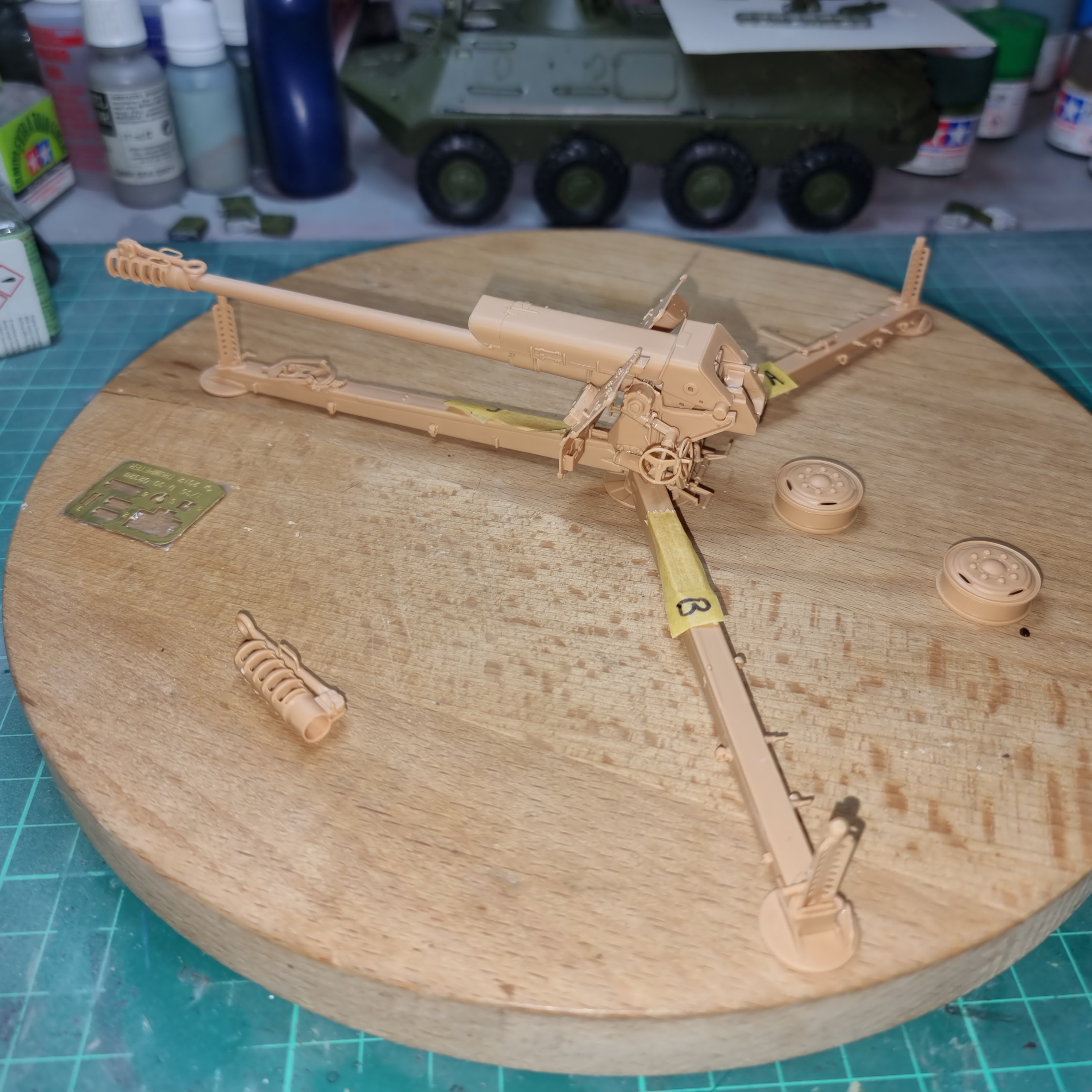
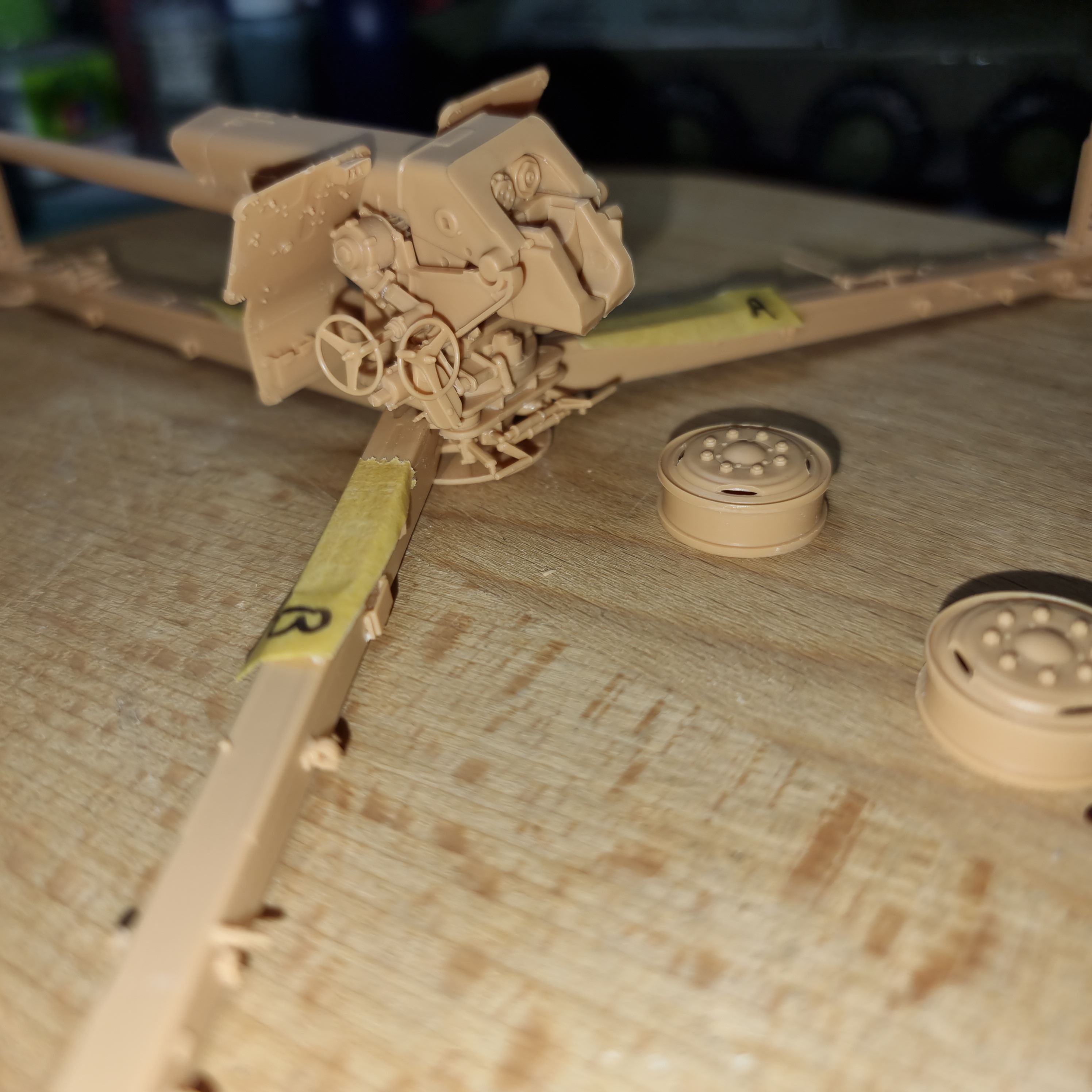
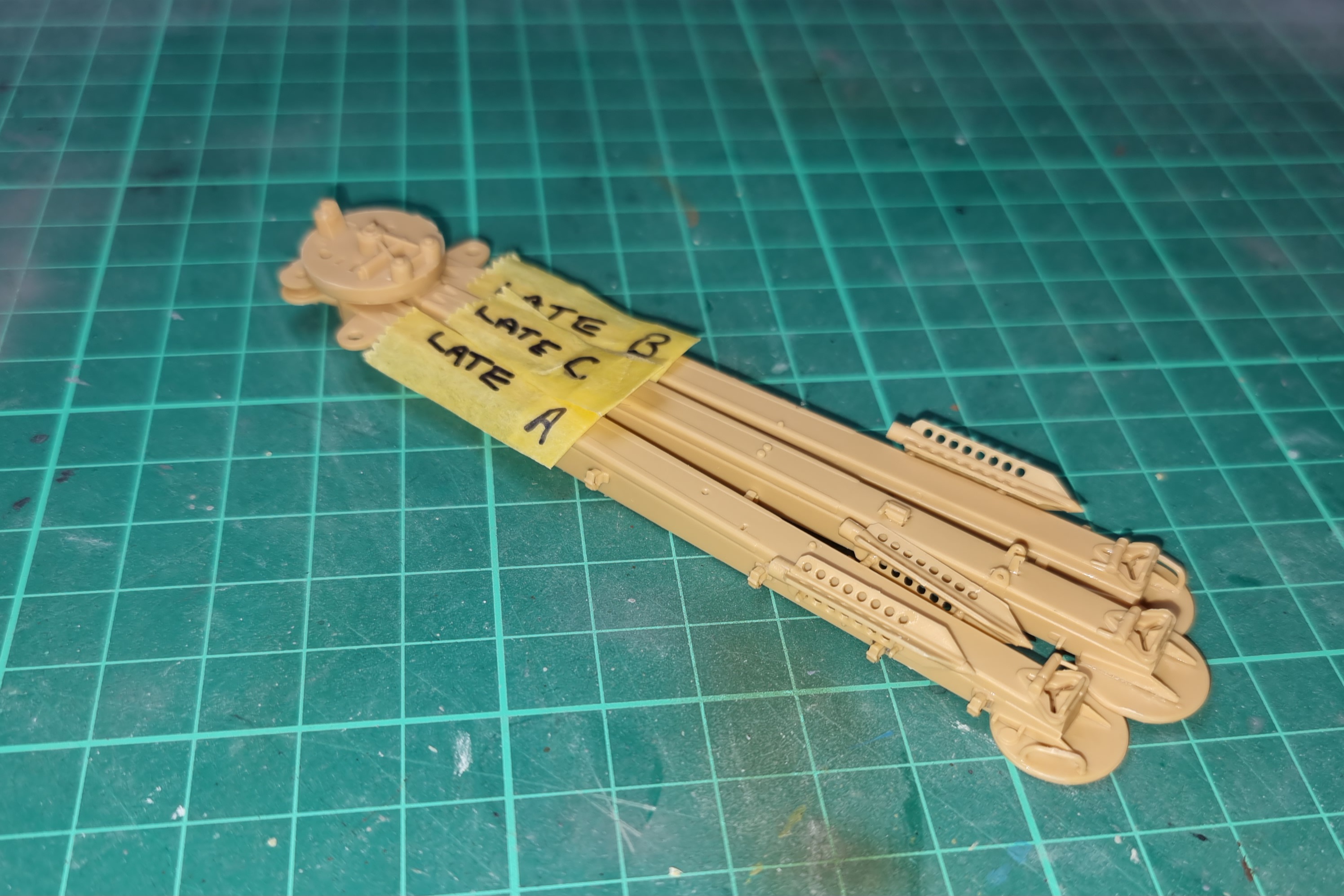
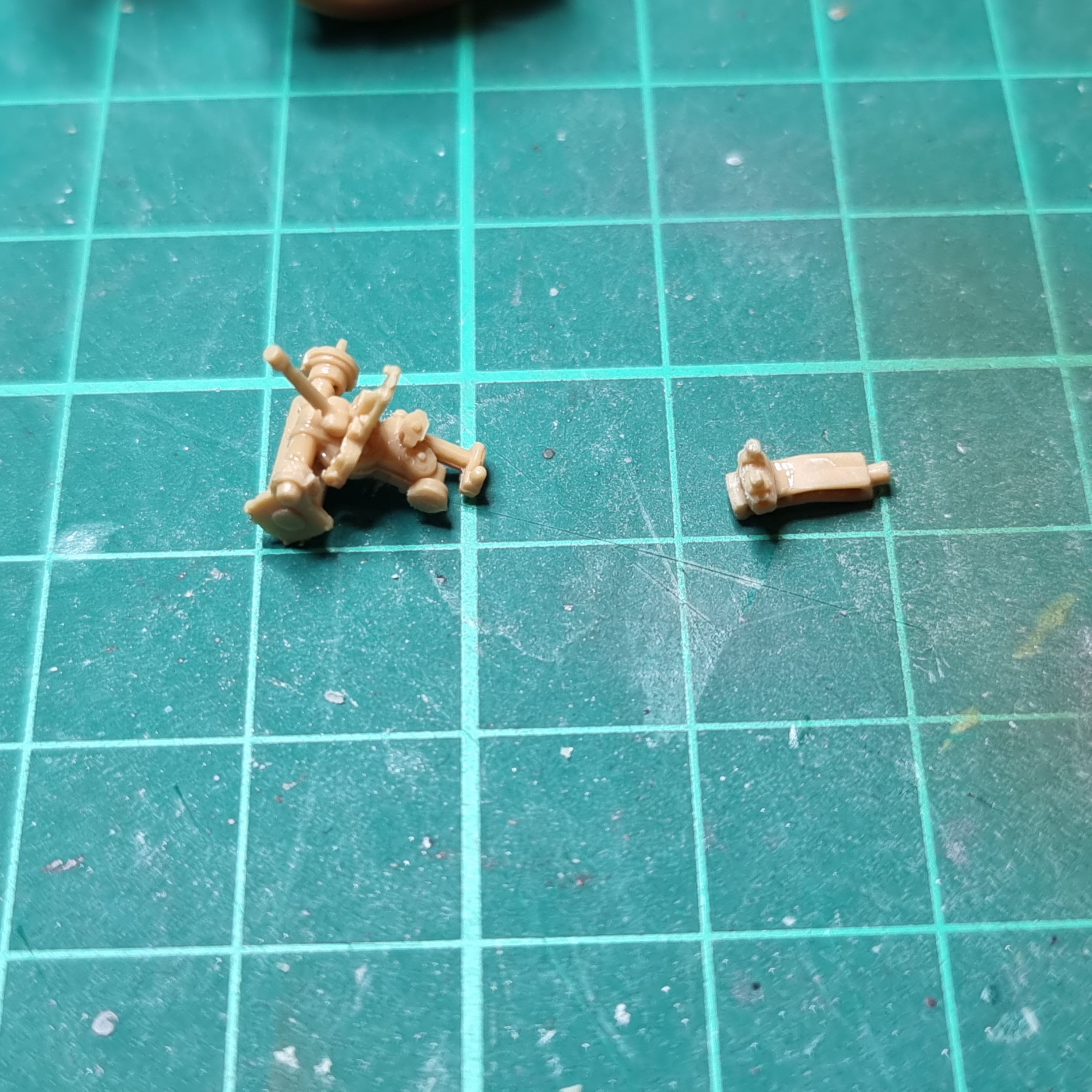
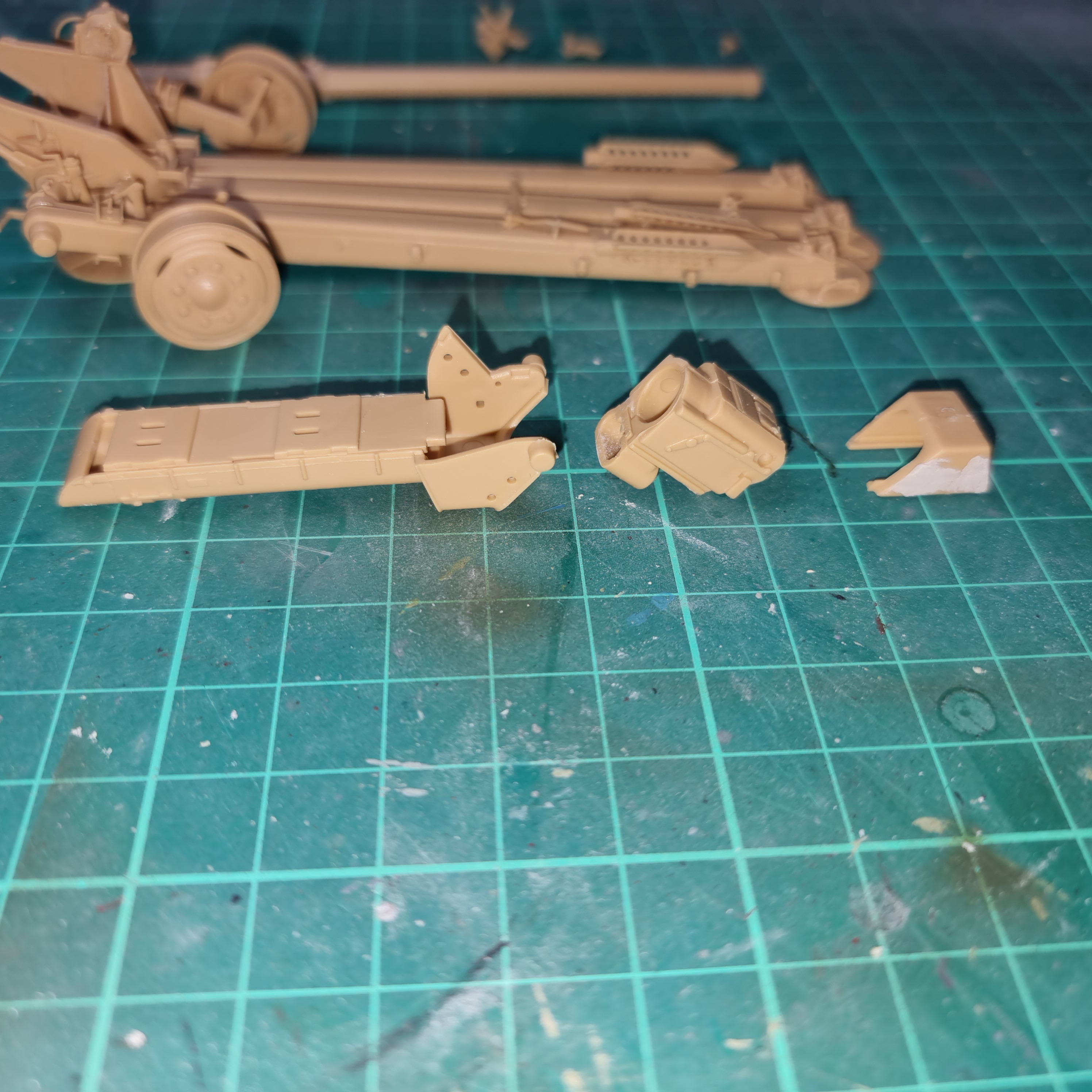
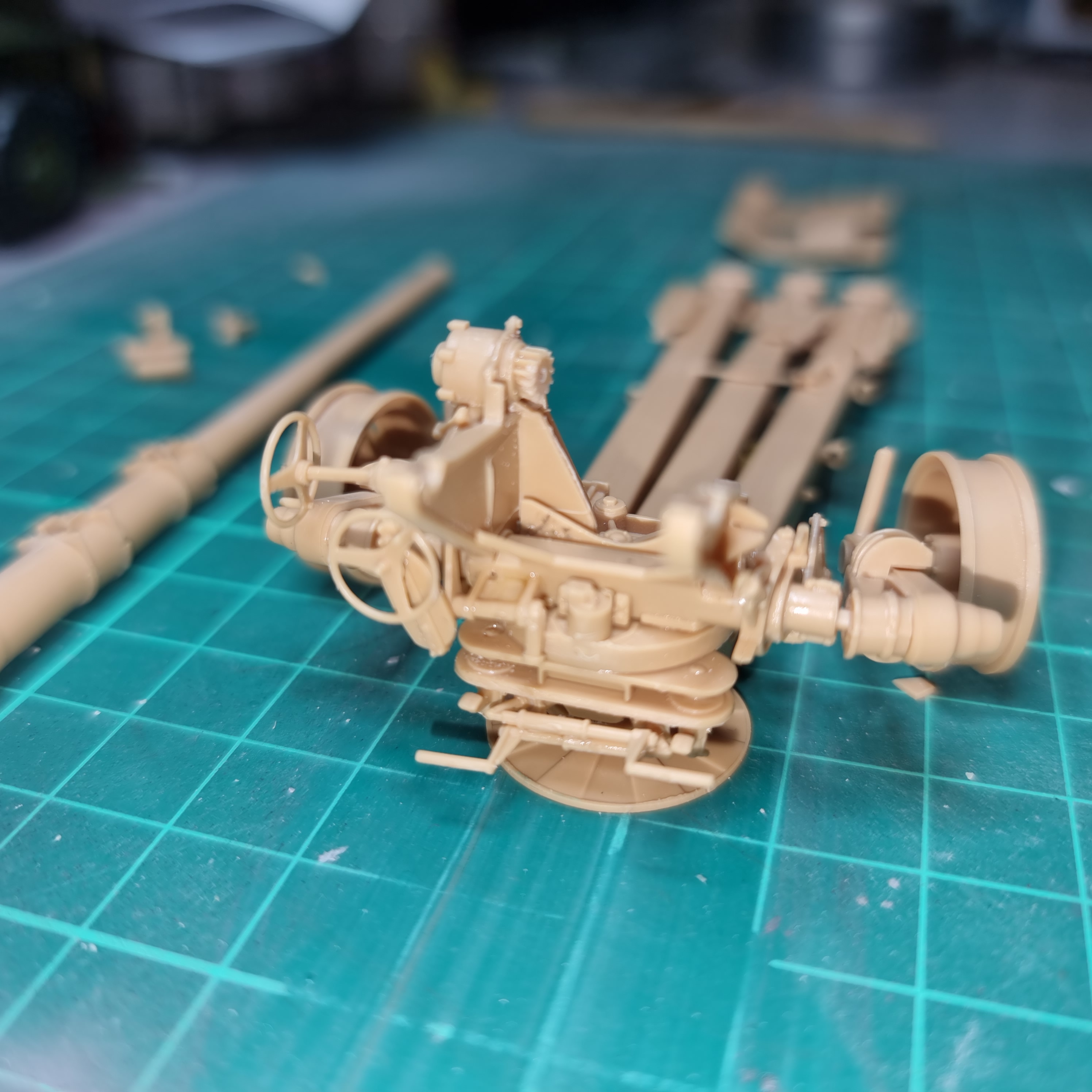
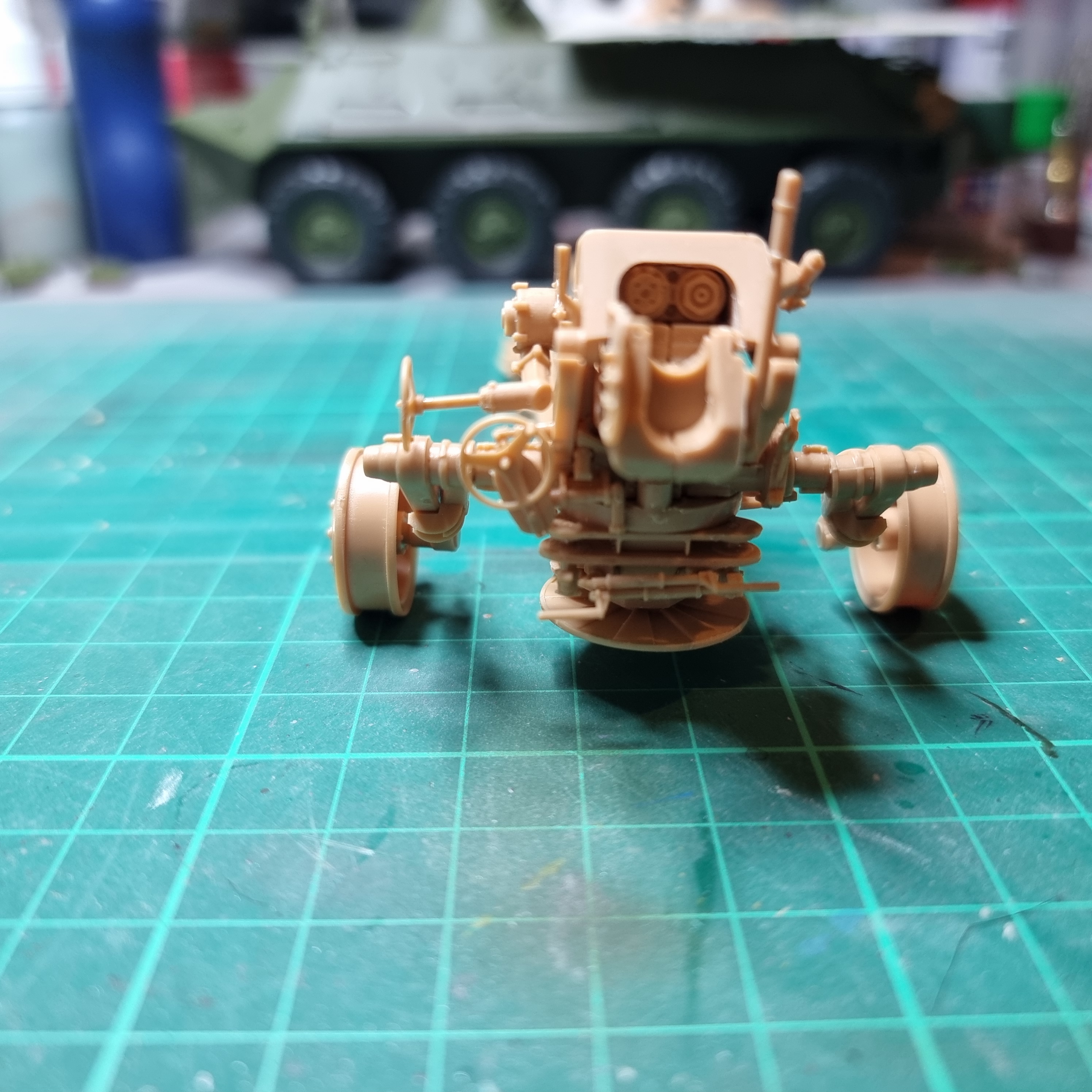
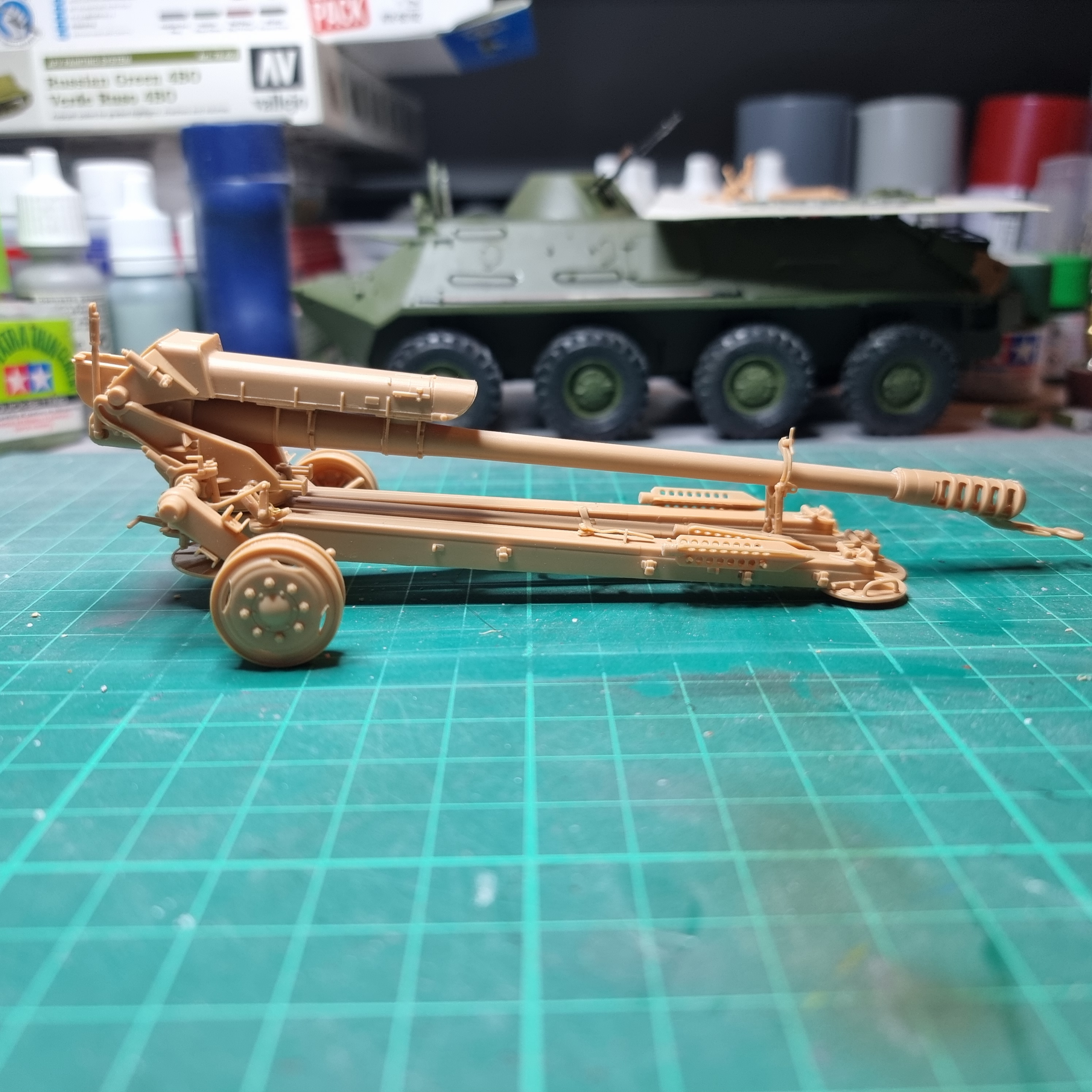
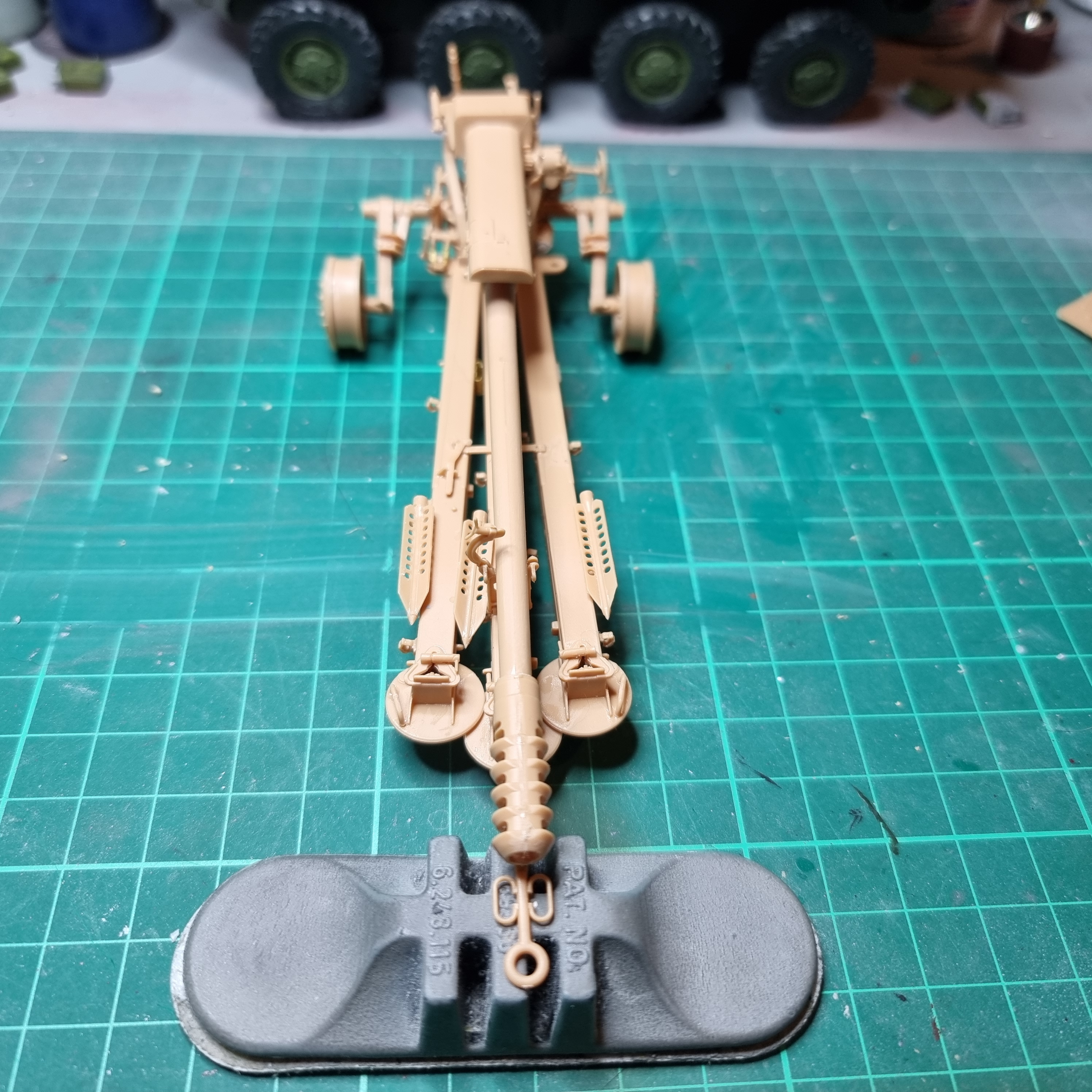
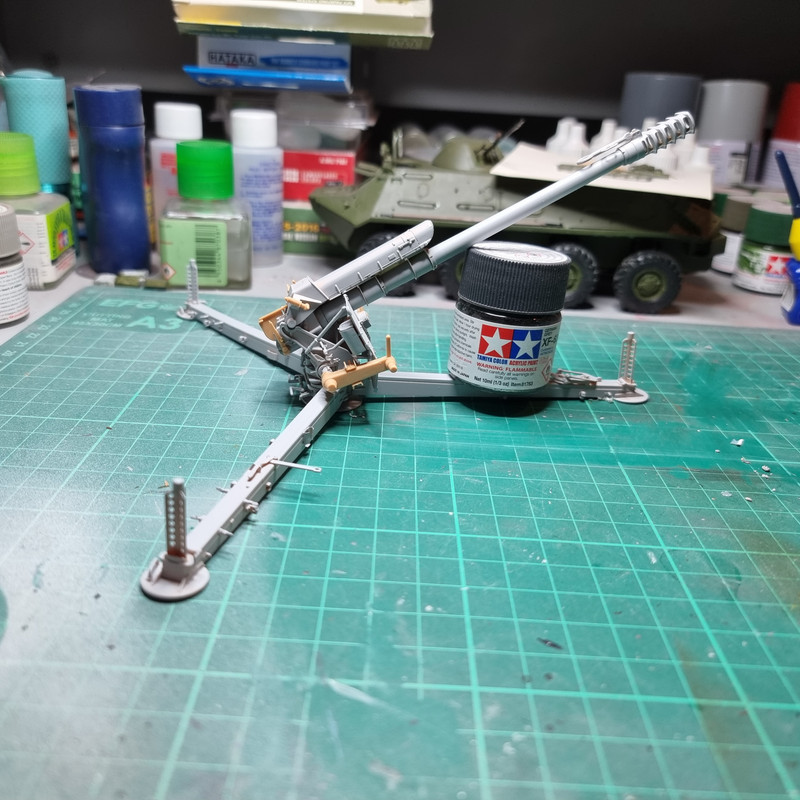
I started the build whilst waiting for the Silk coating on the Battle to dry. First steps of the buil were the legs that support the gun when deployed. Each leg is built seperately and assigned a letter - A, B & C. Marking a good start leg A had one of the PE pieces that needed the ends folded around a round object so I was jolding the piece in a pair of pliars whilst bending the end over a drill.. Got one end done, had just turned it over - then I dropped the piece.... Scoured floor but there is no sign of it. Floor is laminate and brass usually sticks out like a sore thumb so where the hell its gone is a mystery.
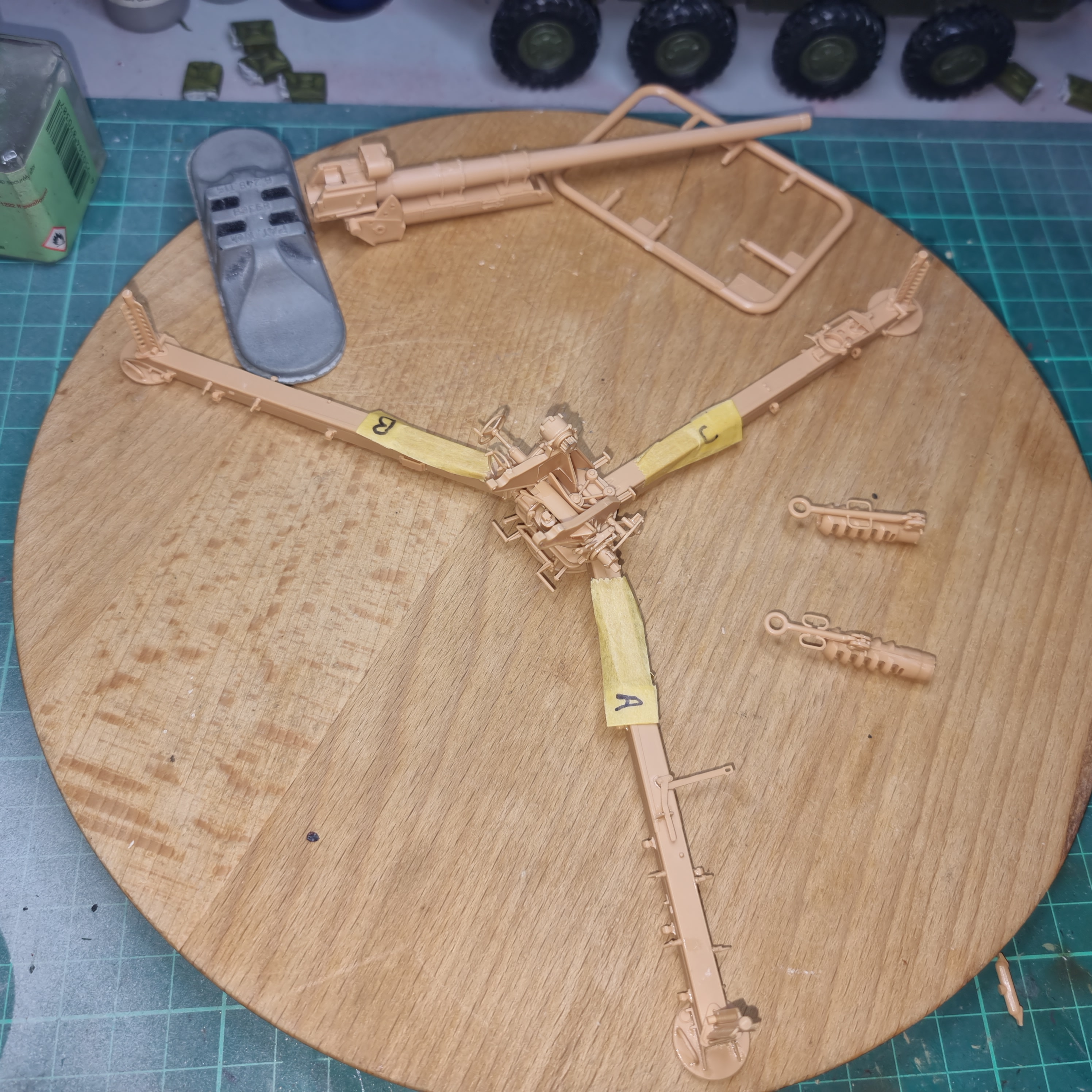
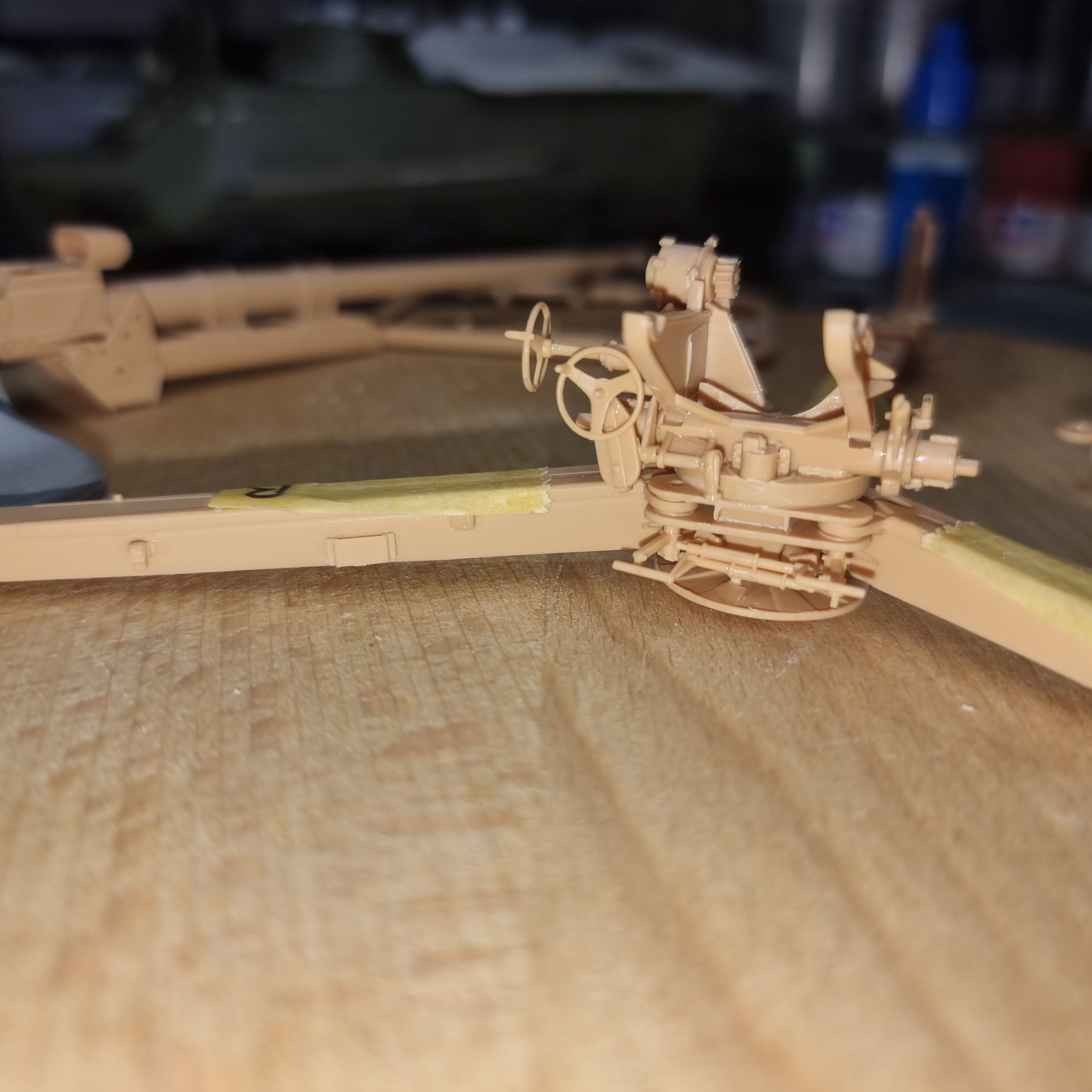
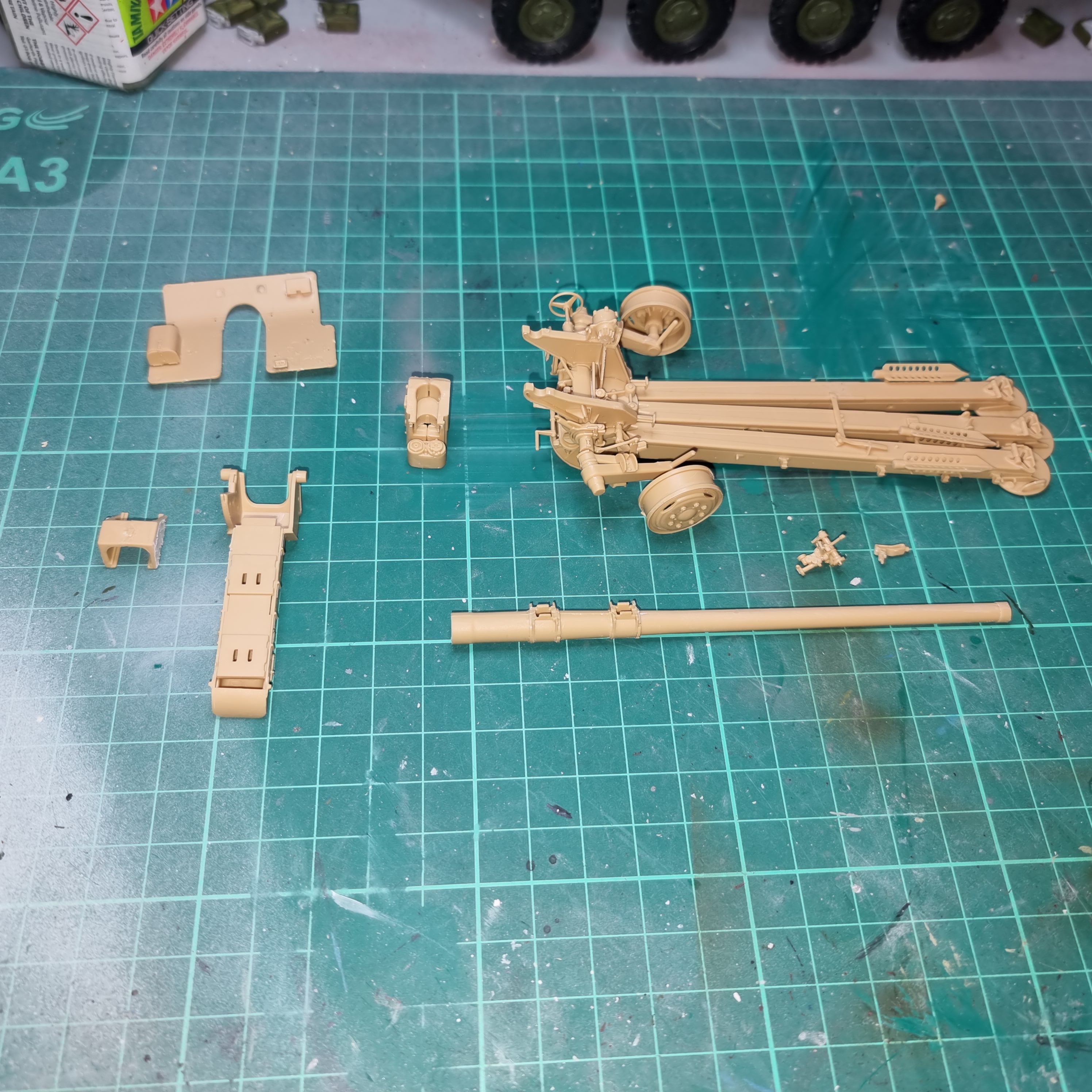
Anyways the day ended with the three legs assembled as seperate entities then all assembled into the central hub.
First up is the Soviet D30 howitzer - a potted (but still rather long) history of which reads thus:
"The 122-mm howitzer D-30 (Soviet ID is 2A18) is a Soviet howitzer that first entered service in 1960. It is a robust piece that focuses on the essential features of a towed field gun suitable for all conditions. The D-30 has a maximum range of 15.4 kilometers, or over 21 km using rocket-assisted projectile ammunition.
Distinctive features of the D-30 include its low mobile mounting and above-barrel recoil system. The three-legged mobile mount is unusual for field artillery, with stabilizers that are clamped together for towing and deployed when in action. A large tow linkage is fixed to the muzzle; in transport the barrel serves as a trail.
Compared to the M-30, the new howitzer had a significantly longer 35 calibre gun barrel, just short of being a gun-howitzer by Soviet definition. Like other guns of the period, it had a high efficiency muzzle brake; this improved muzzle velocity by 175 m/s to a total of 650 m/s for HE, and raised maximum range by 3,500 m beyond the similar M-30. Maximum range was 2 km better than the 76 mm M1942 at 15.3 km. Weight increased by 650 kg over the M-30, to 3,150 kg; the D-30 is over twice the weight of the 76mm M1942. Accuracy improved, with mean error at about 10 km dropping from 35 m with the M-30 to just 21 m.
Effective stabilisation length is a fundamental aspect of a gun mount, and legs 120° apart need to be longer than those with a smaller angle. The D-30's design minimises this problem in several ways. Trunnions are close to the ground, as a result of placing the recoil system and cradle above the barrel. The trunnions are also at the very rear of the breech; this maximises the recoil space when firing at higher elevation angles. Their rearward position also pushes the recoiling element forward on the mount, maximizing relative rearward span of the stabilizers and so stability during recoil. Additionally there is a very efficient muzzle brake, which absorbs about half the recoil. There is no mechanism to reduce recoil length as the angle of elevation increases.
Some of the design decisions have a price. The muzzle brake produces about twice the overpressure in the area around the gun that is acceptable to Western armies, and is the reason it is often seen being fired with a long lanyard, which reduces rate of fire. Furthermore, the maximum elevation angle is restricted to 18° (early versions) or 22° (later versions) when the breech is over a trail leg. This is enforced by a mechanical cam that prevents the piece firing for about 60% of the total top traverse, and limits range to about 12 km, with full maximum range only possible in the central arc of about 48° between each pair of legs. The extreme rearward location of the trunnions means the elevating mass is unbalanced, requiring a strong balancing mechanism to enable manual elevation. To do this, the D-30 uses compression balancing gears.
A central jack is powered by hand-operated hydraulics. This jack is lowered while the wheels are raised to permit two of the stabiliser legs to be swung 120° rearwards. The mounting is then lowered and the ends of the legs spiked to the ground. This mounting provides for quick traversing to fire in any direction.
The pair of large tires are suspended on a single trailing arm; maximum towing speed is 60 km/h on the road. As was normal in Soviet designs, the tyres were filled with foam. Initially, the D-30 had no brakes and no seat for the layer—non-essential luxuries.
A sliding block breech was adopted instead of the M-30's pre-1914 screw pattern, giving a slight increase in the rate of fire. It is a semi-automatic vertical sliding block breech, with a tied jaw; the block moves down to open and opens automatically ejecting the empty cartridge case as the recuperator forces the gun tube back into battery after a round is fired. The design is closely related to those of breeches on other Soviet post–World War II guns and howitzers.
The non-reciprocating sights are standard Soviet pattern, designed for one-man laying. Included are a direct fire anti-tank telescope, a panoramic periscopic indirect-fire sight (dial sight) in a reciprocating mounting, an angle of sight scale, and a range drum for each charge engraved with the range (distance) scale. The elevation leveling bubble is mounted on the dial sight mount. The range drum enables the standard Soviet technique of semi-direct fire when the piece is laid visually on the target and the range set on the range drum.
Soviet 122 mm howitzers used different ammunition to 122 mm guns, although there was some compatibility. In the case of ammunition for the D-30, the standard 122 mm howitzer shell weight of 21.8 kg was retained, with a metal cartridge case holding variable propelling charges. Cartridge and shell are loaded separately; this means that the shells have to be hand-rammed by a man to the right of the breech with a ramming rod. The D-30 could fire the older M-30 ammunition; however, new shells were also introduced, eventually including a rocket-assisted projectile with a range of 21.9 km. The M-30's range of propelling charges, comprising base and eight increments, was replaced by a new set comprising base and four increments; single base propellant was retained. A more effective High Explosive (HE) shell was developed, as well as smoke, illumination and chemical filled projectiles.
In keeping with Soviet doctrine, the anti-tank role is important; there is a HEAT shell capable of penetrating 460 mm of steel armour plate.
The maximum rate of fire of the D-30 is 6–8 rounds per minute, and about 75 rounds per hour. There is disagreement as to whether this maximum rate of fire is achievable for indirect fire. Based on reloading speeds of similar guns using separate charges, solo re-laying, and given a stable emplacement, semi-automatic breech and no long lanyard, (examples are the 25-pdr. and 105mm L118), and assuming concurrent lay adjustment during reloads, then it probably is when in the hands of a competent detachment. However, 5-6 rounds per minute may be more realistic with a poorly trained gun crew.
The D-30 is noted for simplicity of maintenance by its users; reputedly there are no special tools, all jobs can be done with a wrench and large hammer. "
Now the kit.
This is one of Trumpeters offerings and represents the early version of the D30. It gives the option of building the gun in either transport or combat configuration - I will be hoing for the latter one. The paint schemes are either the standard 4BO Green or tthe sand colour used by the 40th Army in Afghanistan.
The box contains 5 sprues - 2 x A, 1x B, 1 x C and 1 x D, a pack containing the trail legs, a pack of tyres, , a small pack of PE, decals, instructions and painting guide.
For so small part count the instruction book at first look formidable but a carefull.scan shows that its two books in one - one for transport mode, one for combat mode.
The build
I started the build whilst waiting for the Silk coating on the Battle to dry. First steps of the buil were the legs that support the gun when deployed. Each leg is built seperately and assigned a letter - A, B & C. Marking a good start leg A had one of the PE pieces that needed the ends folded around a round object so I was jolding the piece in a pair of pliars whilst bending the end over a drill.. Got one end done, had just turned it over - then I dropped the piece.... Scoured floor but there is no sign of it. Floor is laminate and brass usually sticks out like a sore thumb so where the hell its gone is a mystery.
Anyways the day ended with the three legs assembled as seperate entities then all assembled into the central hub.


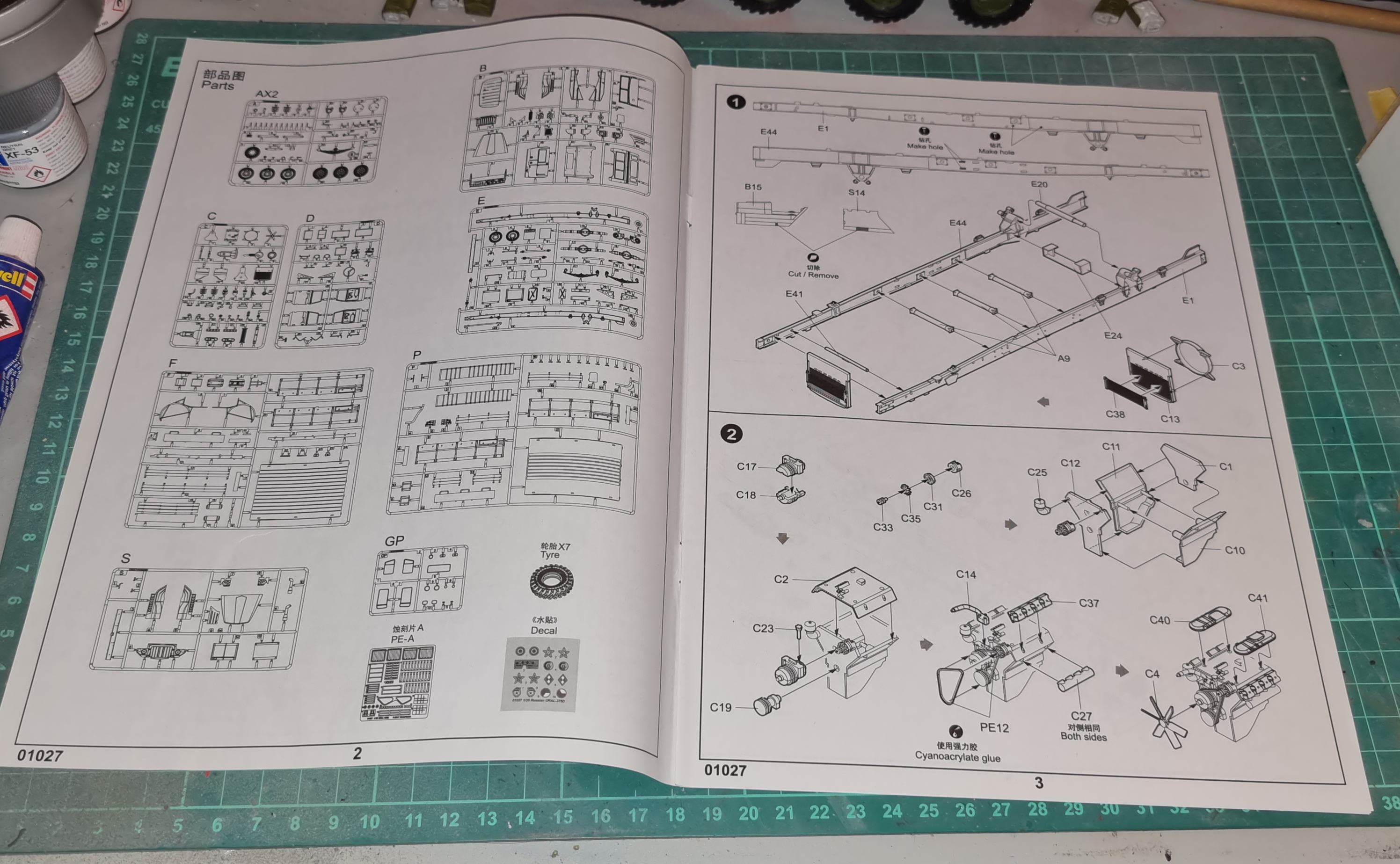
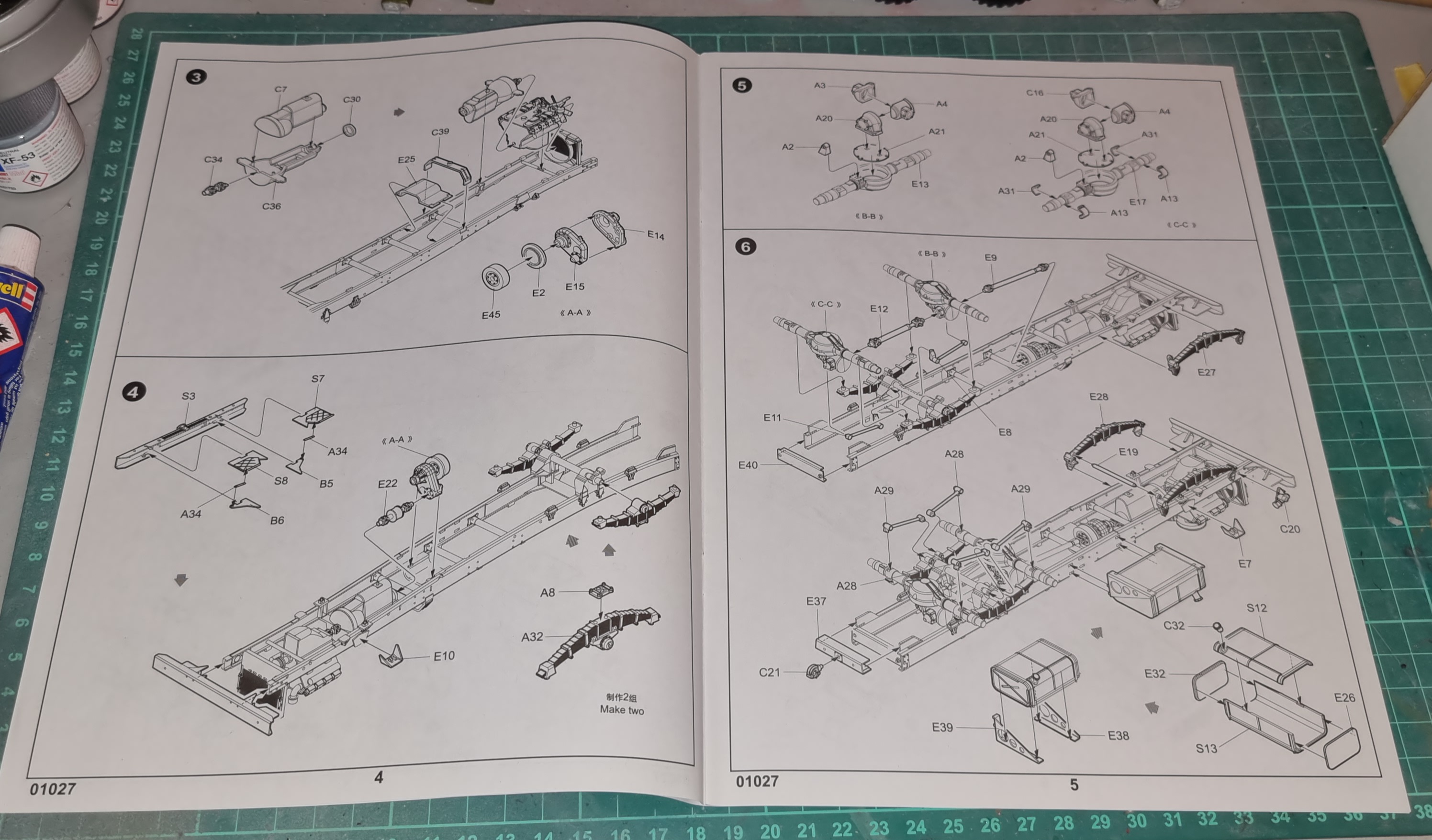
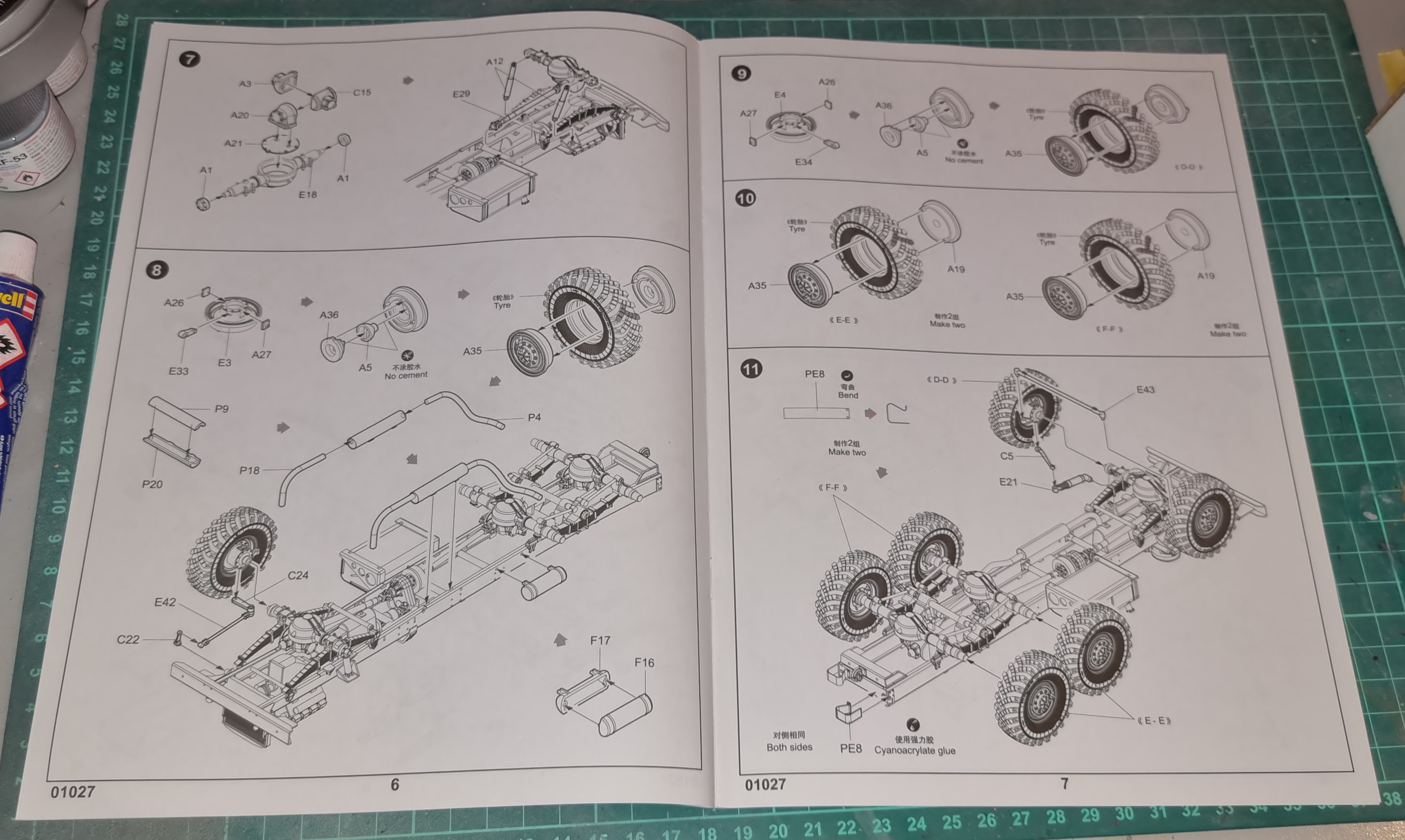
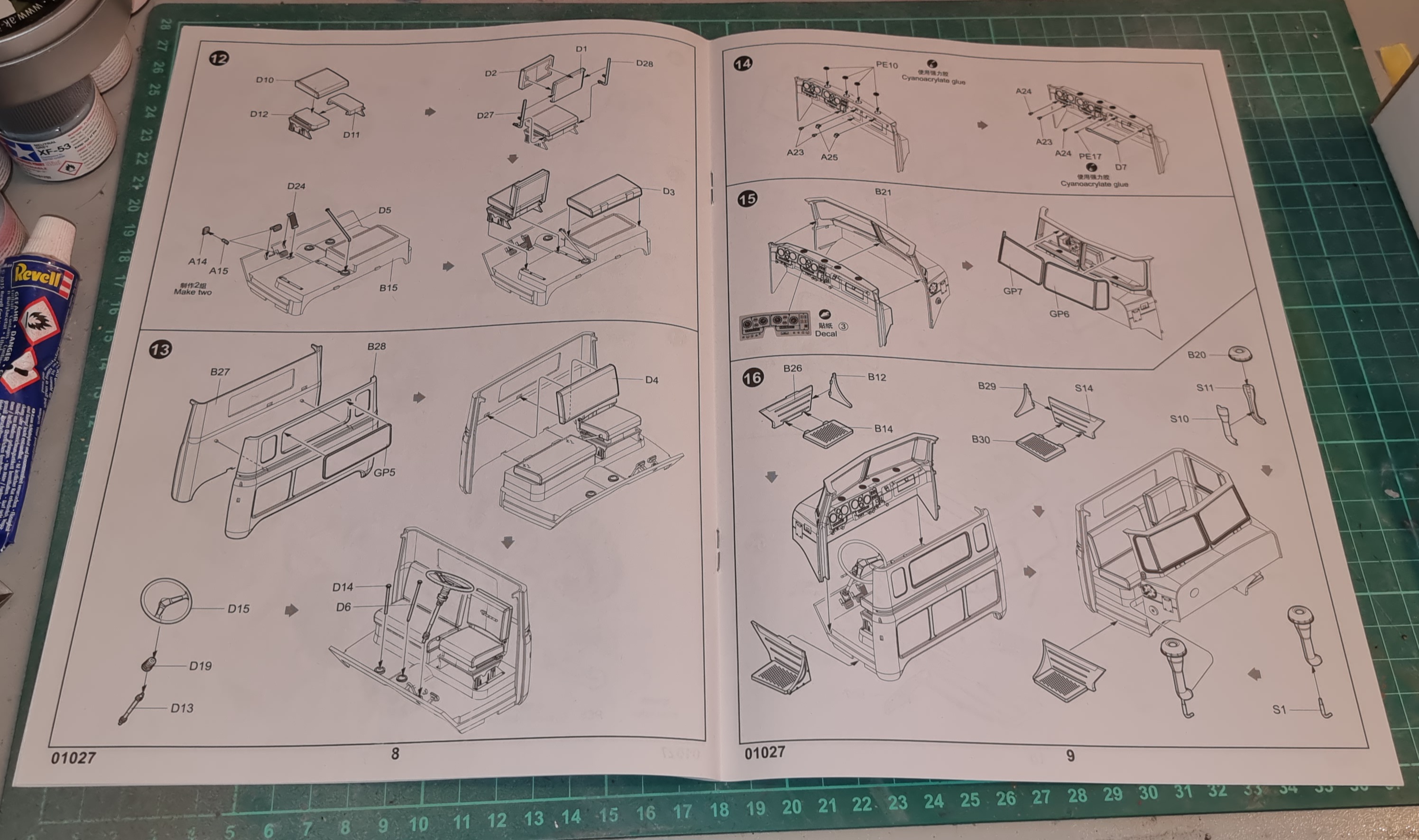
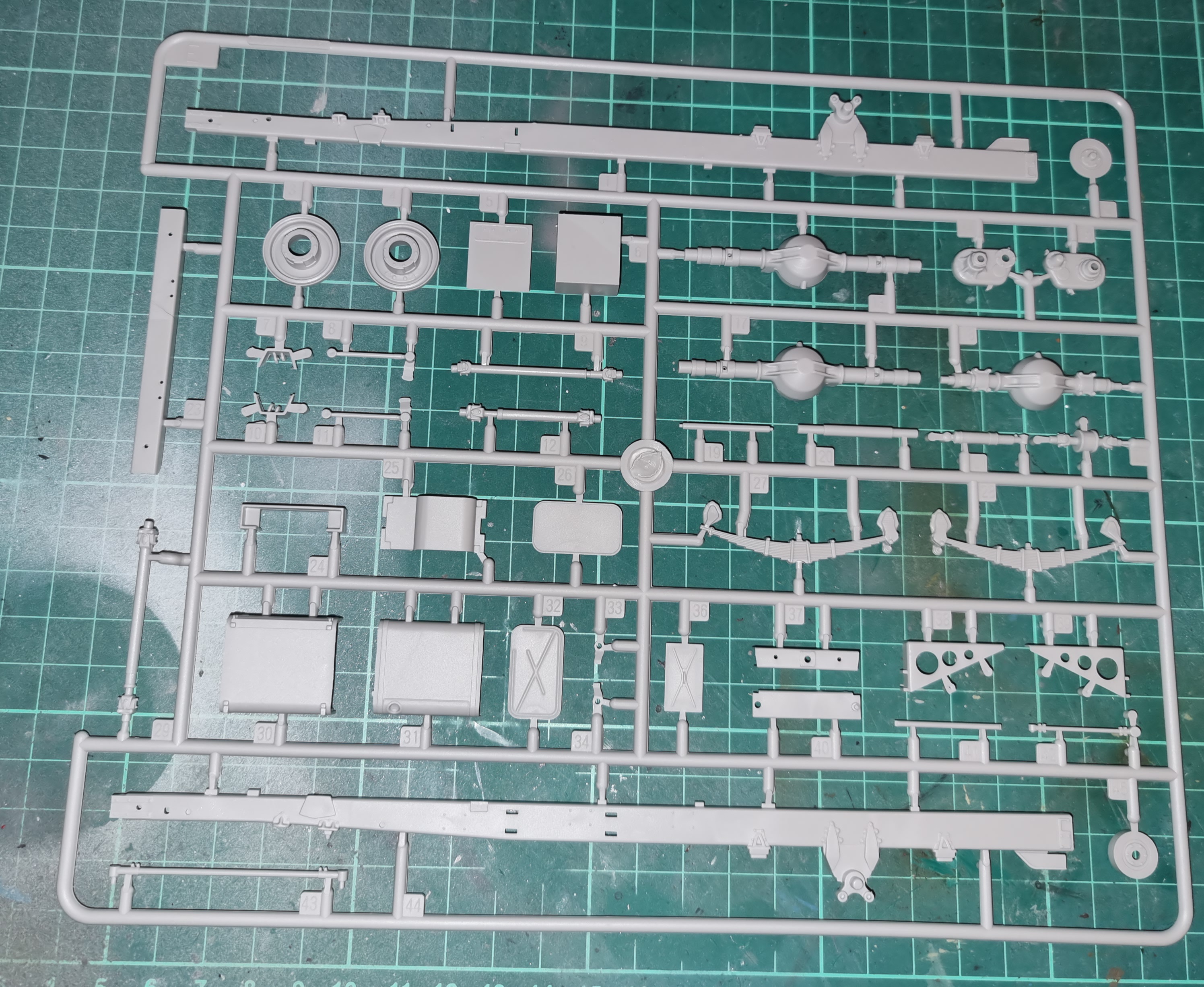
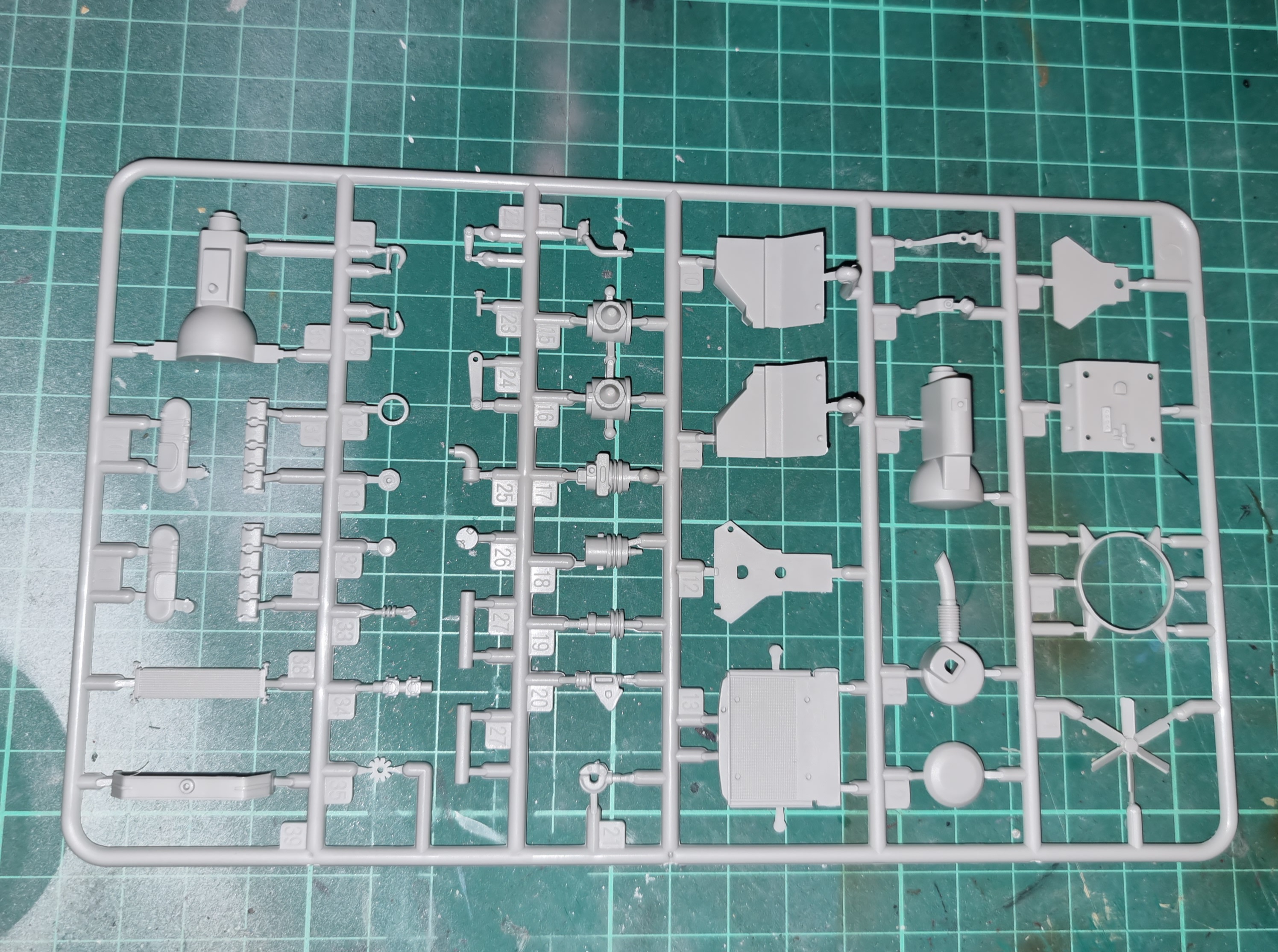
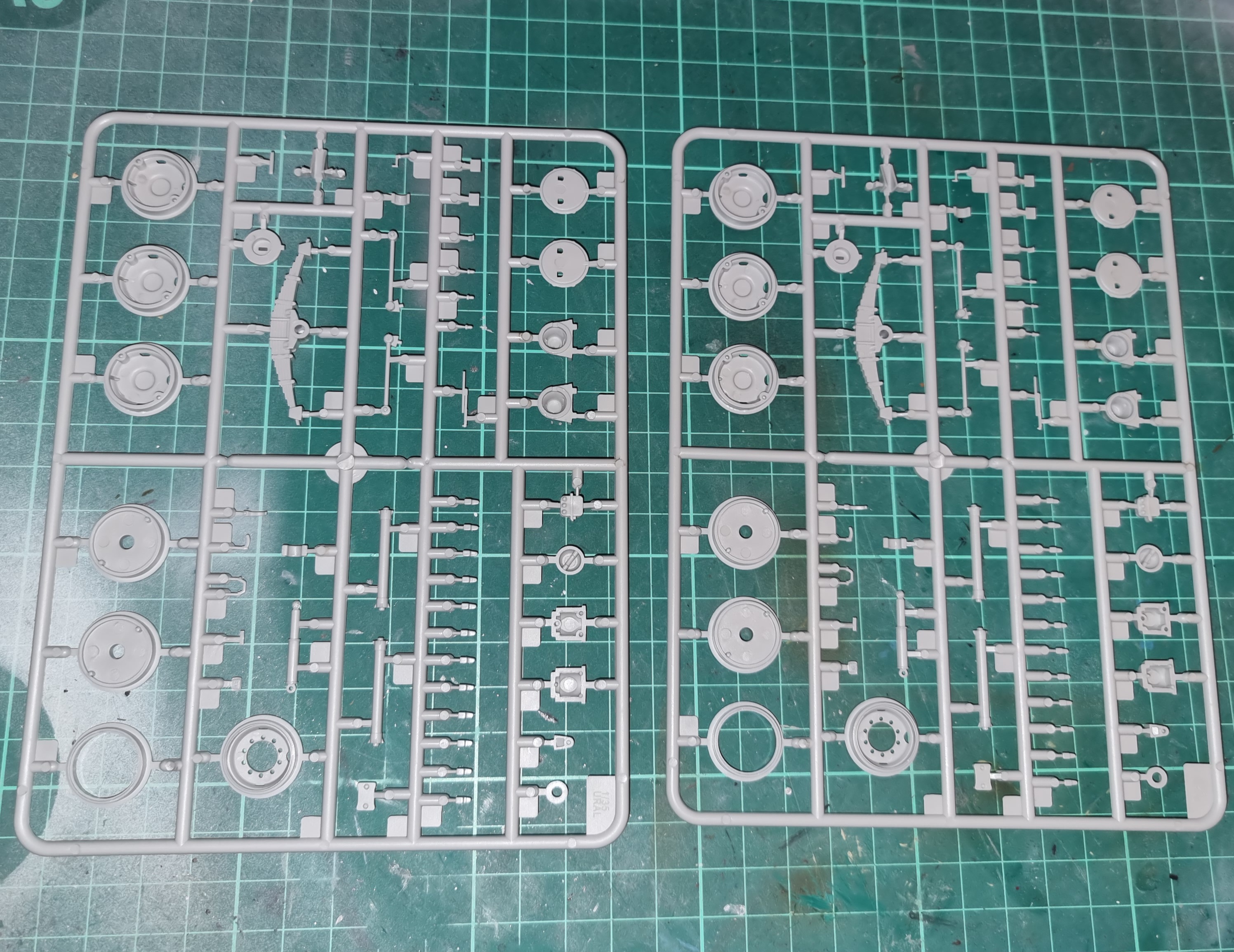
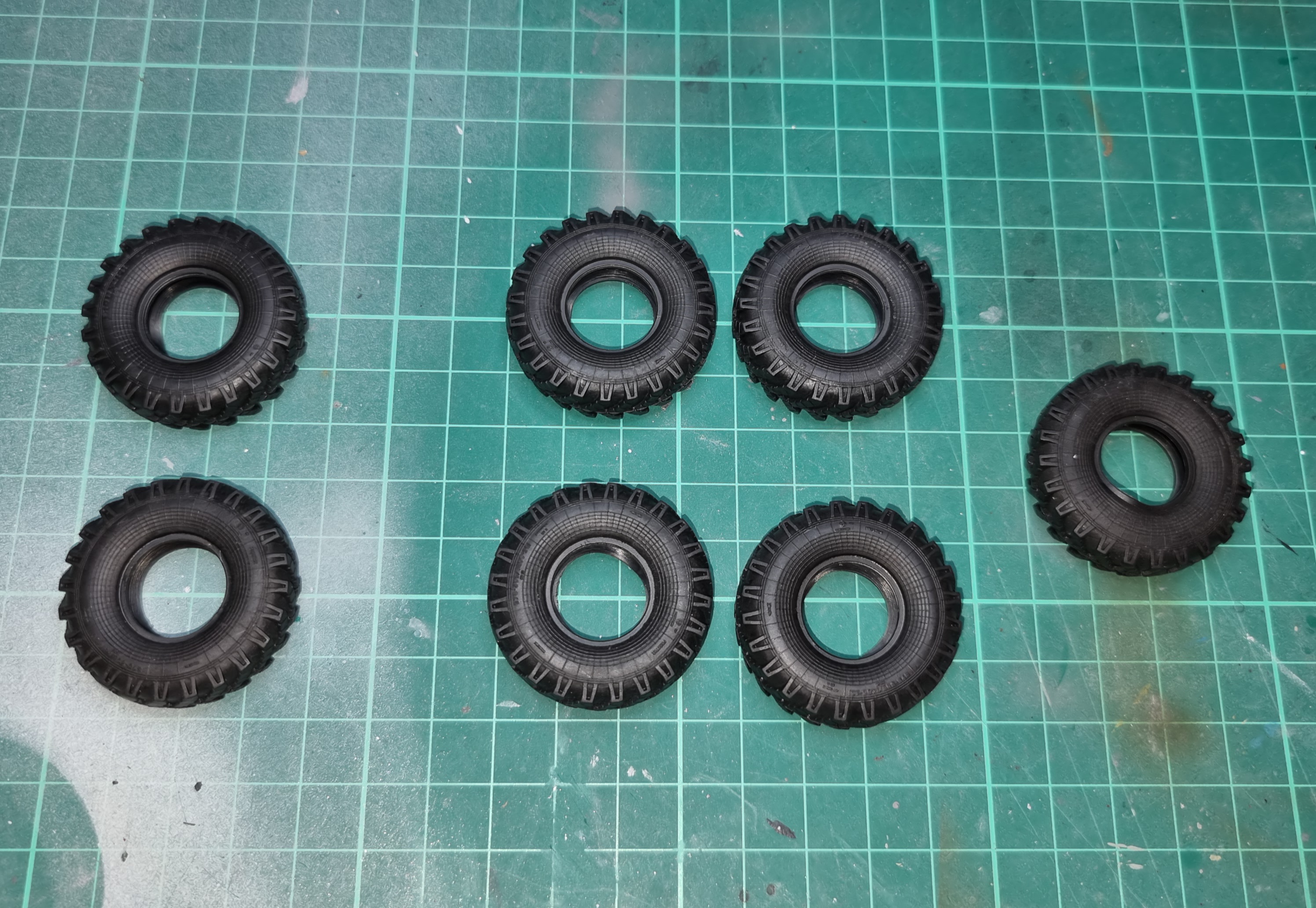
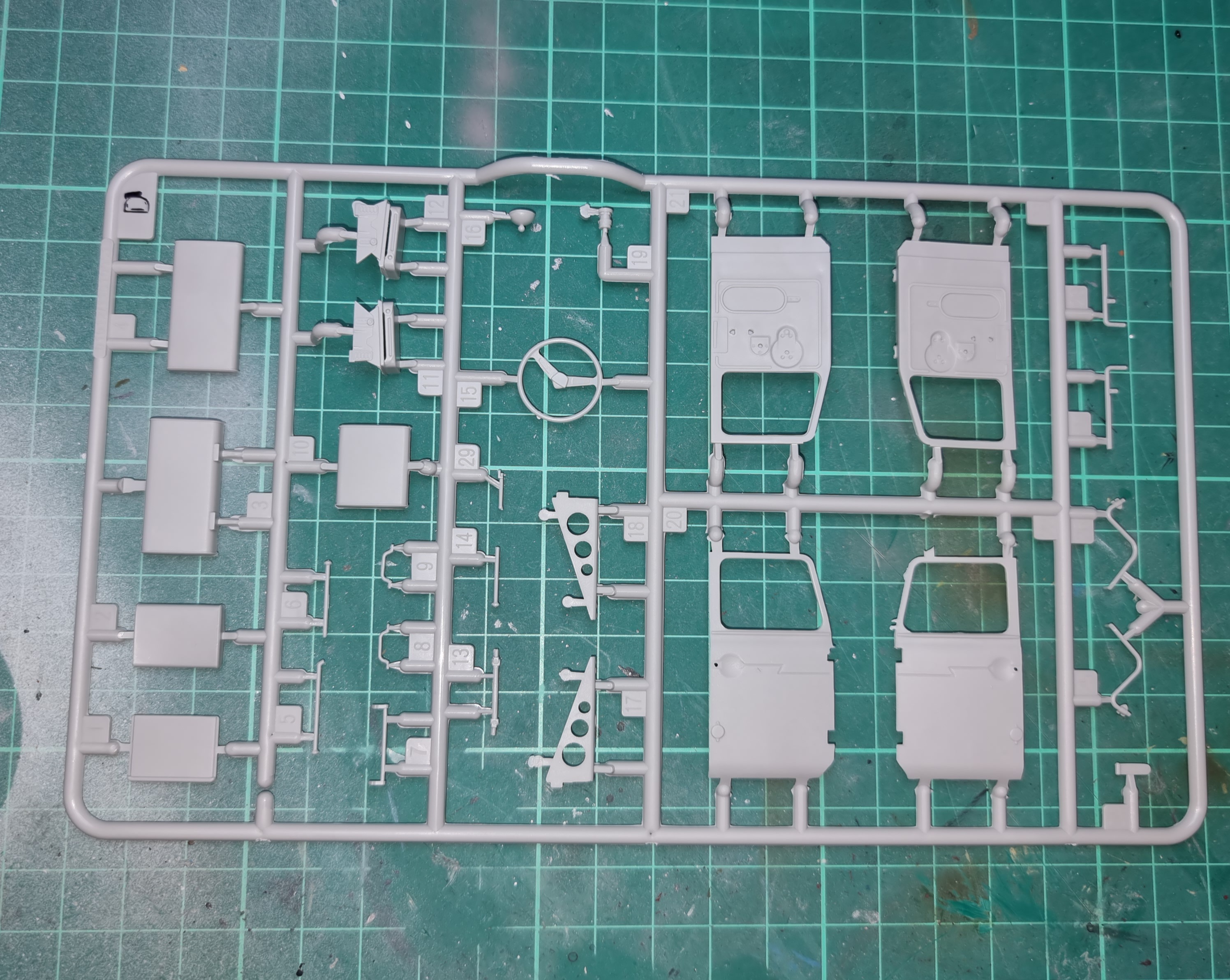
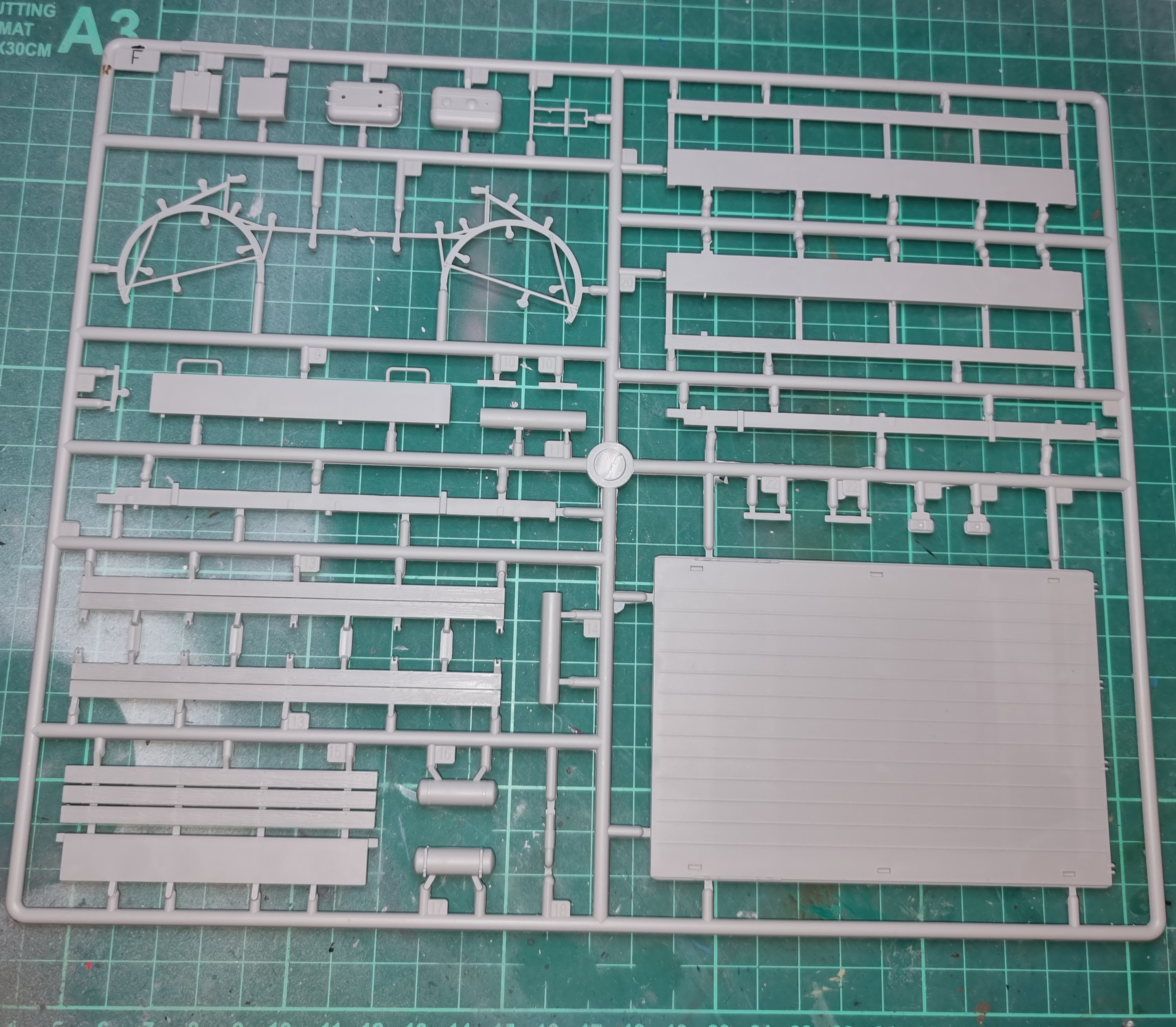
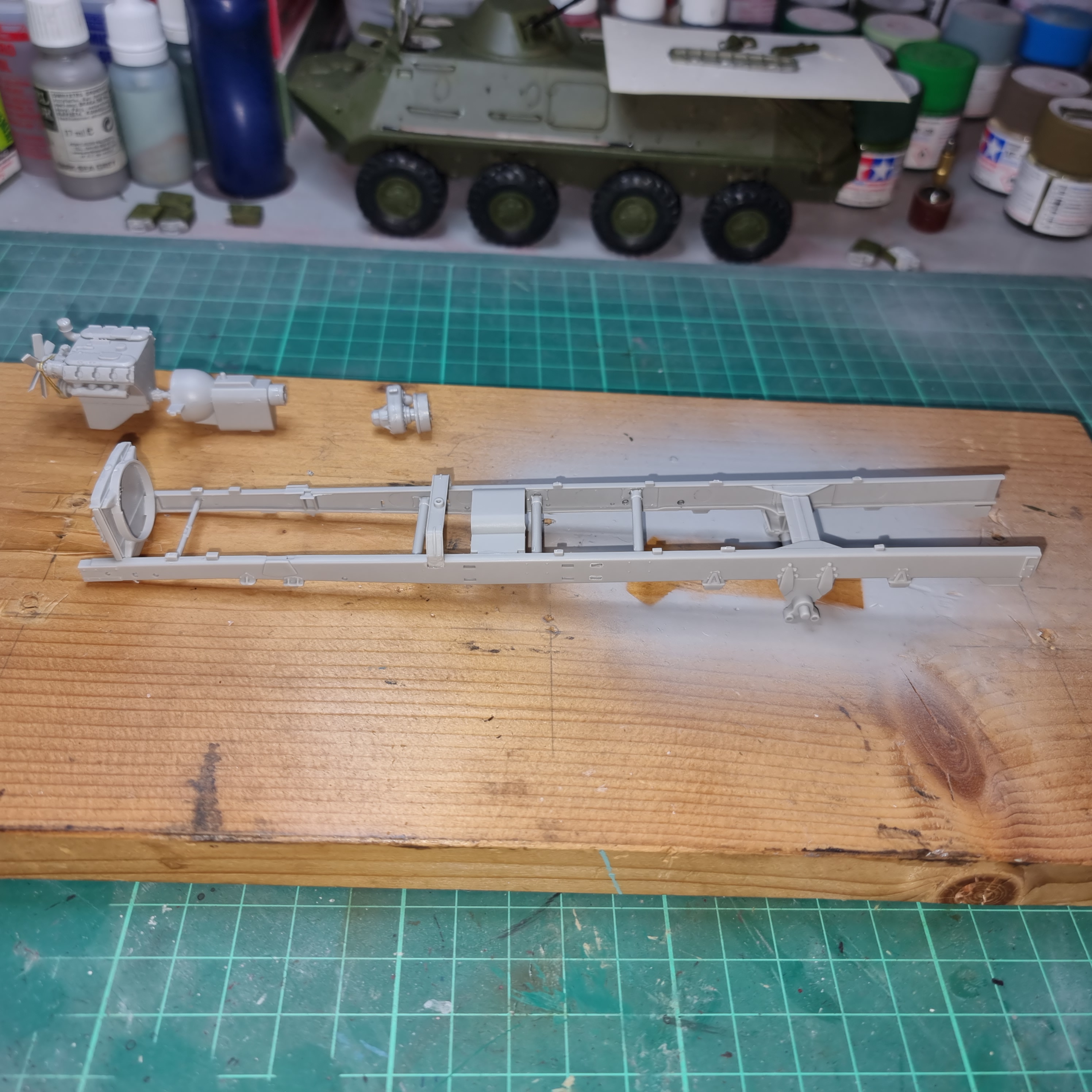
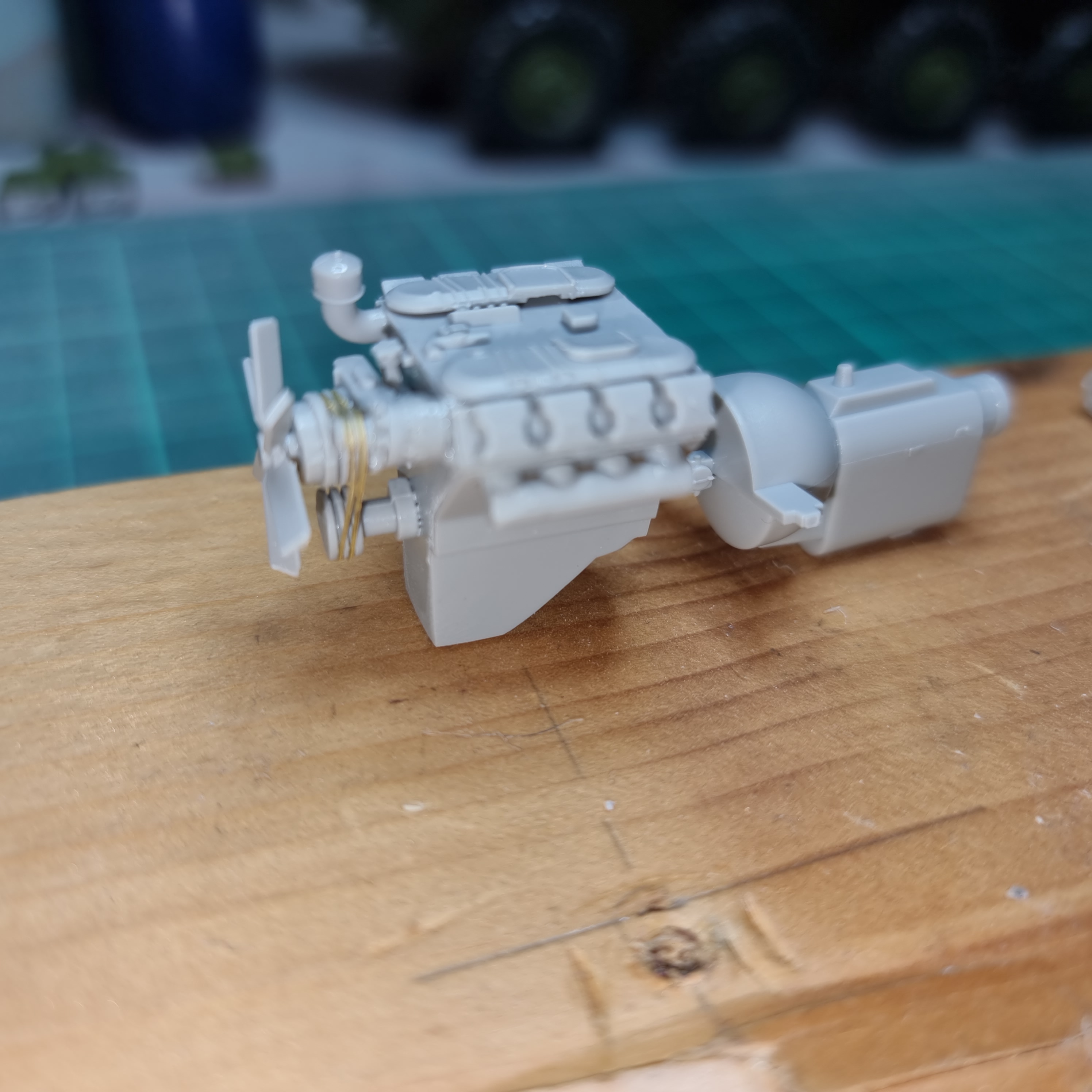
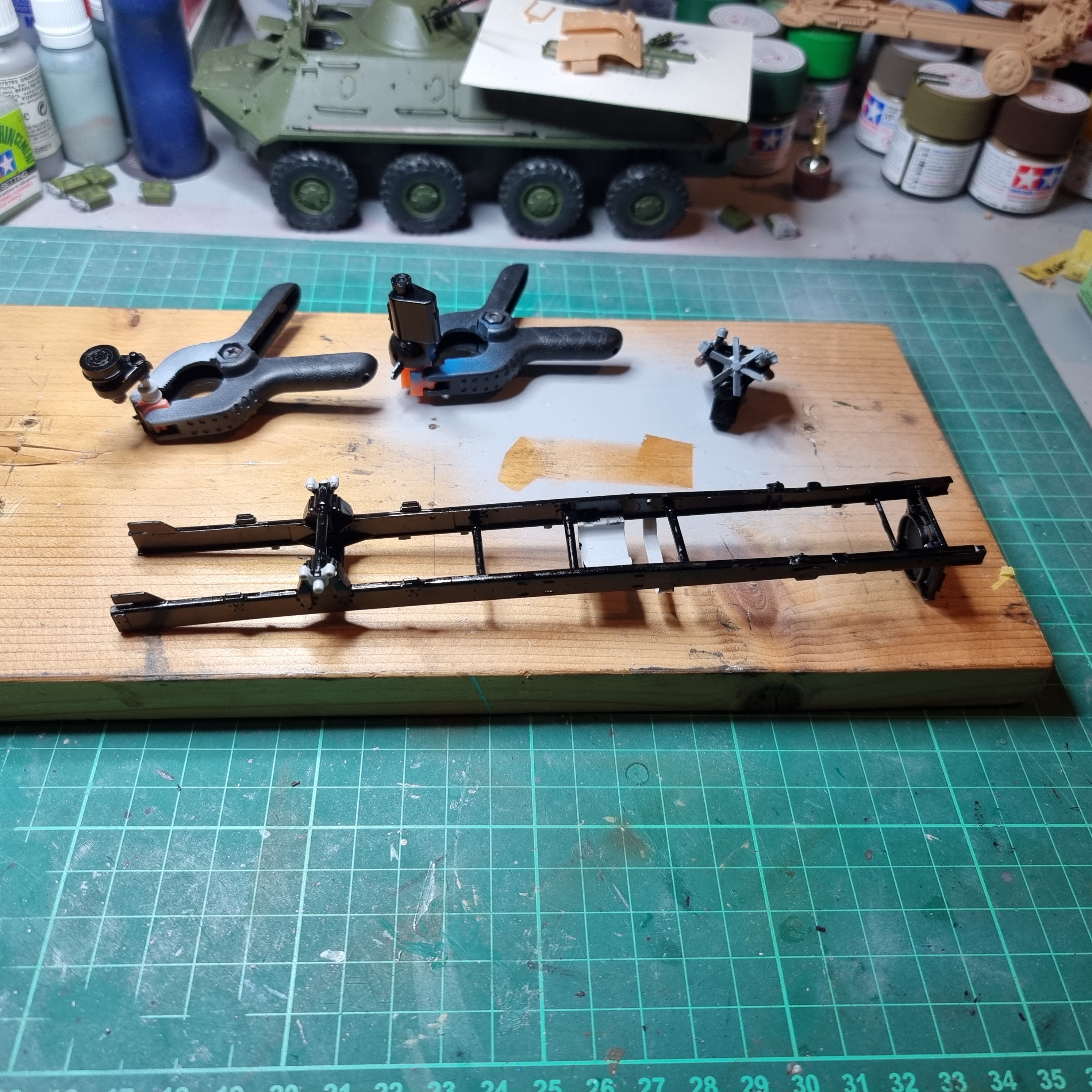
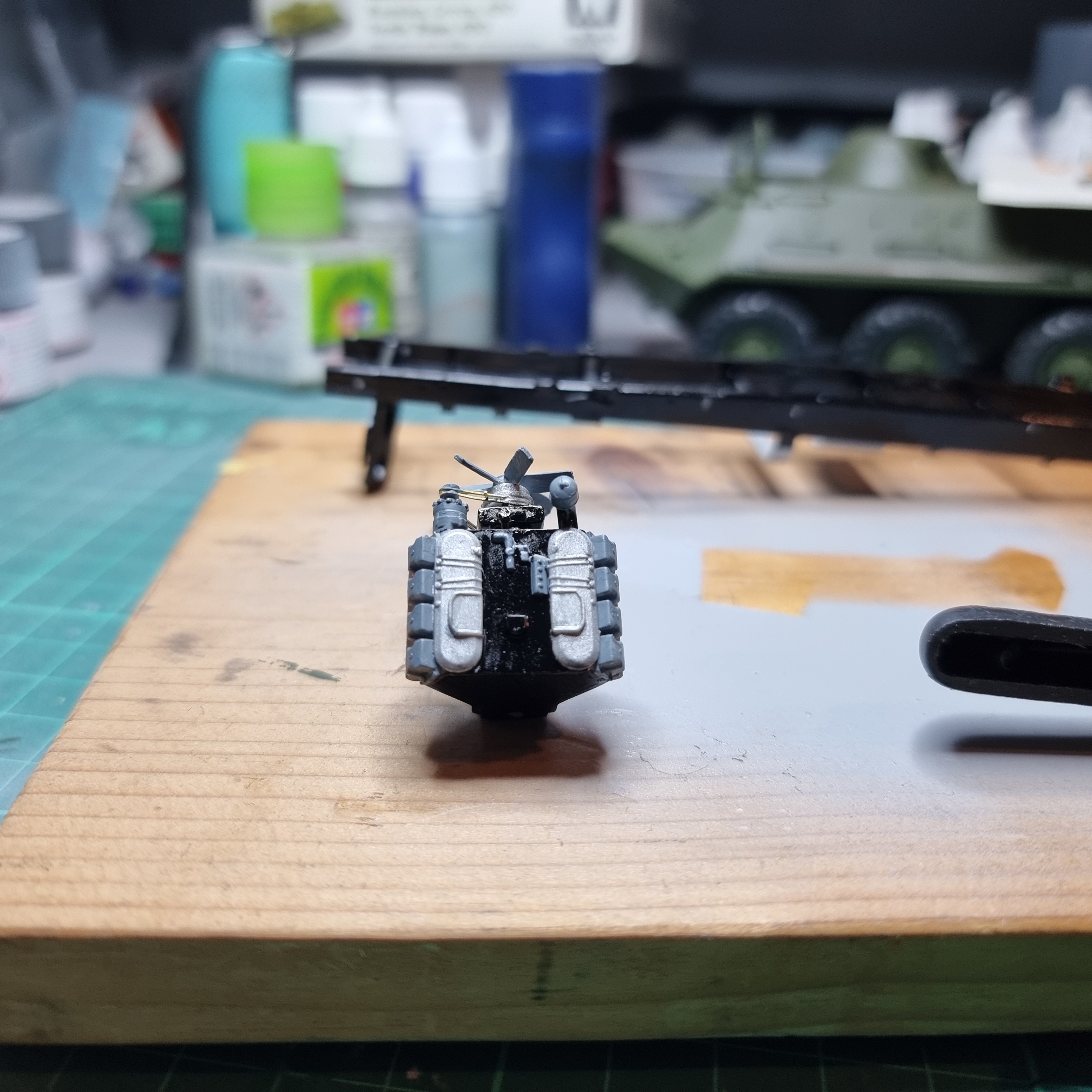
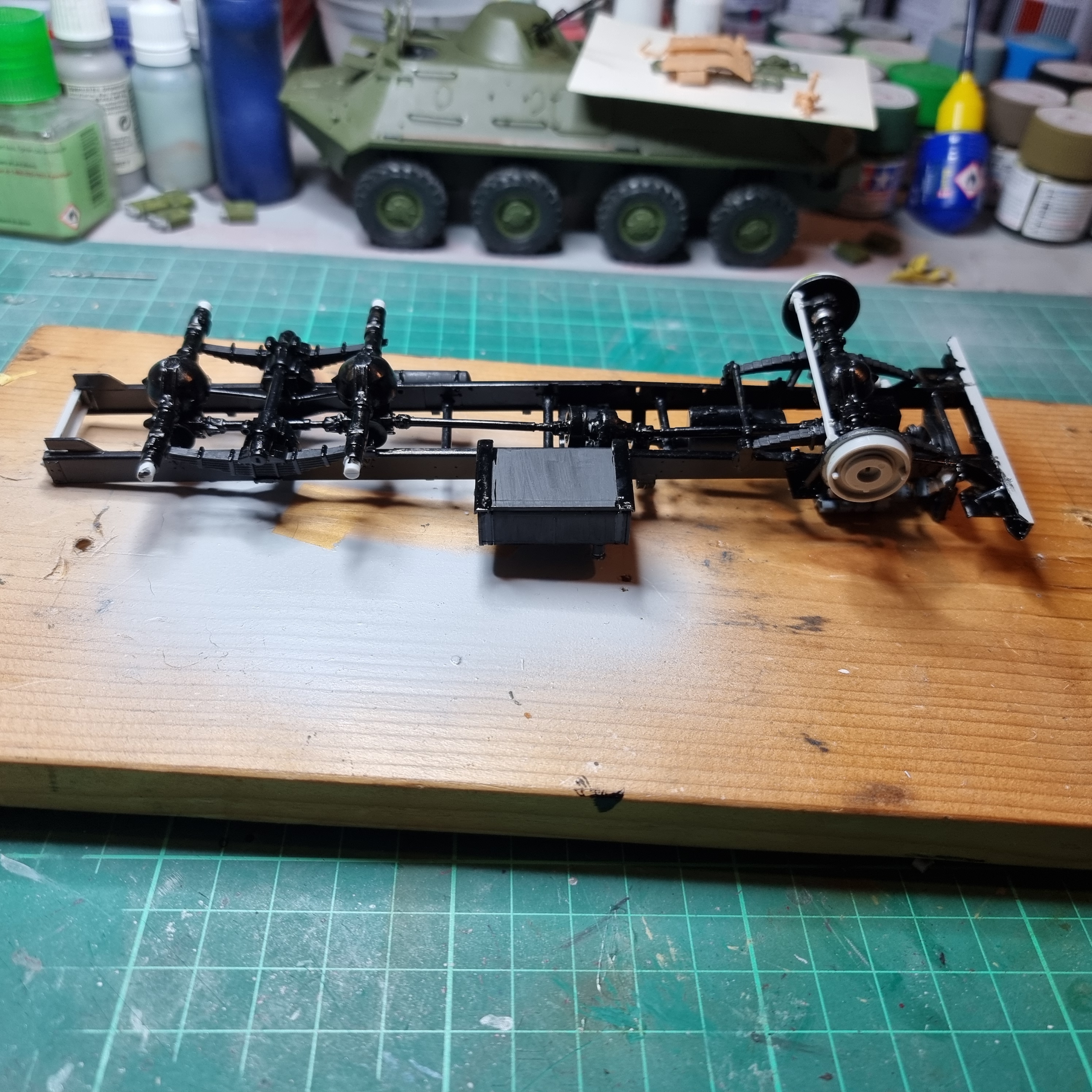
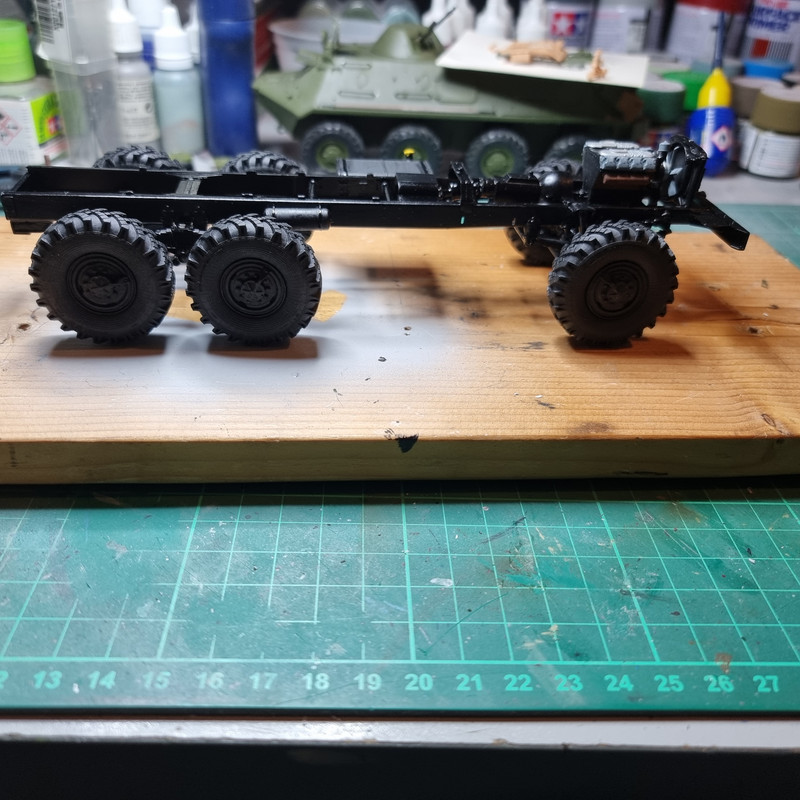
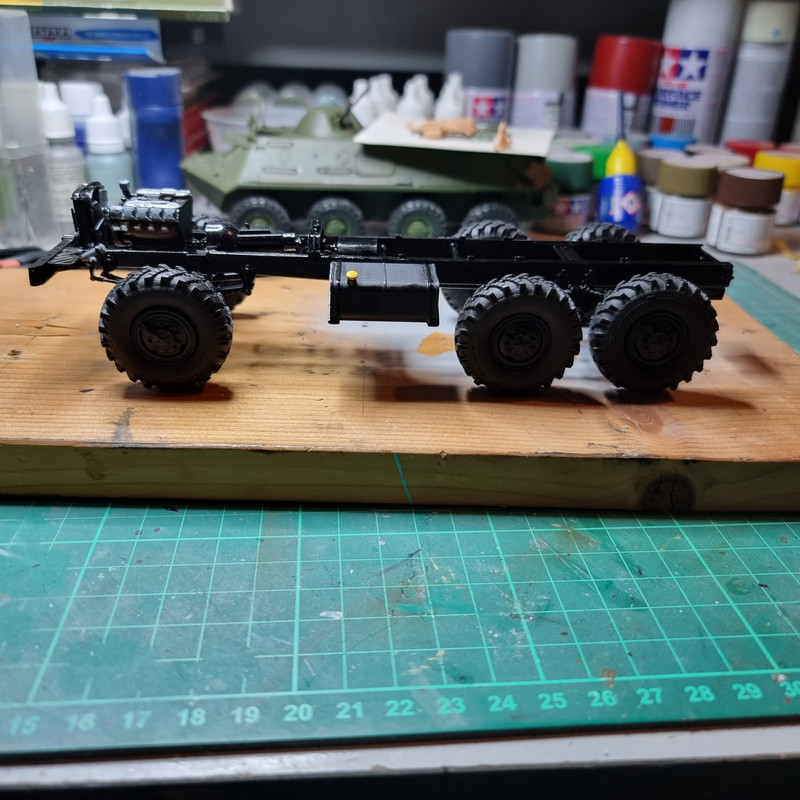
 but ... where is the truck??!!
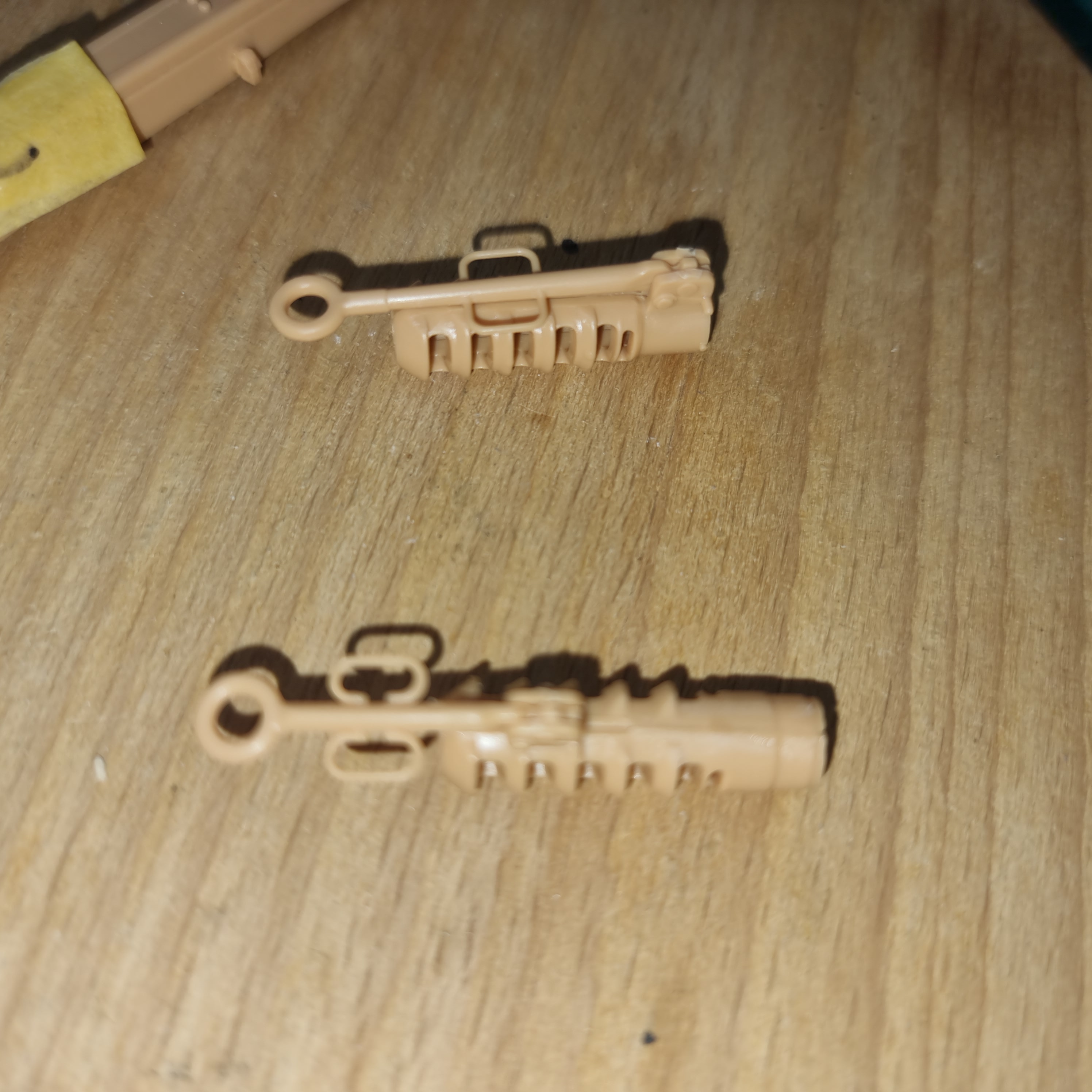
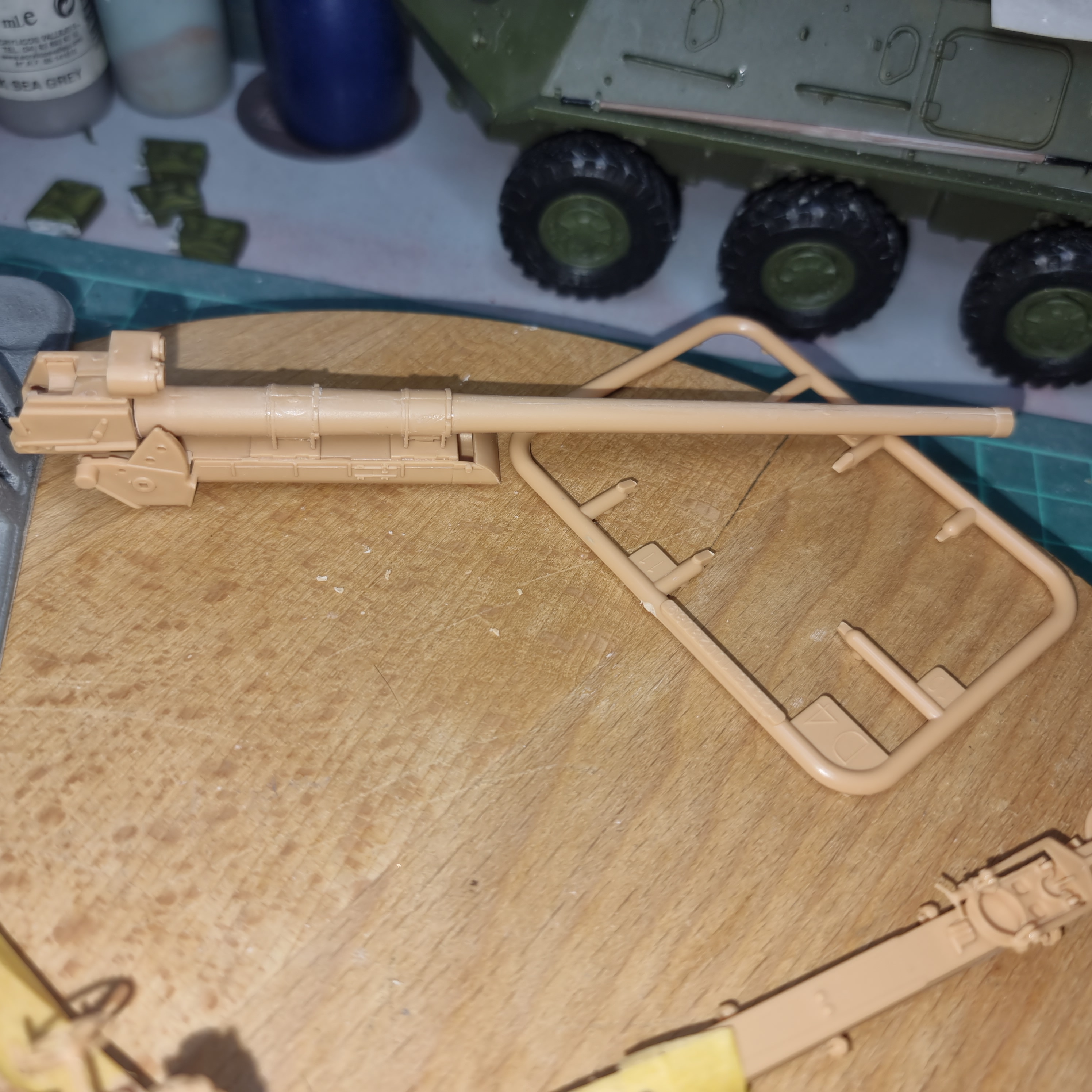
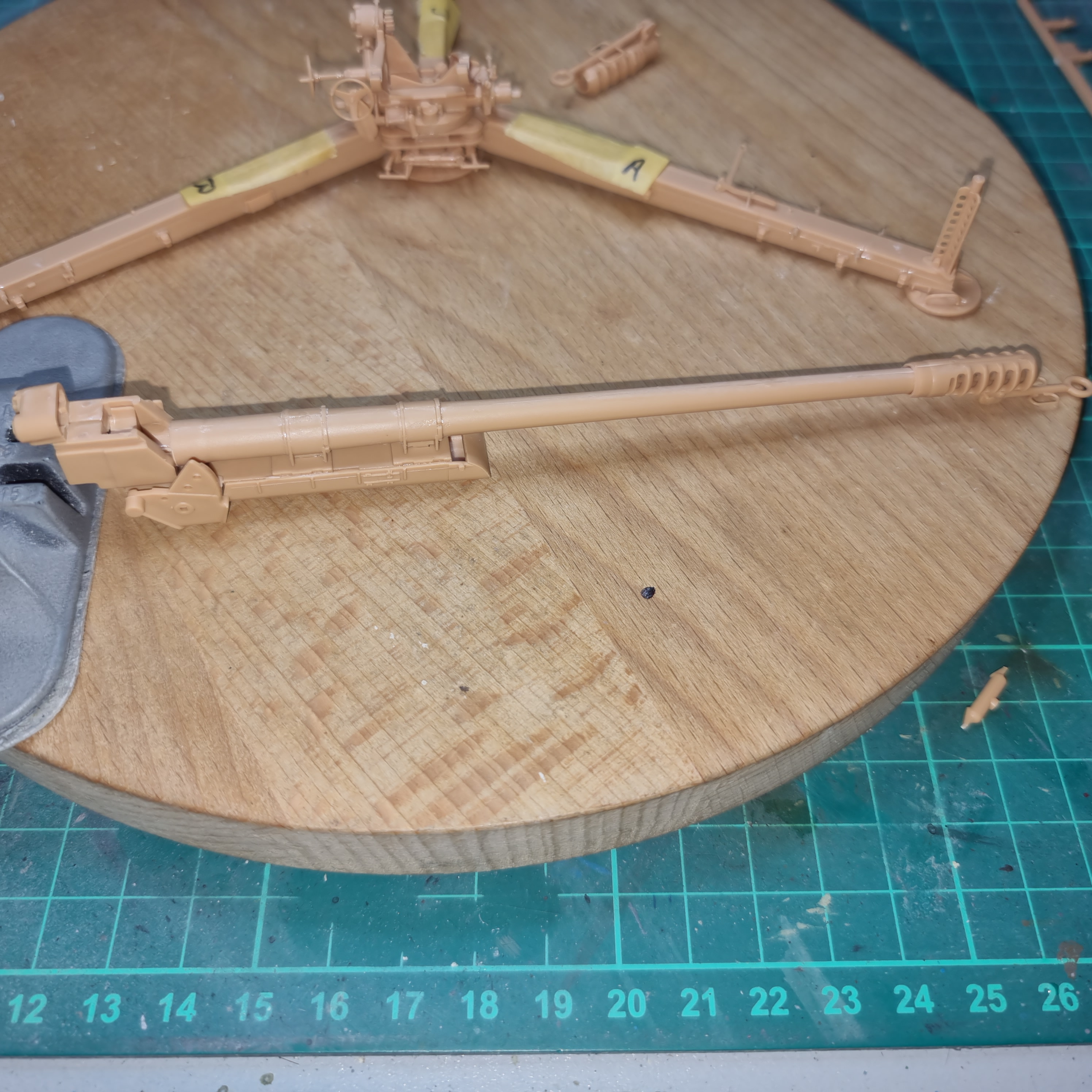

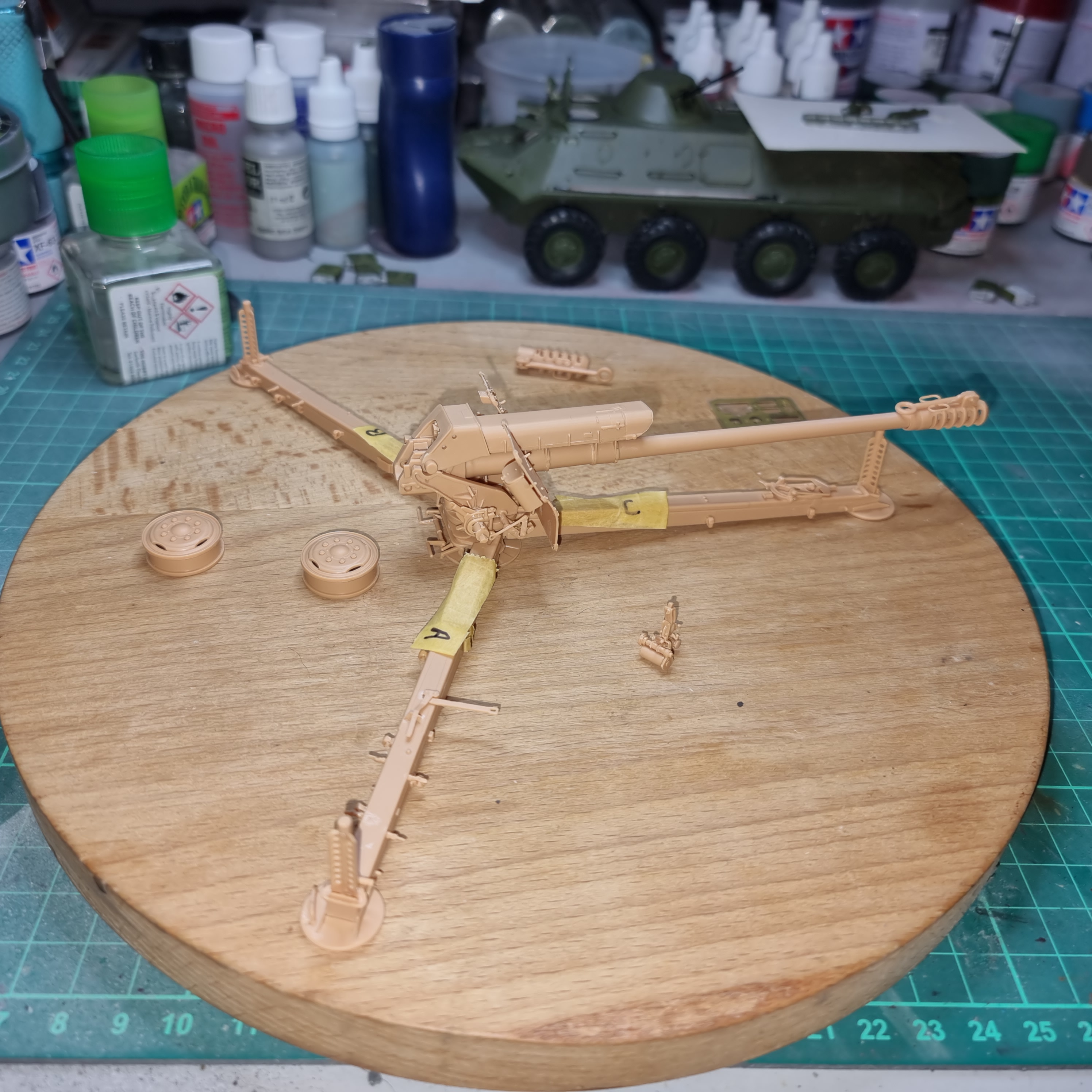
 So its now actually ordered and, Postal Unions permitting, should be here in a few days.I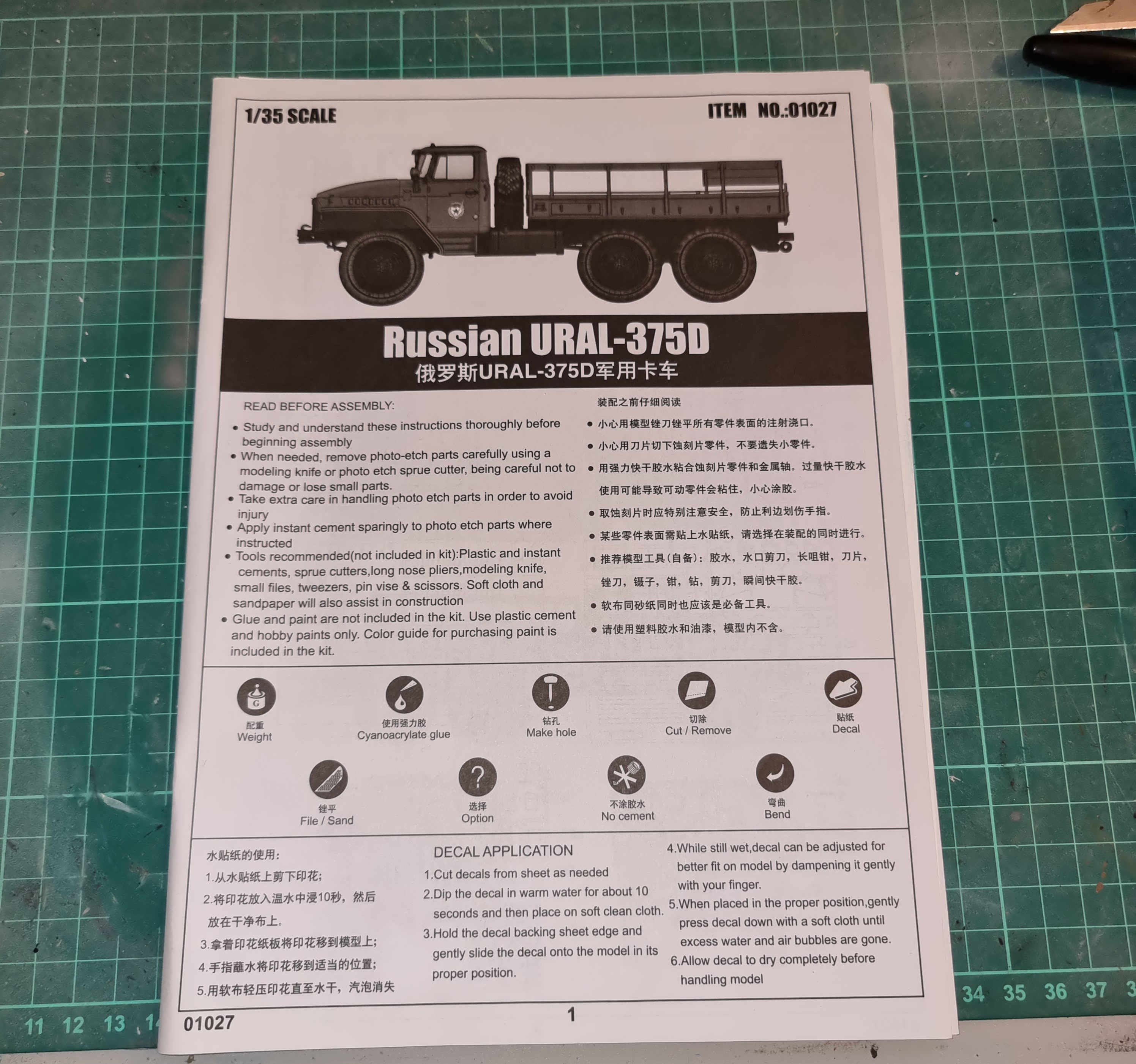
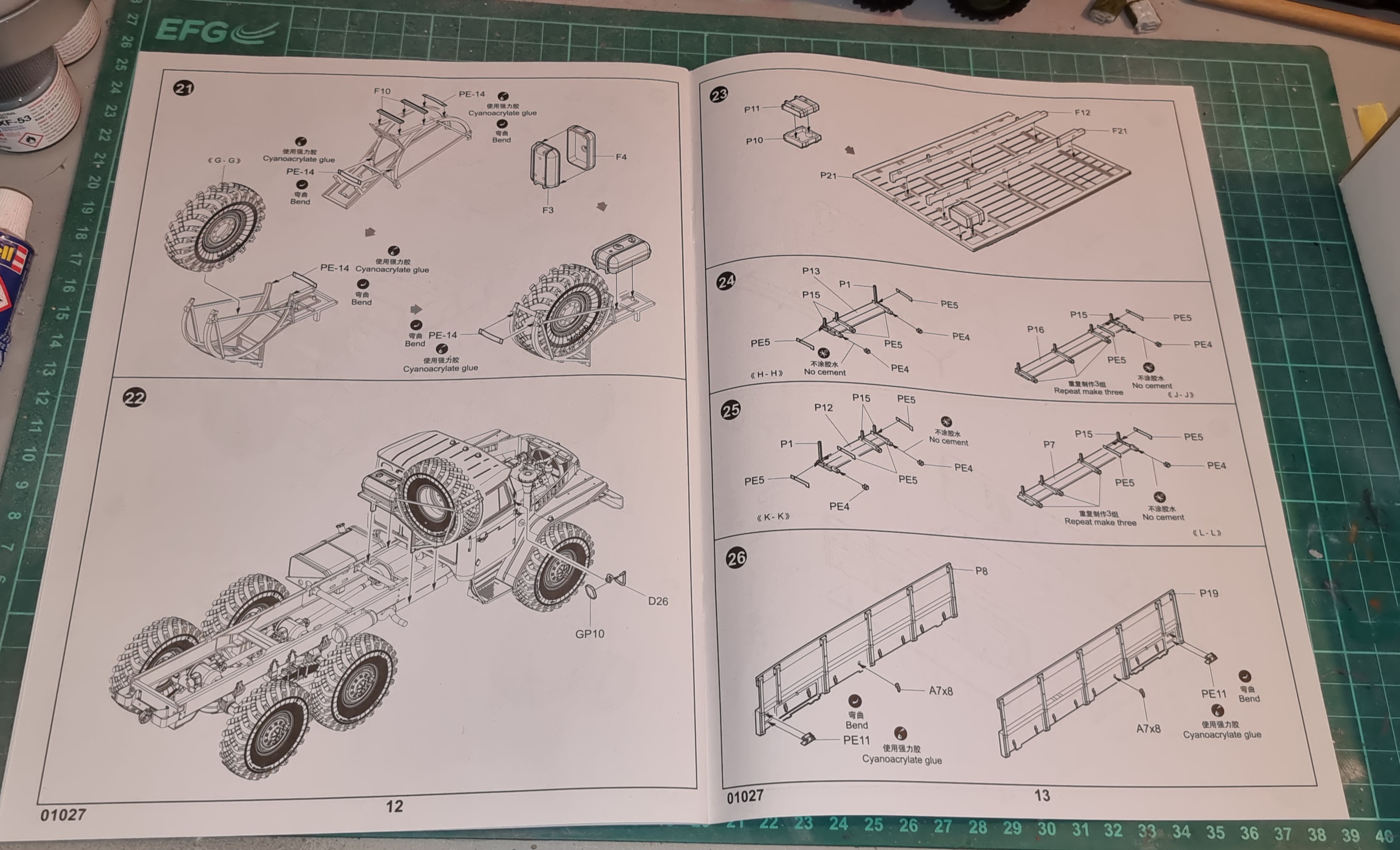
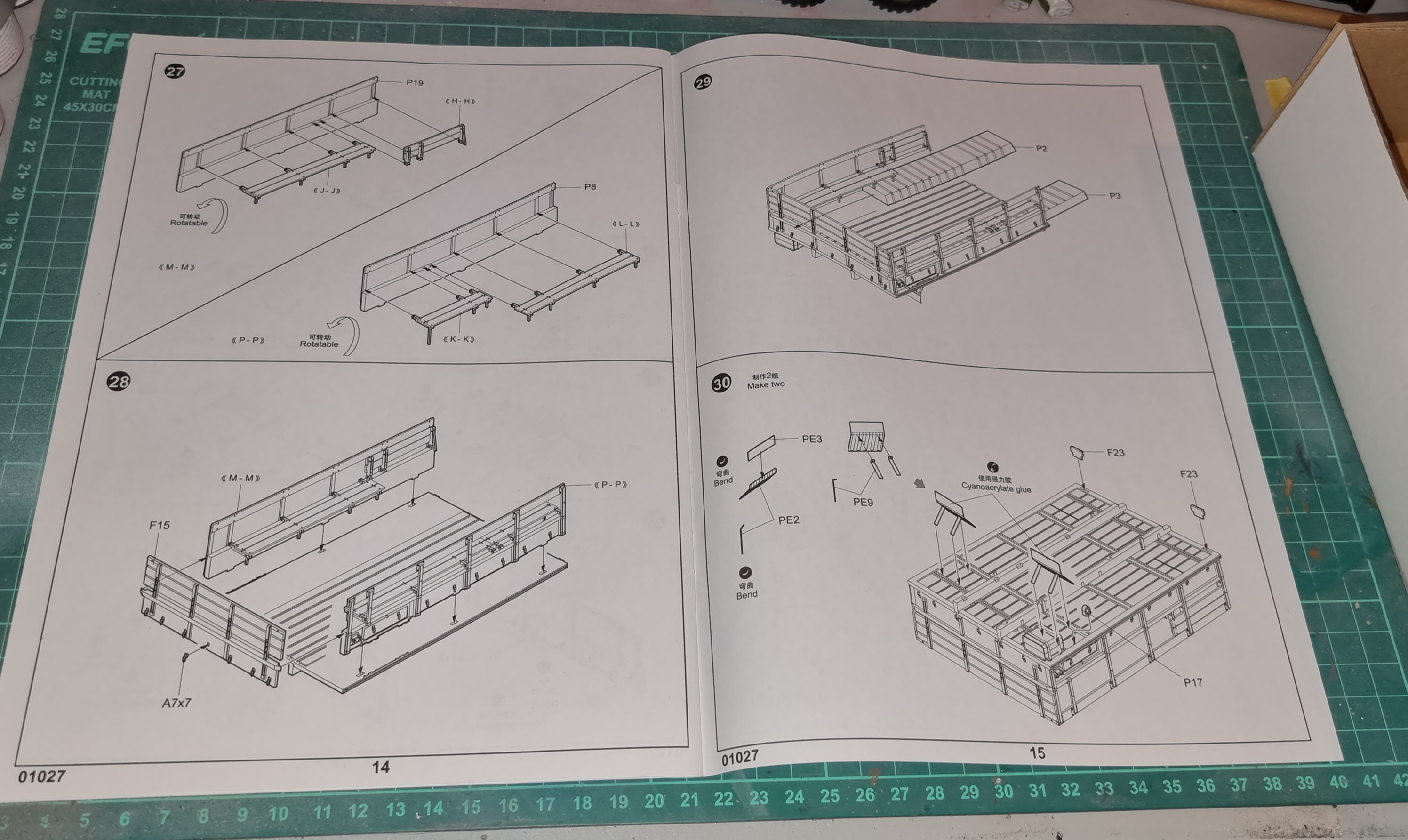
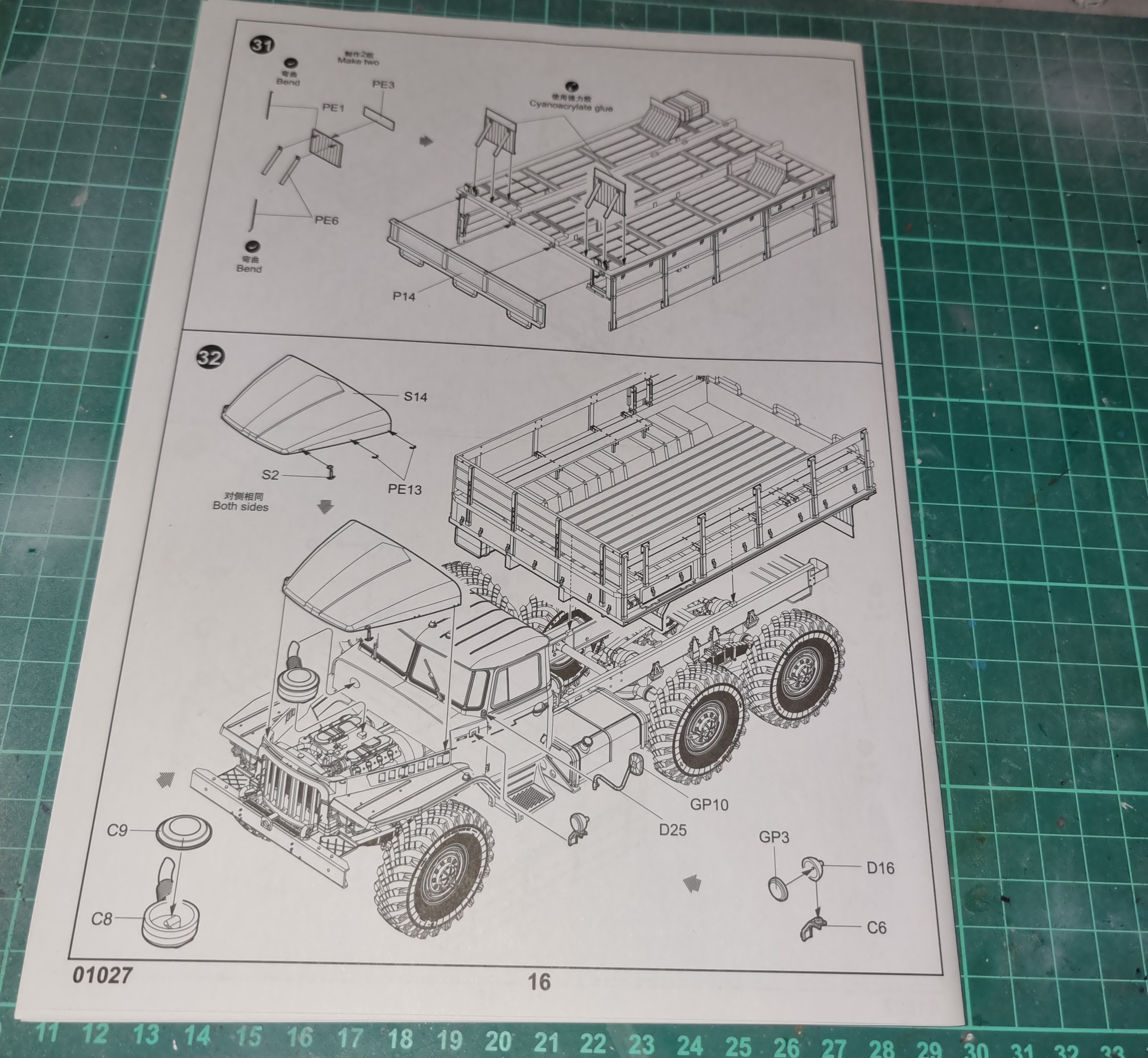
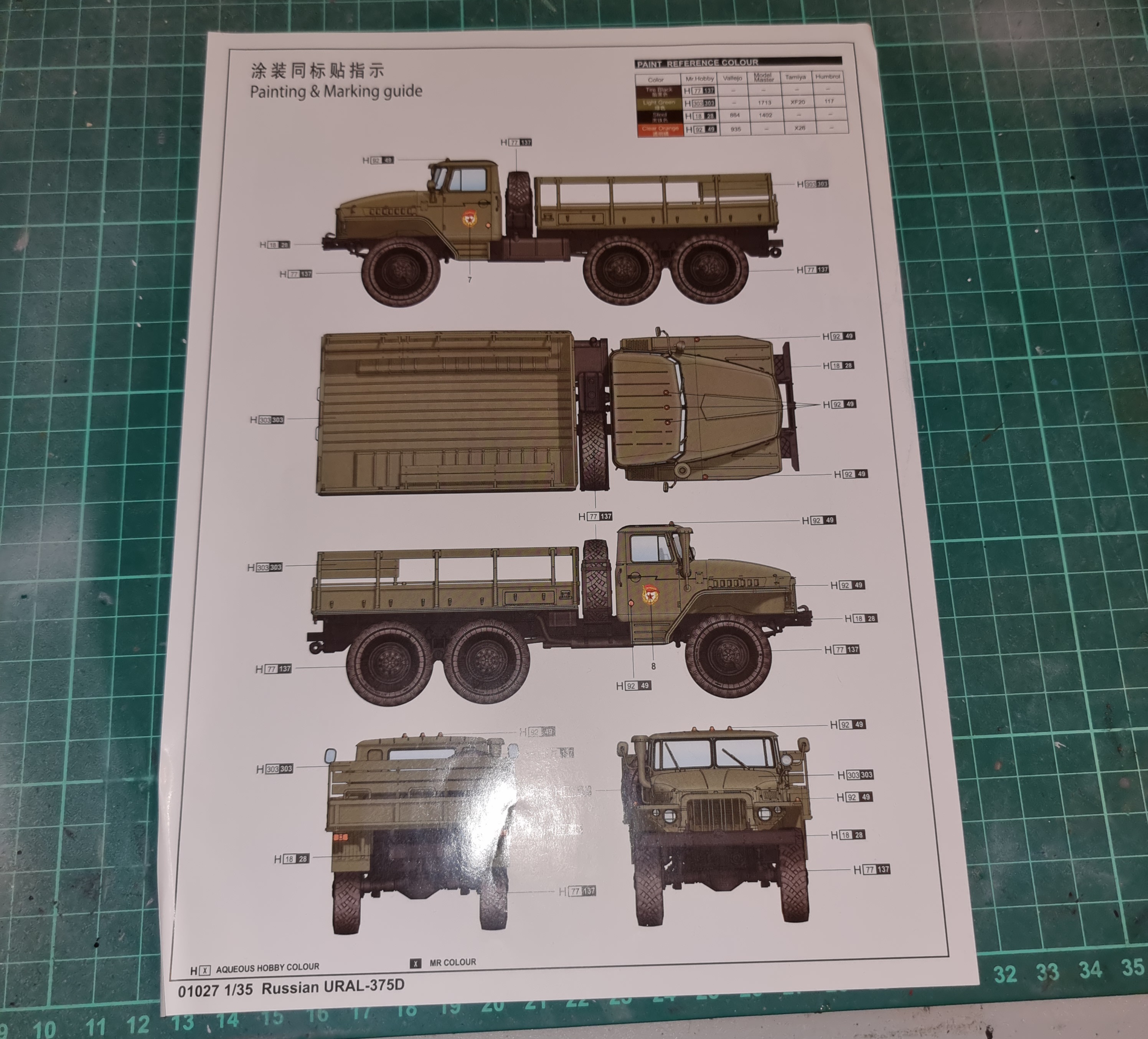
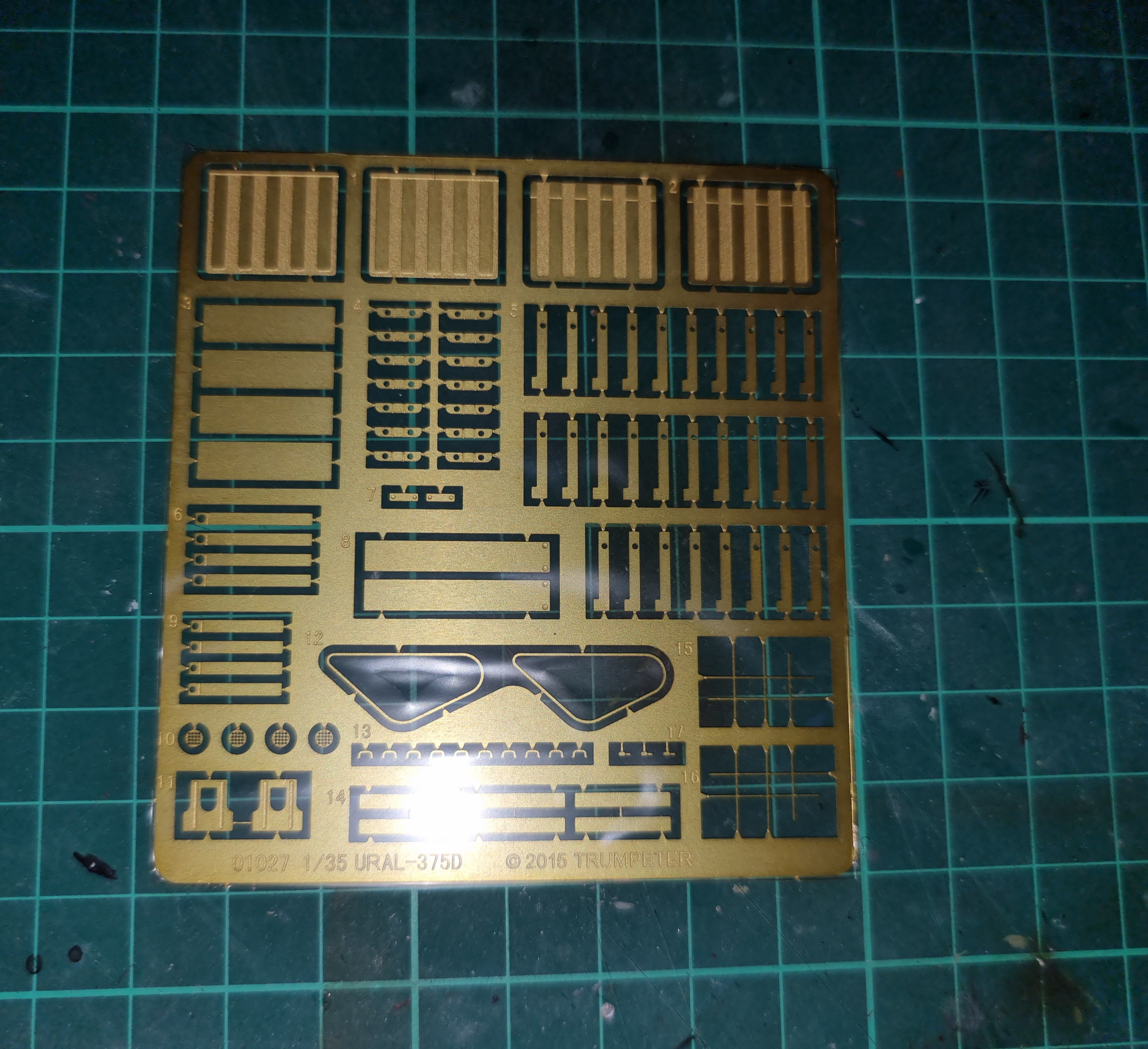
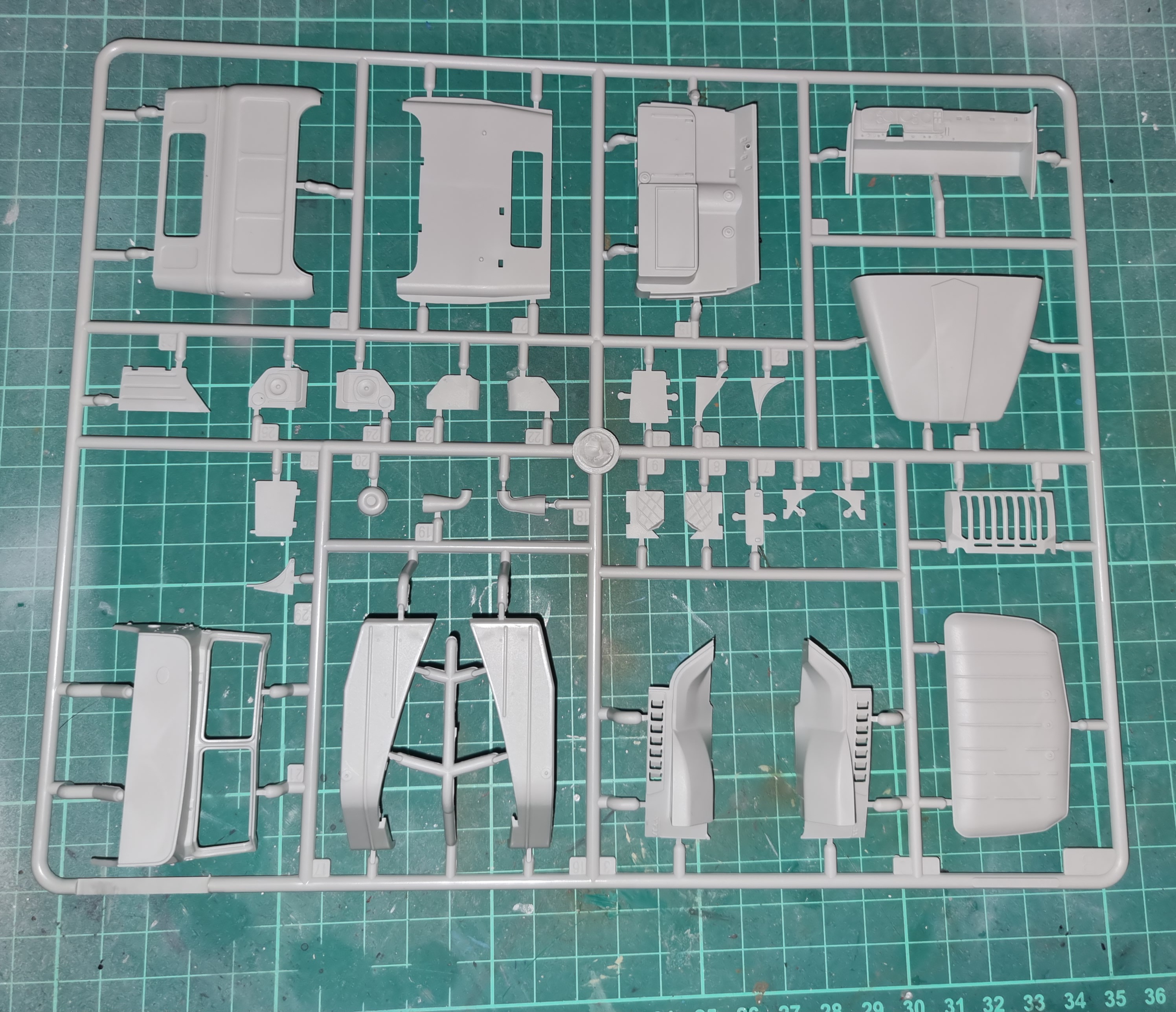
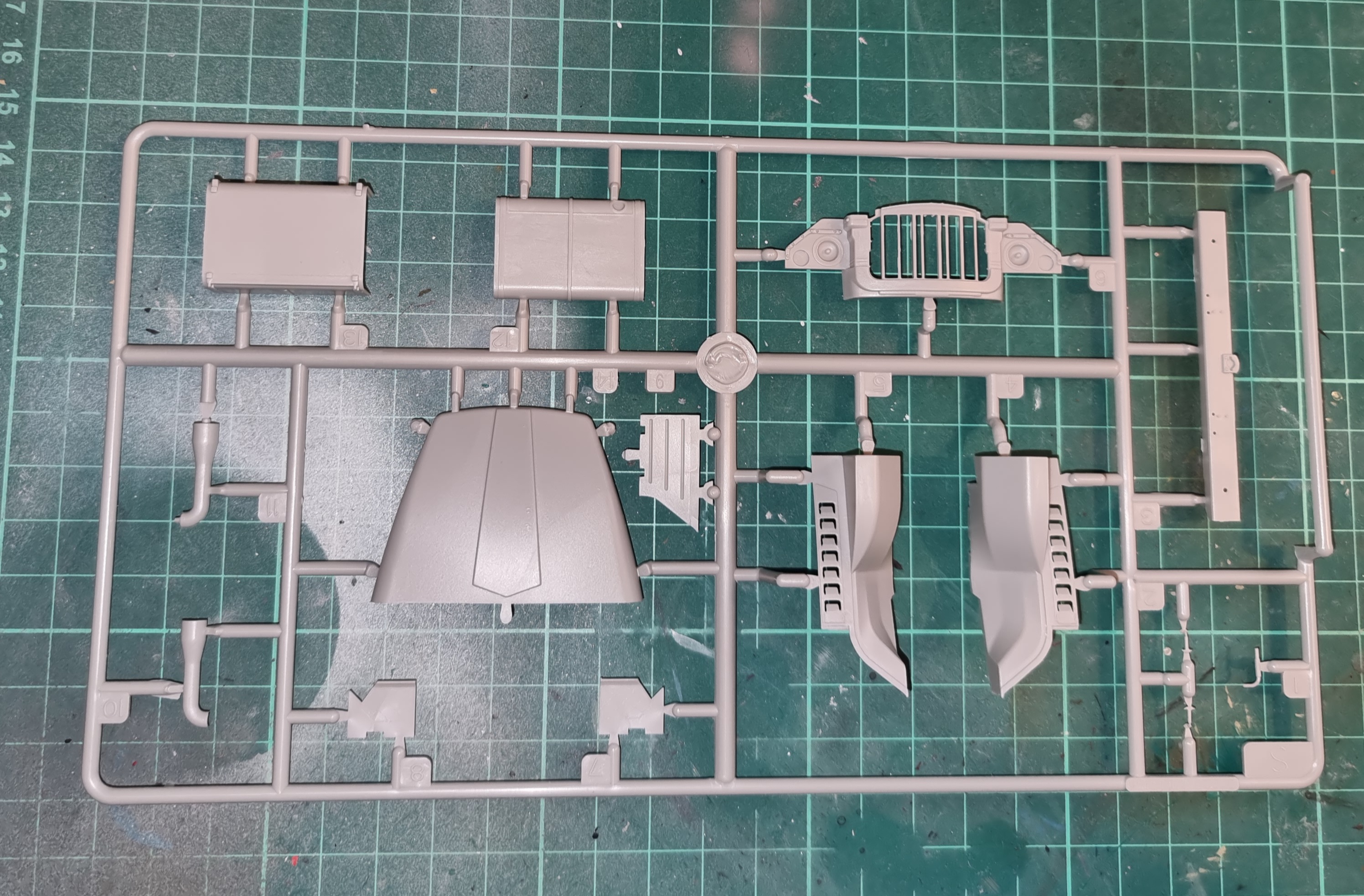
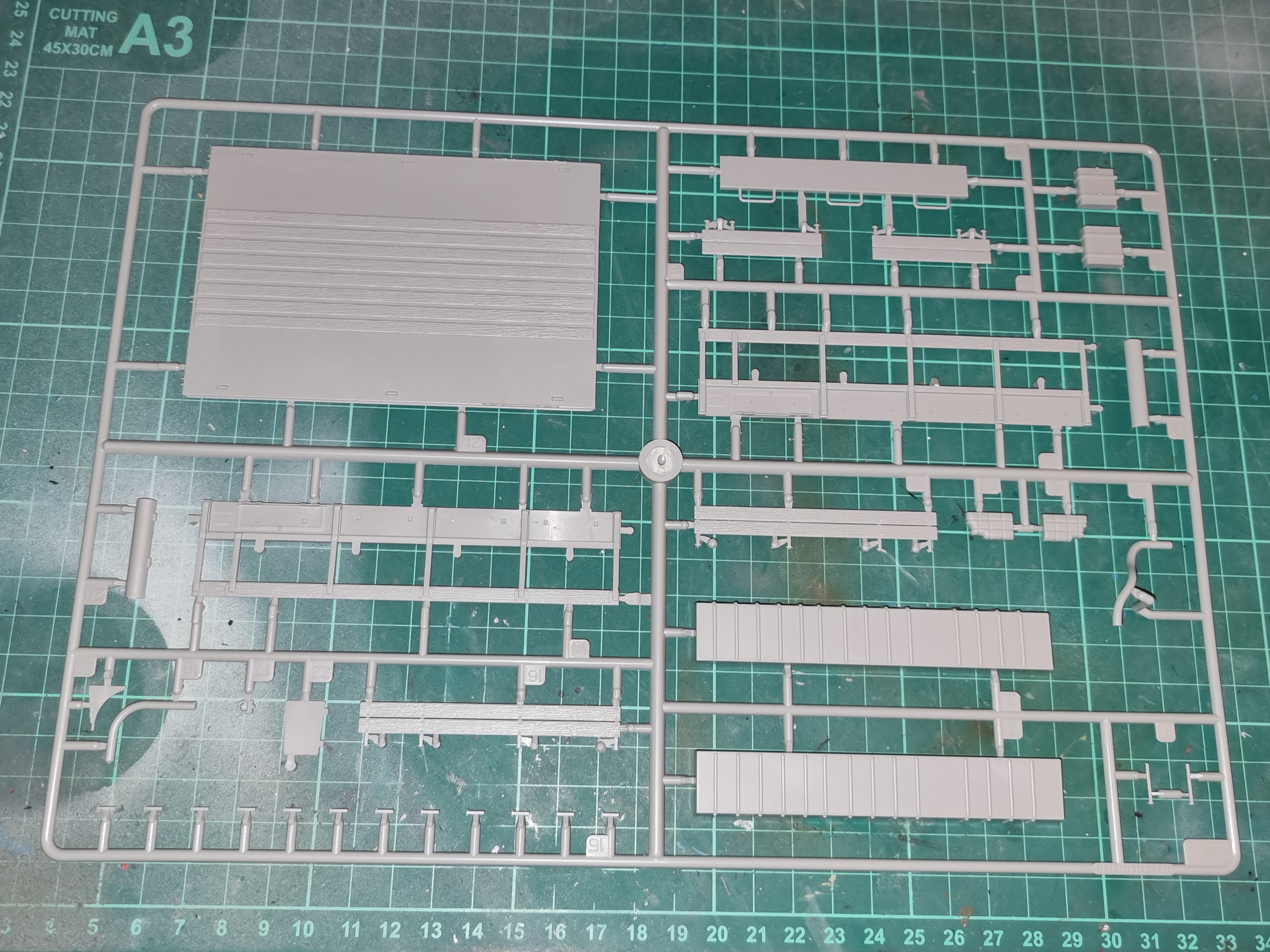
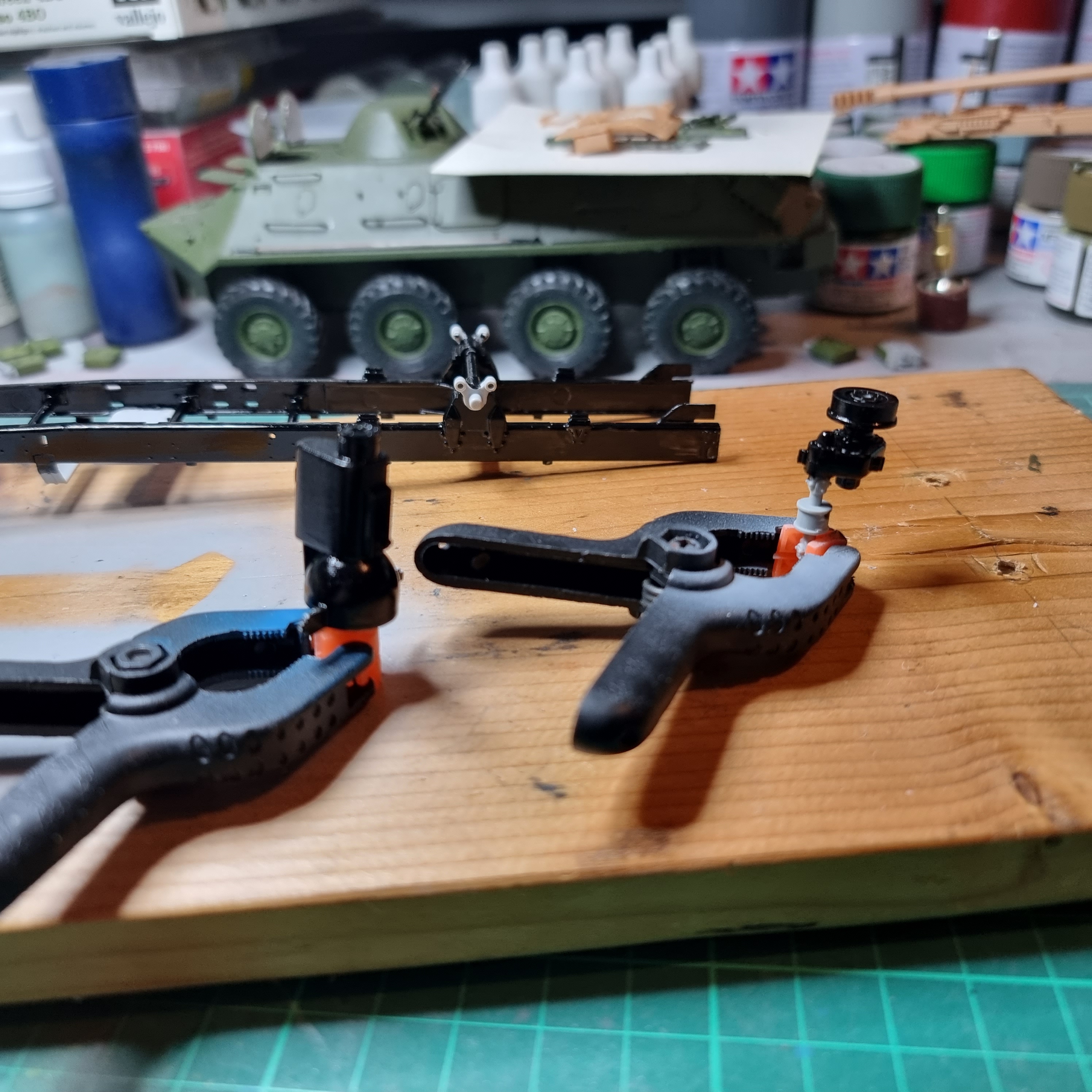


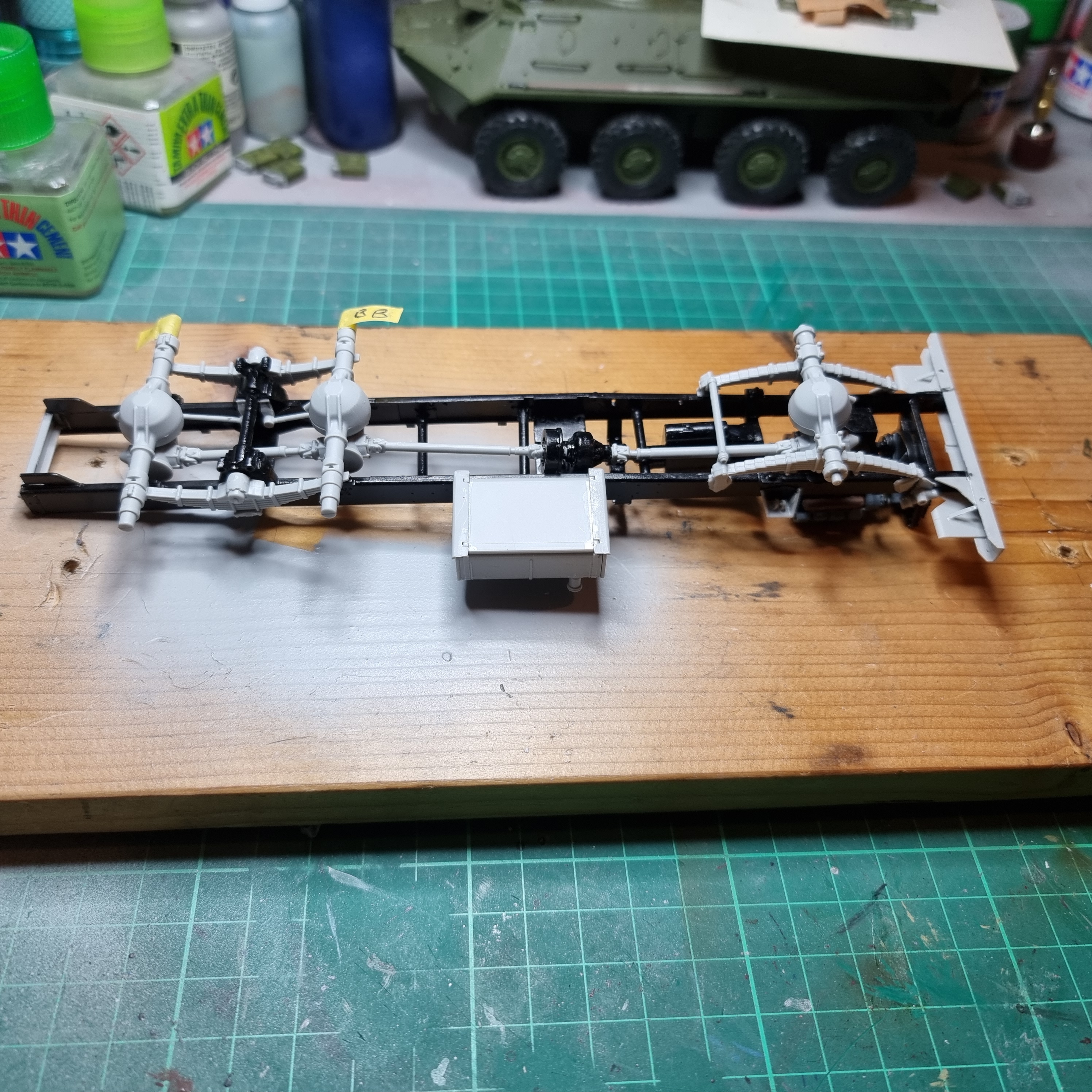
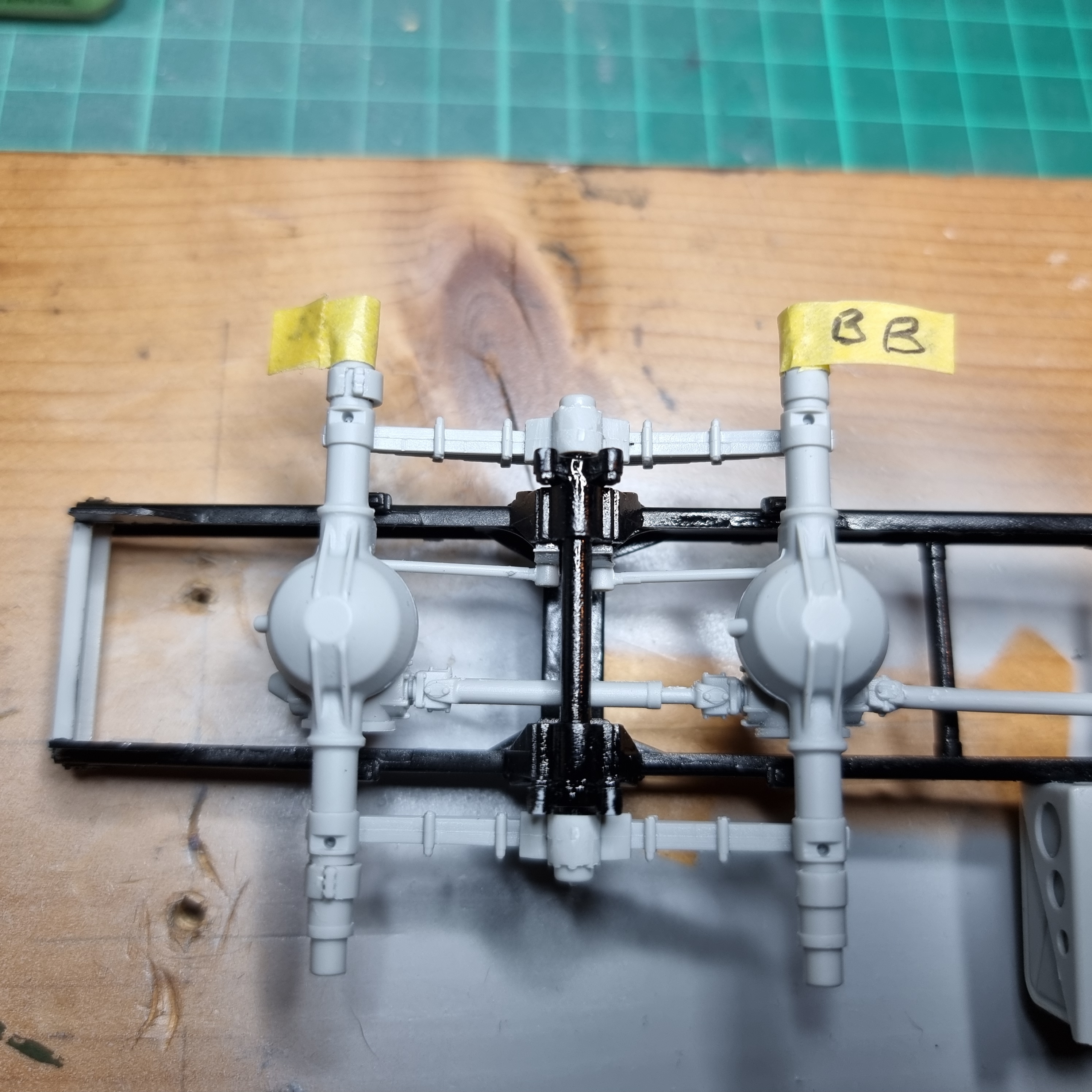
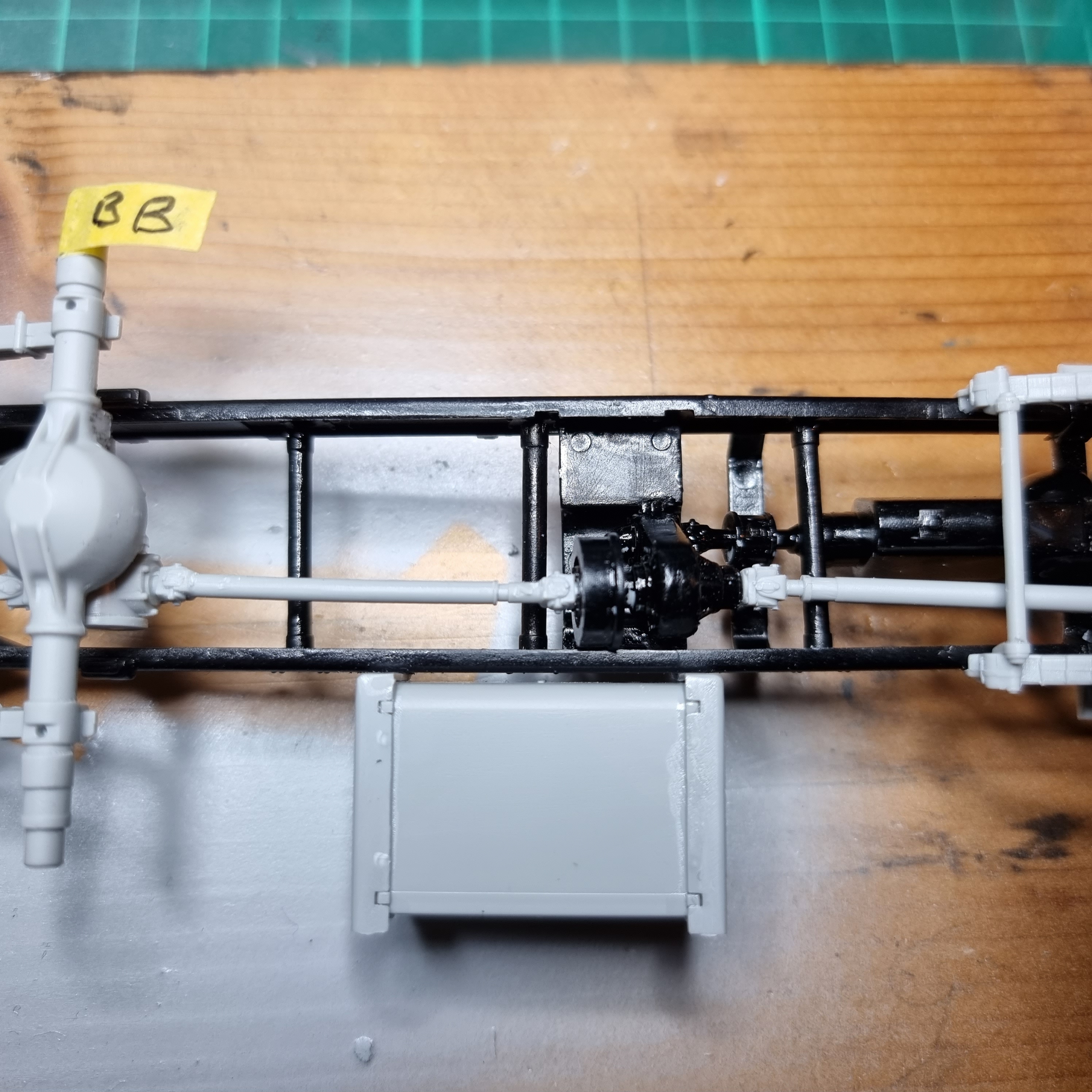




 80 dollars shipping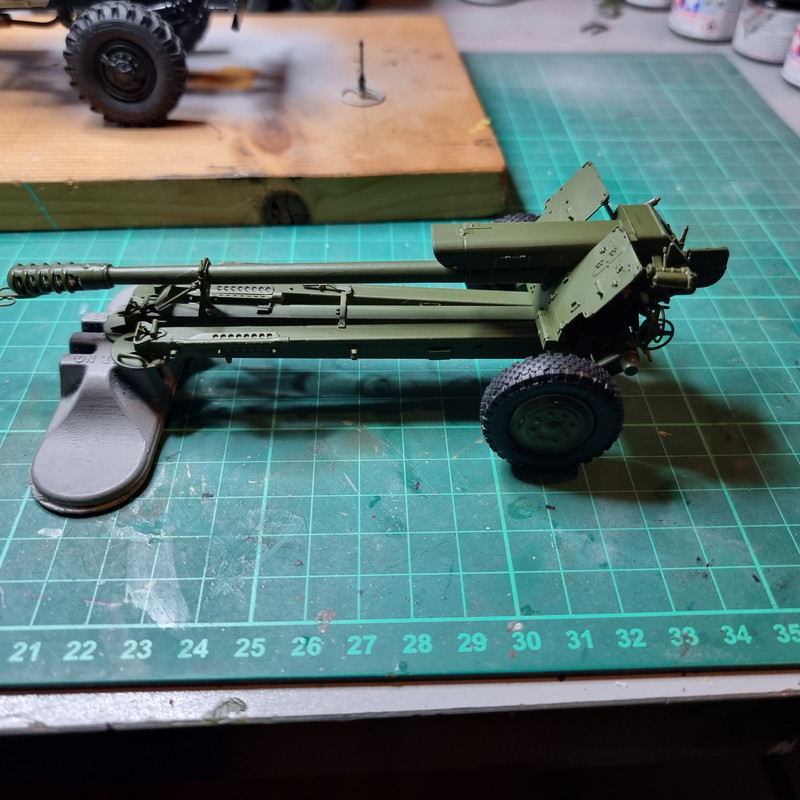

 )
)