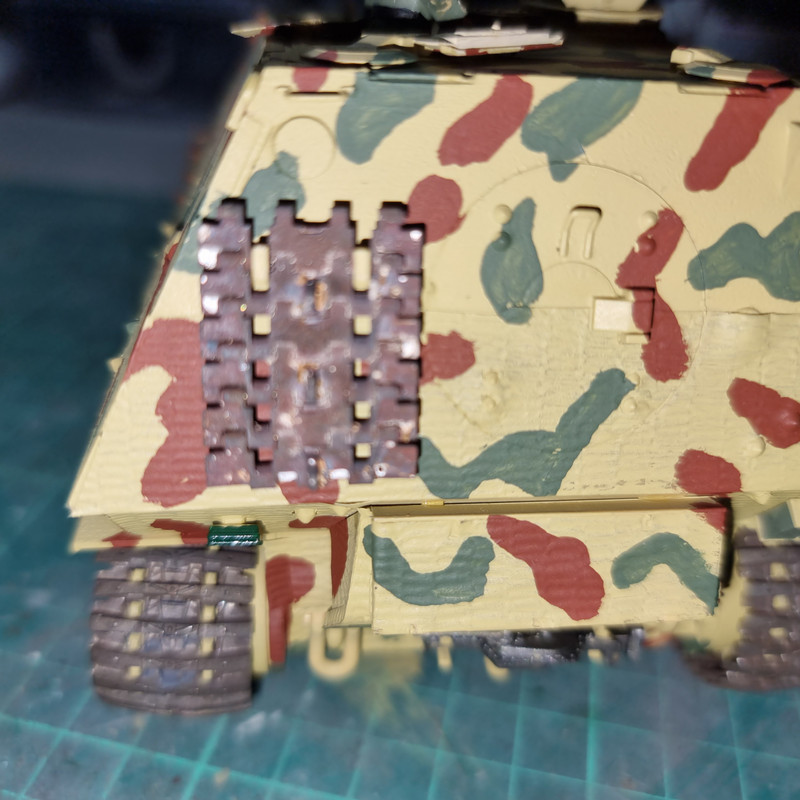
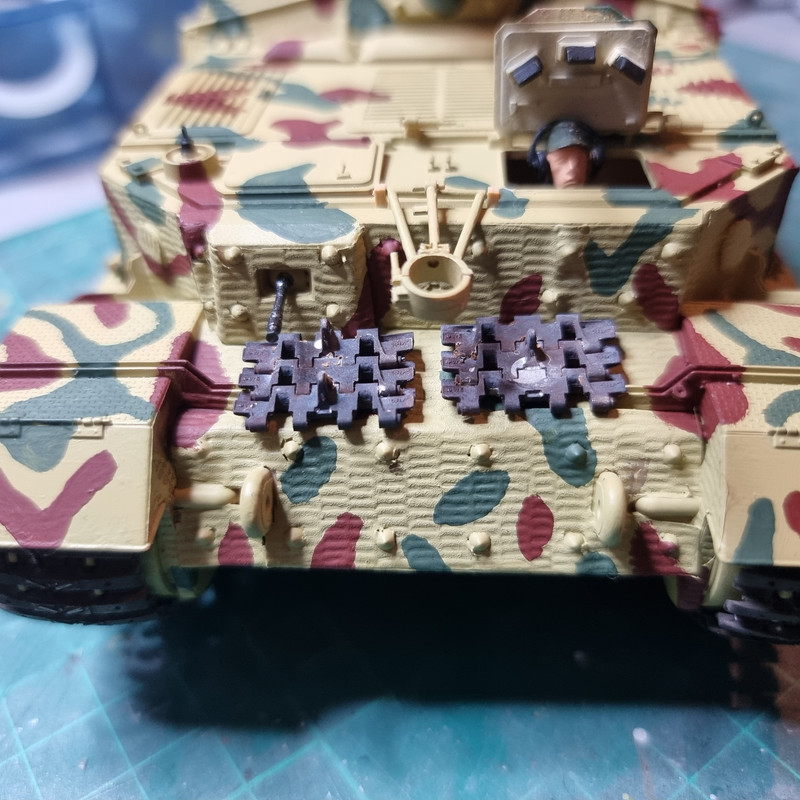
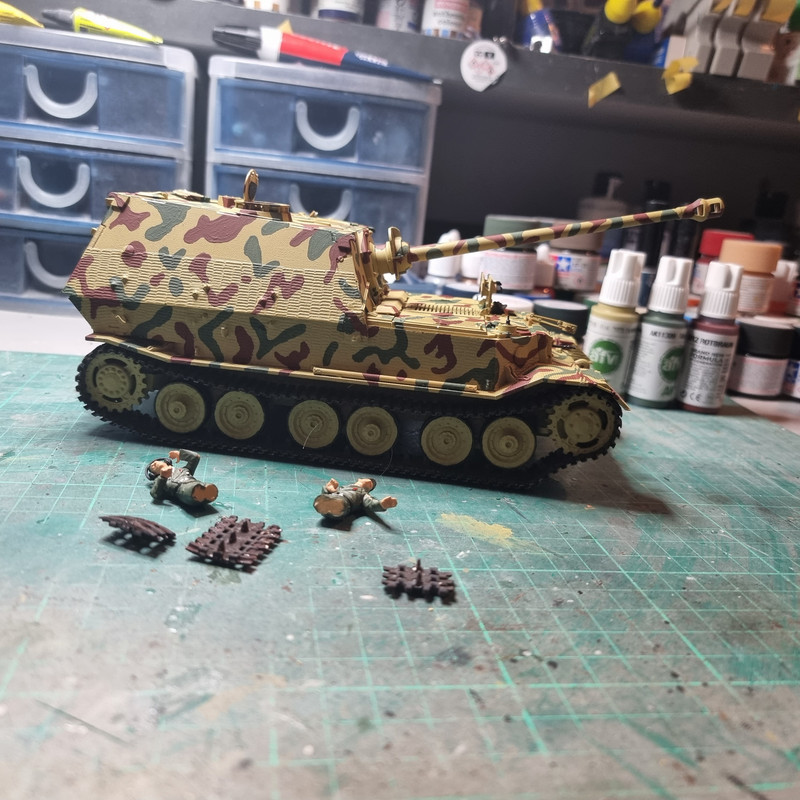
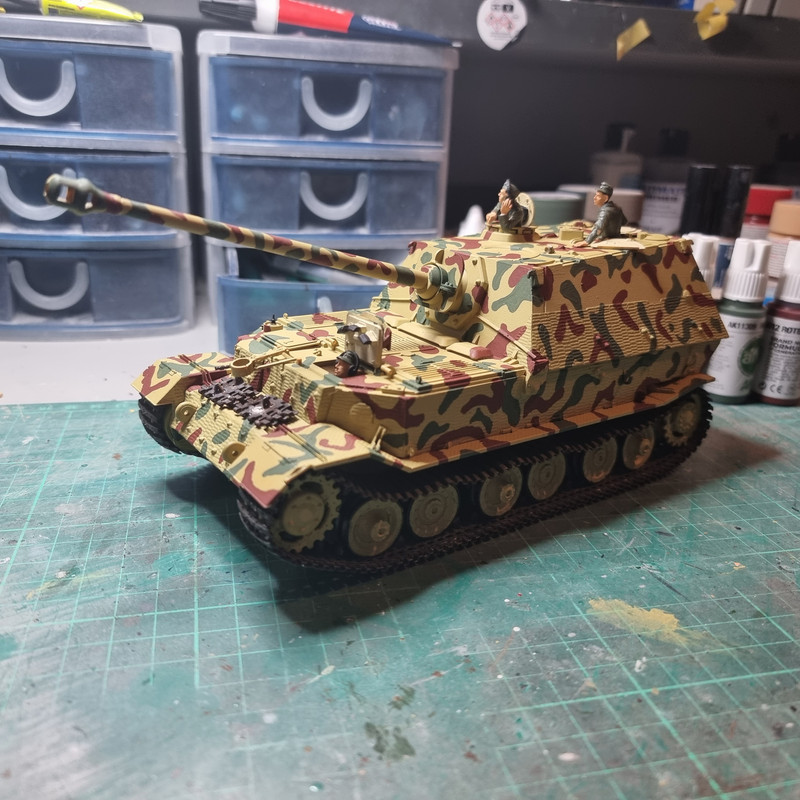
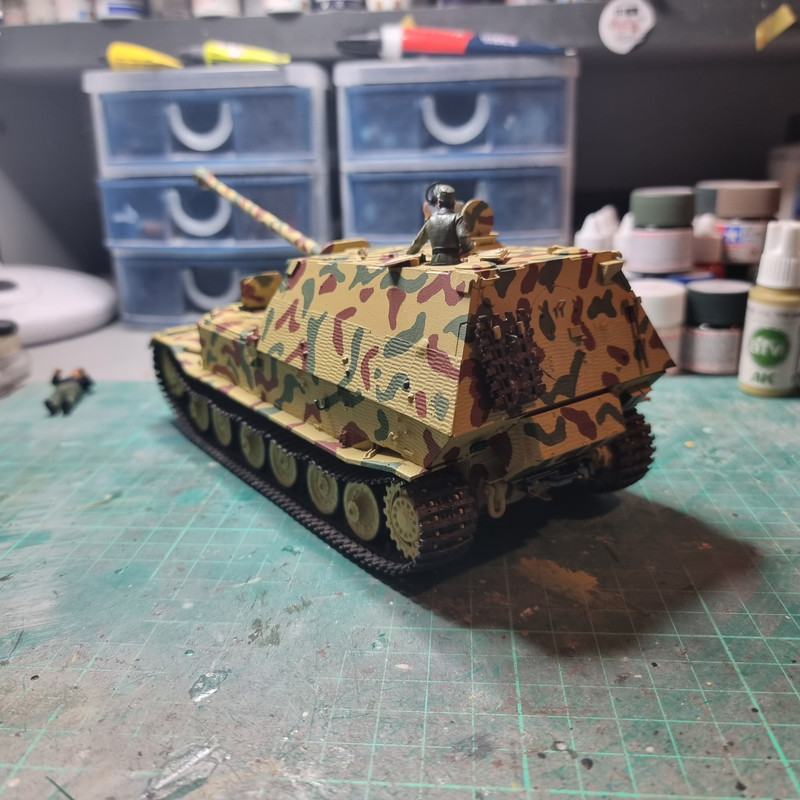
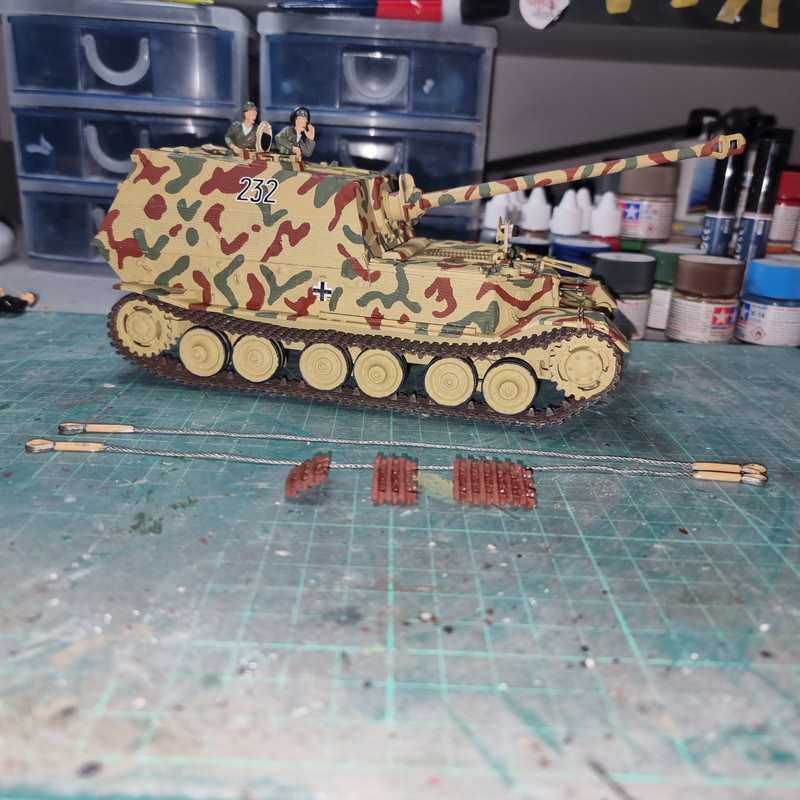
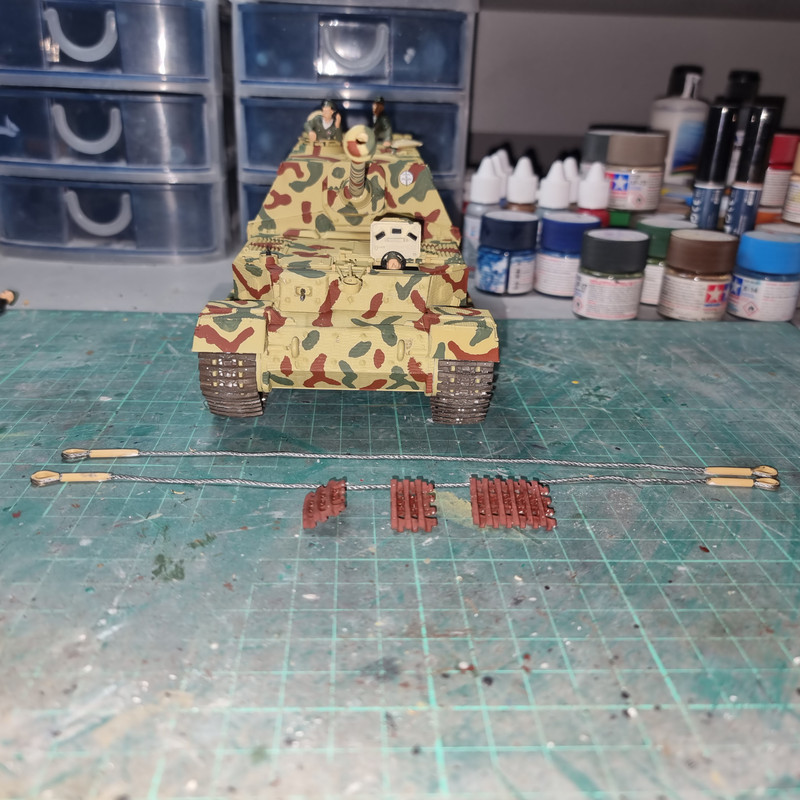
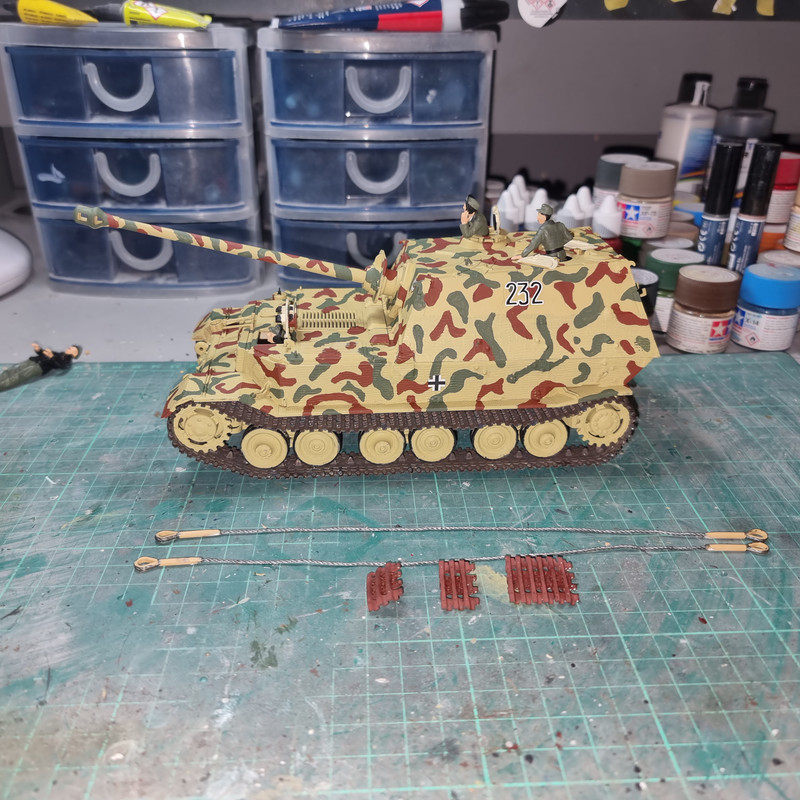
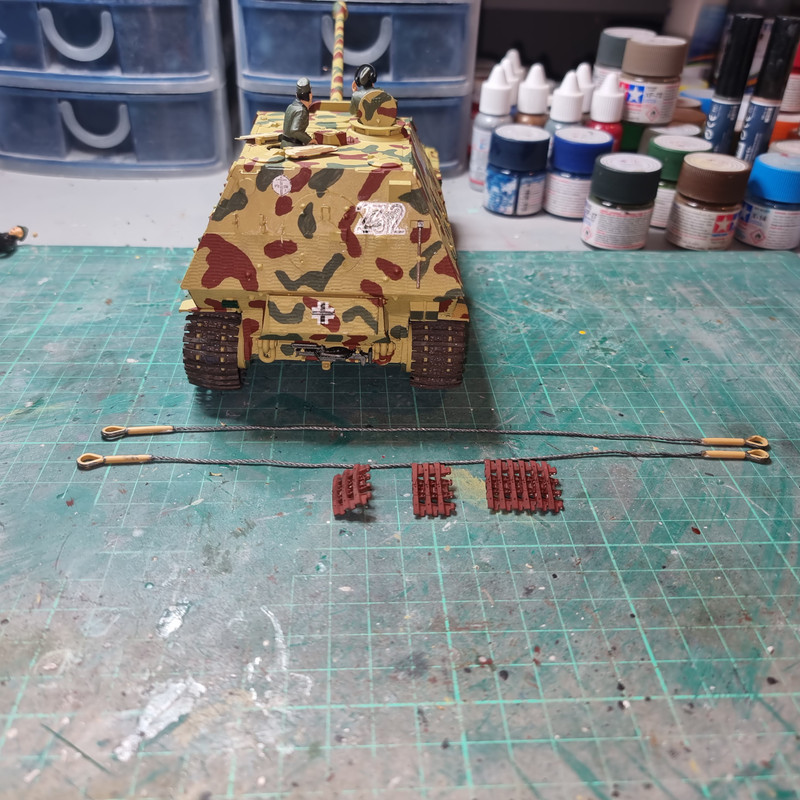
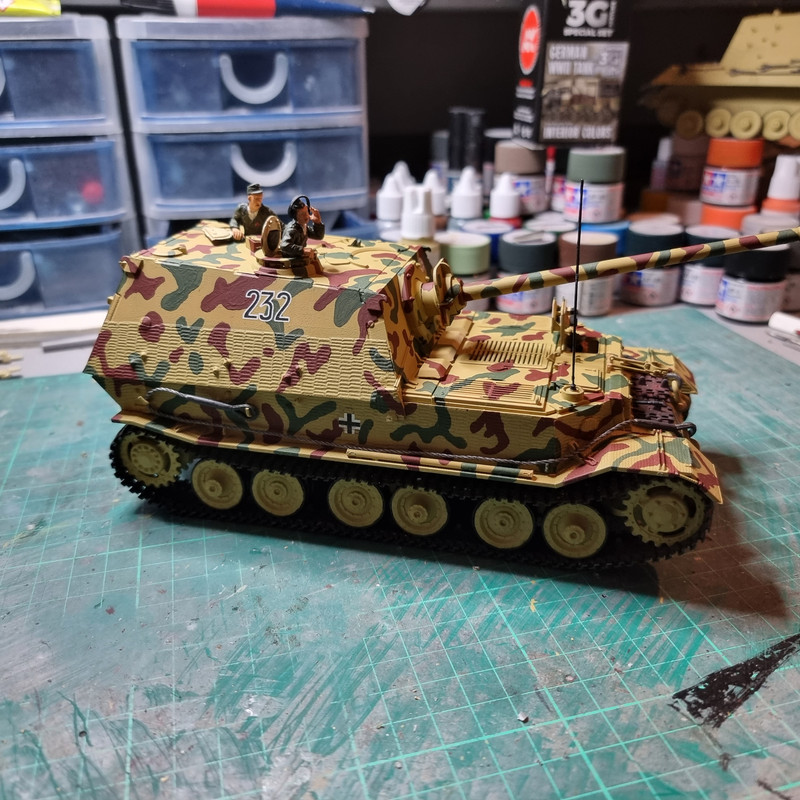
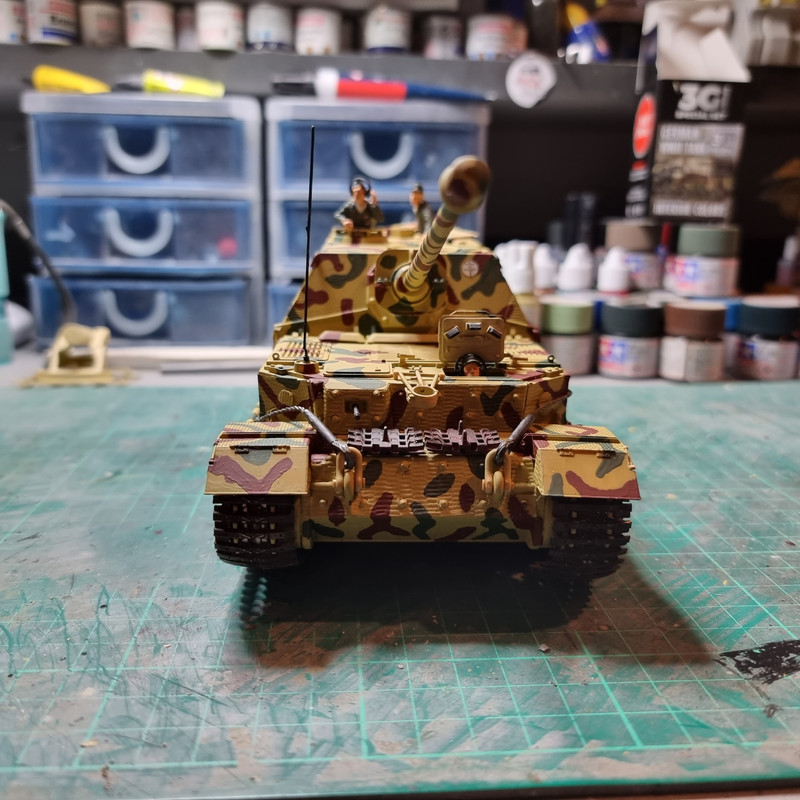
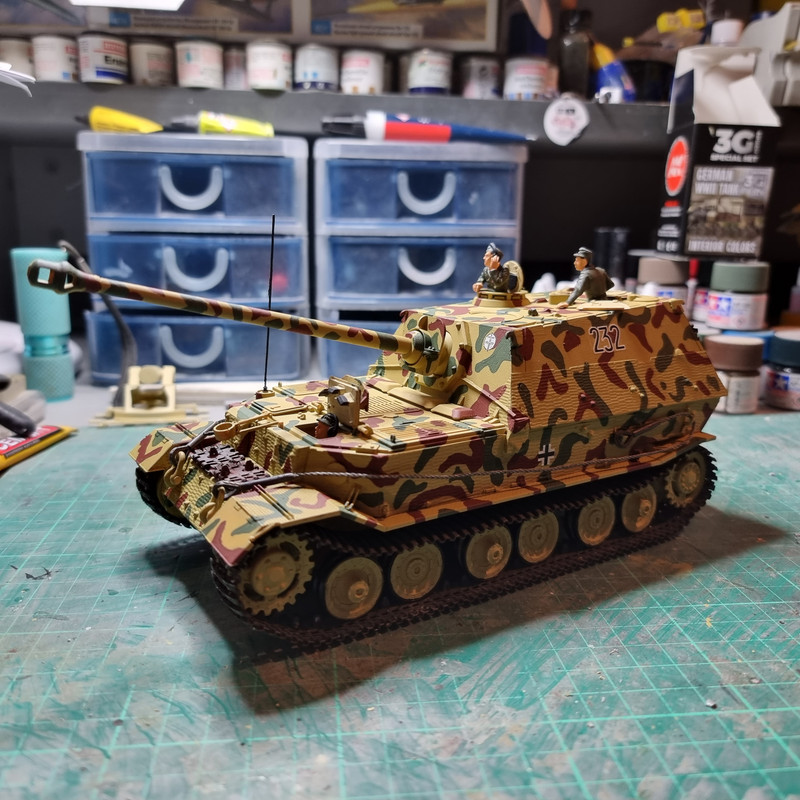
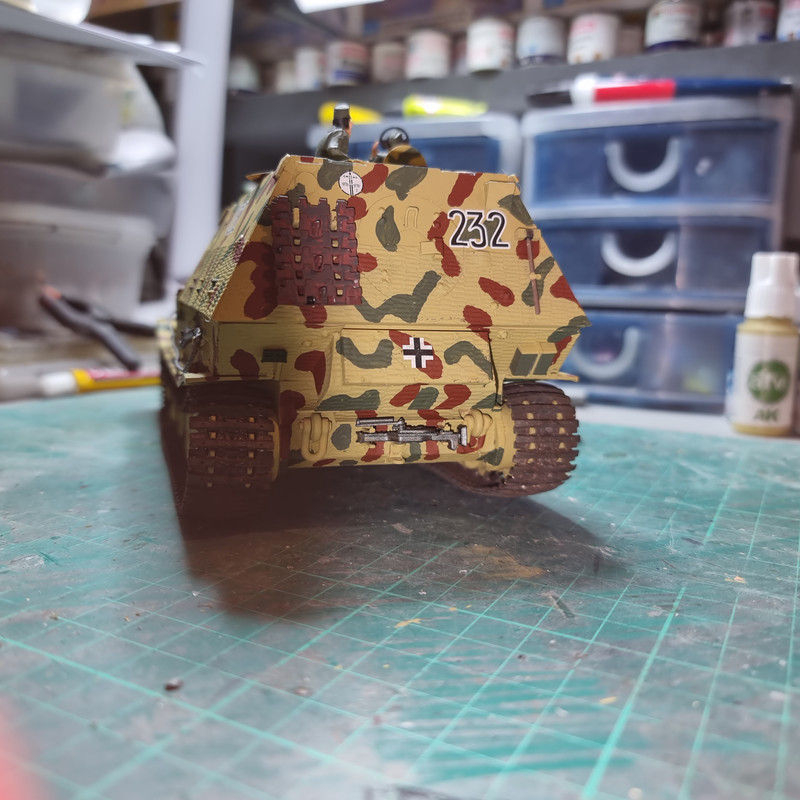
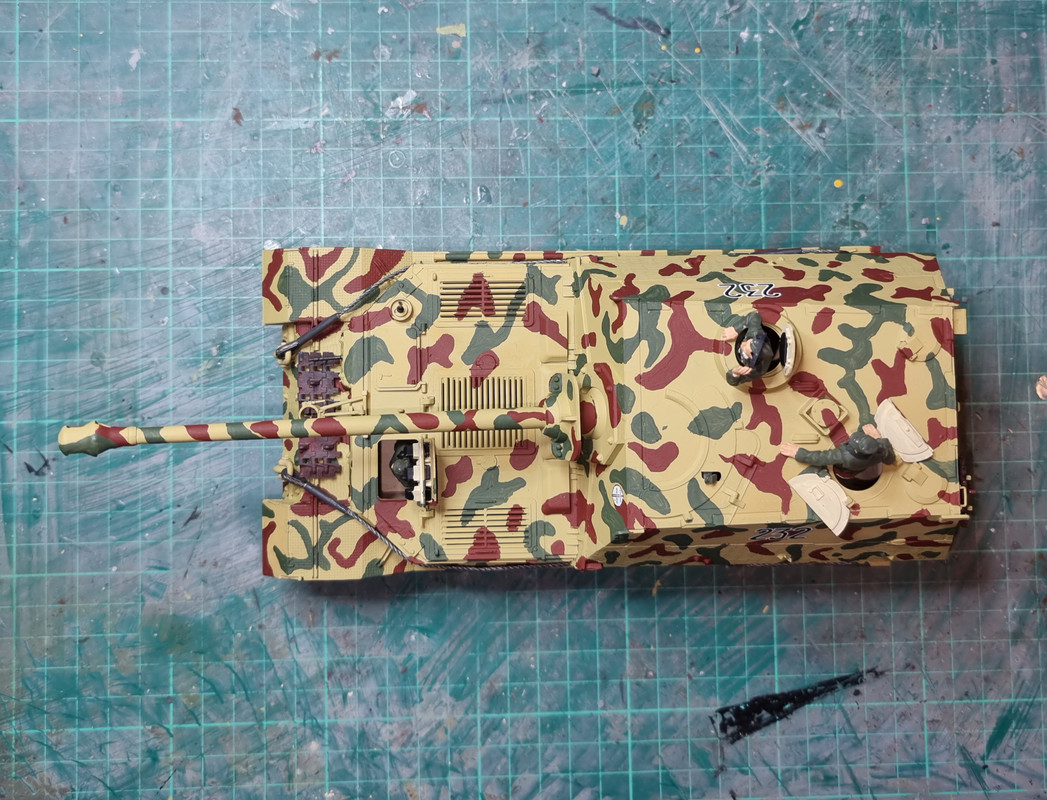
Tamiya 1/35 Tiger (P) Elefant
Posted: Sat Jan 27, 2024 11:19 pm
Next up in the Tiger family is the Elefant, also known as the "Ferdinand". This is the Tamiya 1/35 scale version.
This monster tank hunter had an odd beginning as one of the contenders for the Nazi Schwerer Panzer (Heavy Tank) that became known as the Tiger 1. Two designs were submitted - Henschel submitted design VK4501 with a conventional powerplant/drive train and centrally mounted turret whilst Porsche submitted design VK45-01P with a forward mounted turret and a complex electro-mechanical drive system (later to resurface in the Maus). Although Hitler was fascinated by the Porsche drive system the contract was awarded to the Henschel design in part because it was a less complex system but mainly because the Porsche design required large amounts of copper, a commodity the Reich was short of. However Porsche had completed 100 hulls in anticipation of winning that now had no use as designed and rather than waste these hulls the Oberkommandante des Heer mandated they be converted into casemated tank hunters making them the precursor to the Jagdpanzer and an improvement over the open-topped Panzerjaegers. Conversion was relatively easy, the electro-mechanical drive meaning the engine could be put anywhere, all that needed to be done was change the length of the power cables to the drive motors. In the final design the two engines sat between the driver & radio operator positions and the gun crew & commander in the casemate meaning communication was only poscible whilst the intercom functioned. . Approx. 91 Ferdinands entered service designated Panzerjäger Tiger (P)
In the field the type proved slow and unreliable, the engines tending to overheat, and with high fuel consumption. Recovery of damaged Elefants was another problem - the standard recovery vehicle at the time was the BergePanzer IV. Whilst more than capable of recovering Panthers, to recover a Tiger 1 required 3 Bergepanzers and to recover an Elefant required FIVE!! As a result three of the remaining 9 hulls were converted to Bergepanzer Ferdinand specifications.
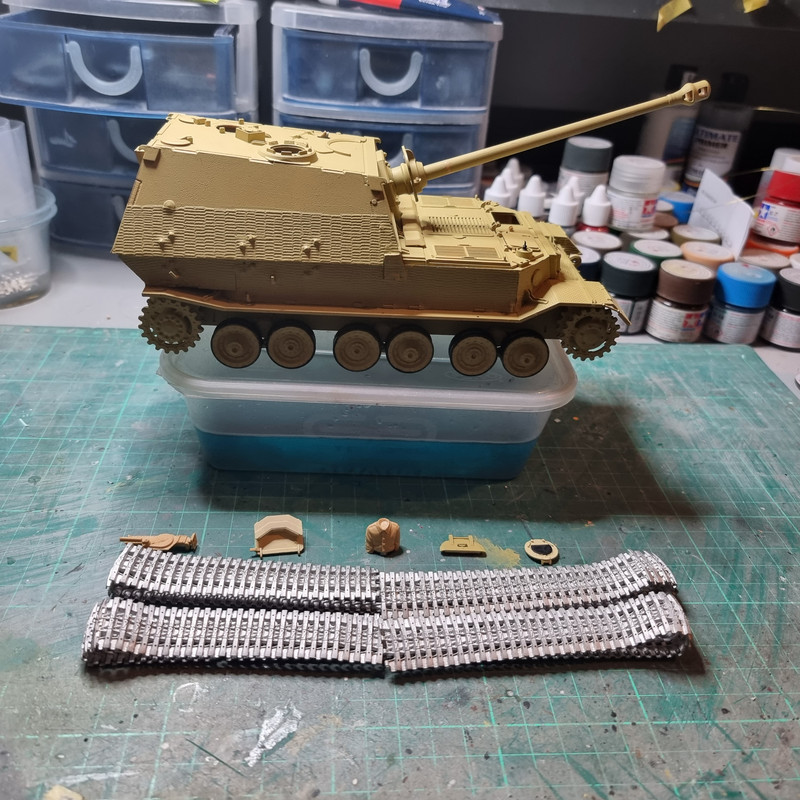
Although the Elefant usea the same "slack track" design as the Tiger 1, Panther etc the suspension was much simplified with 6 wheel on 3 suspension units per side as opposed to the complex interleaved "Schachtellaufwerk" design Henschel used on the Tiger 1.
The Pak-43 main gun was very effective with a 28⁰ traverse and an elevation of between -8⁰ to +14⁰ but initially the type lacked any defensive weaponry and Kursk proved them vulnerable to infantry up close. As a result a hull machine gun was installed in front of the radio operator.
Only two Elefants now survive - one in the US Armys Fort Wragg collection that was captured at Anzio - hull number 102 and one in the Kubinka Tank Museum in Russia, captured at Kursk, hull number either 150090 or 501.
The kit
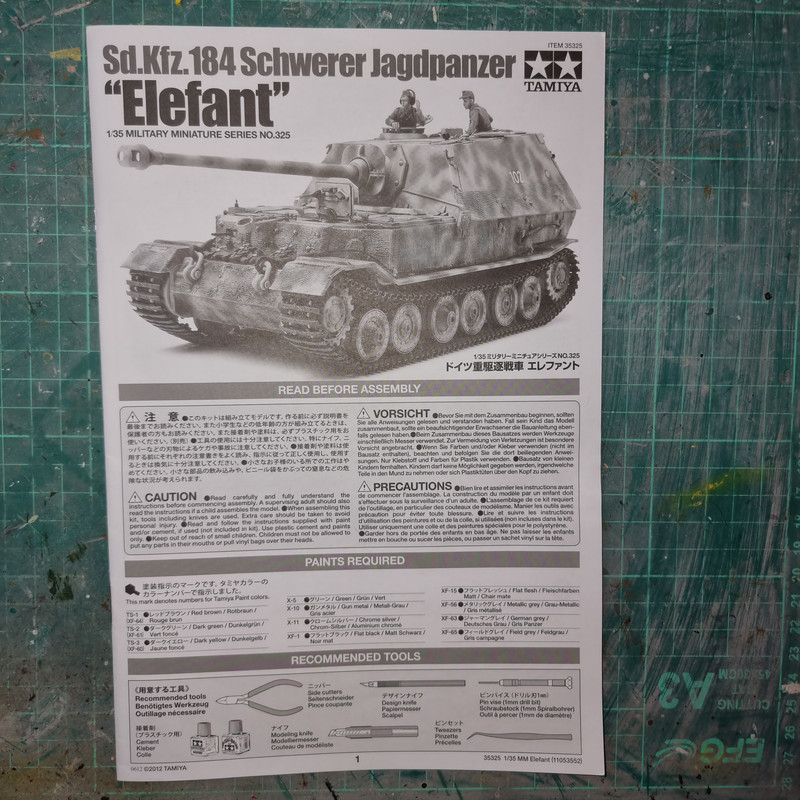
Instructions
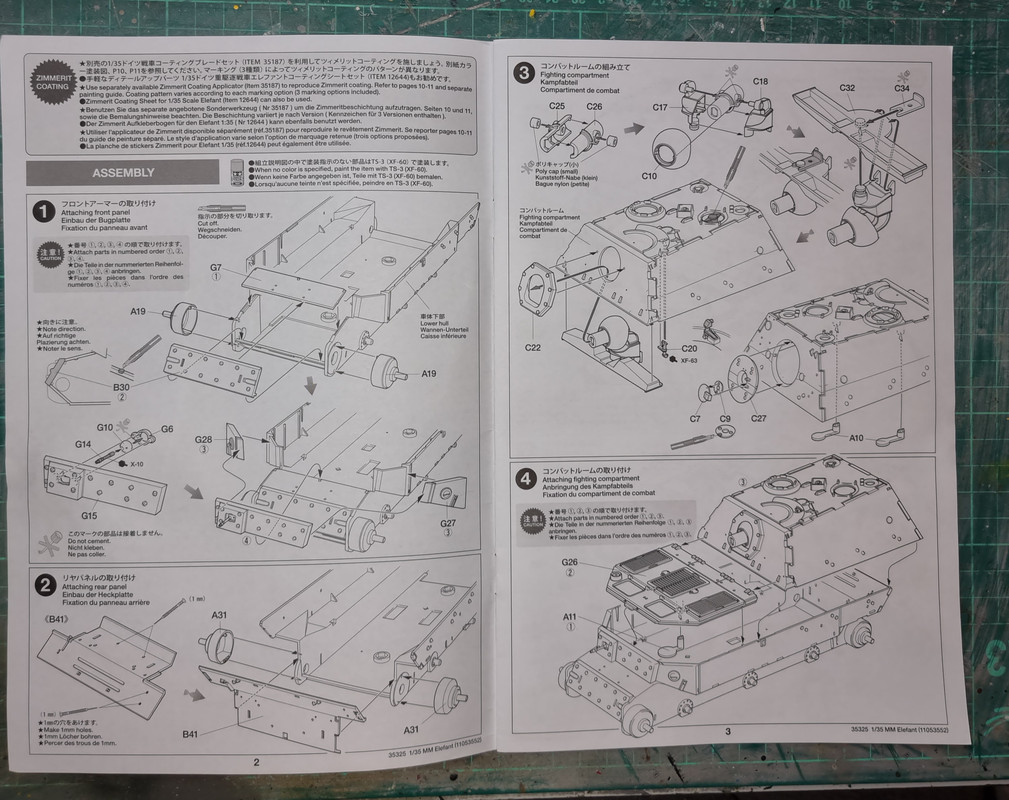
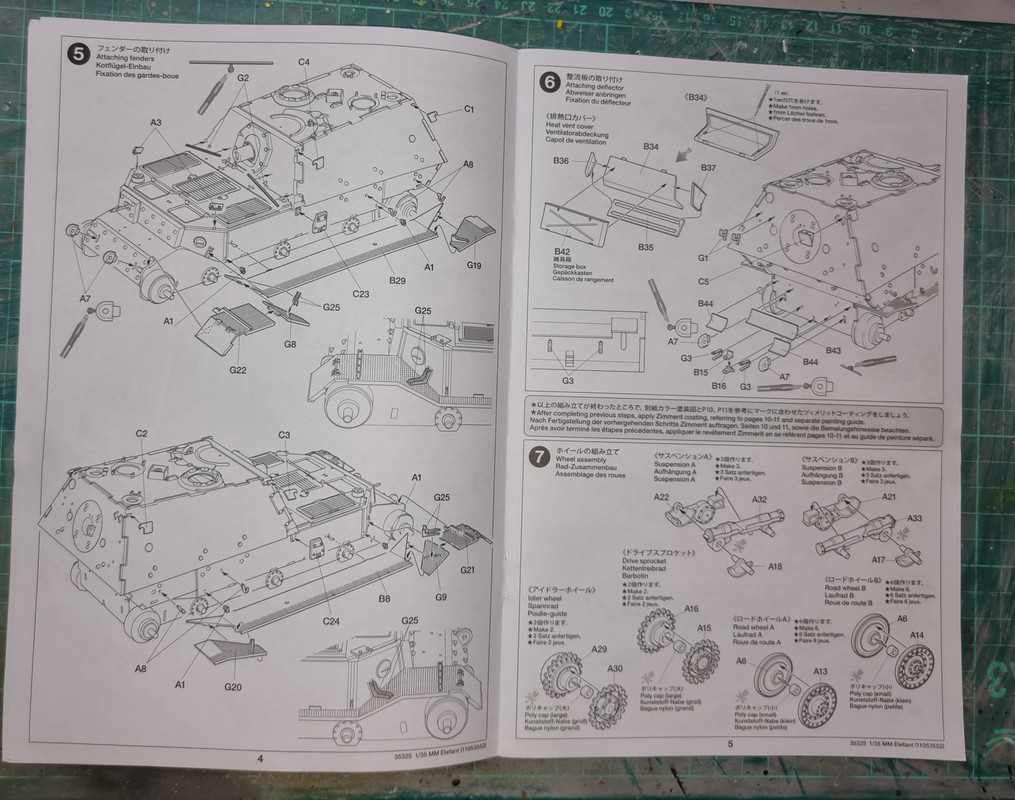
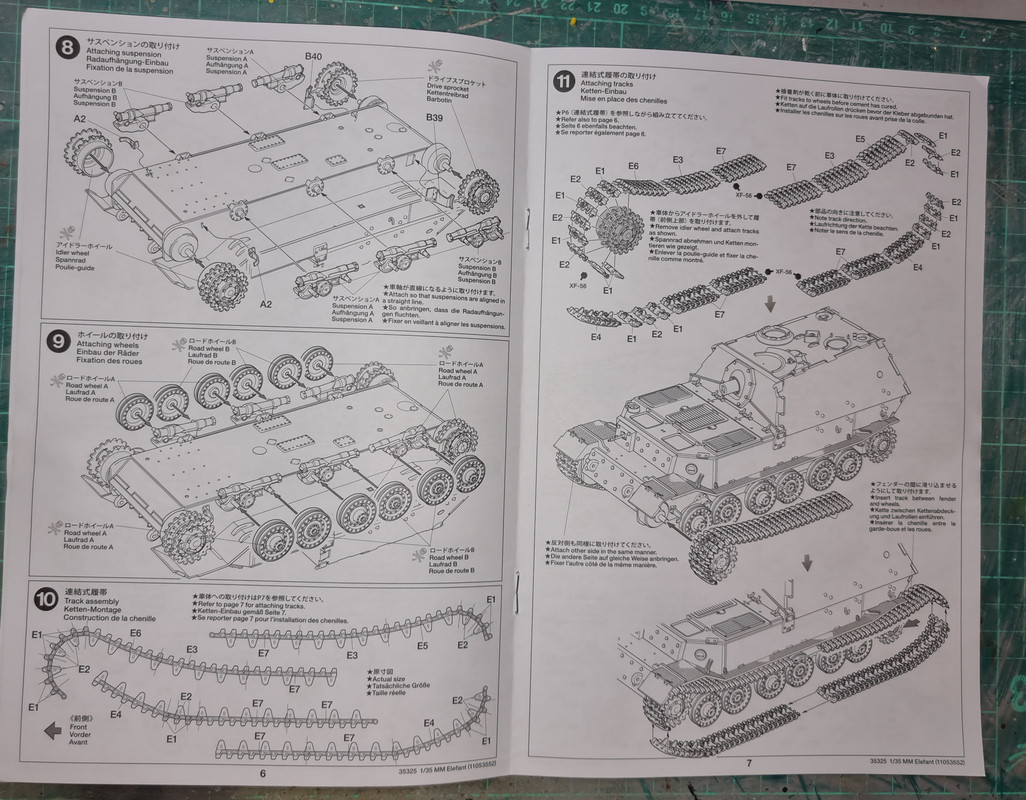
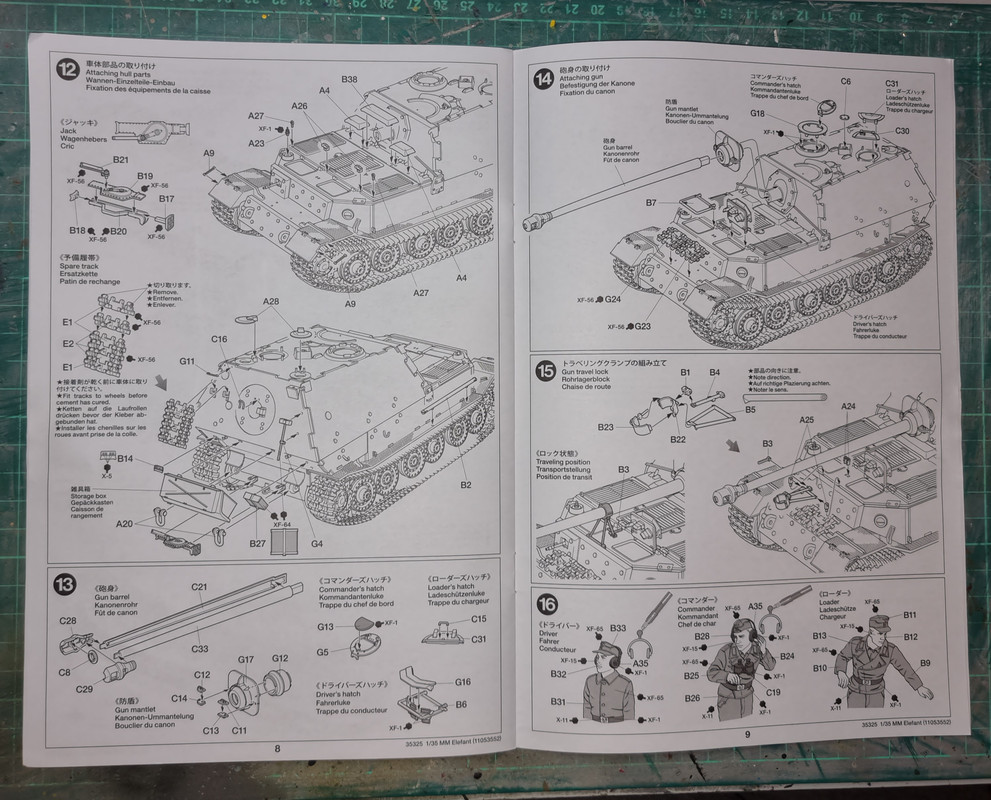
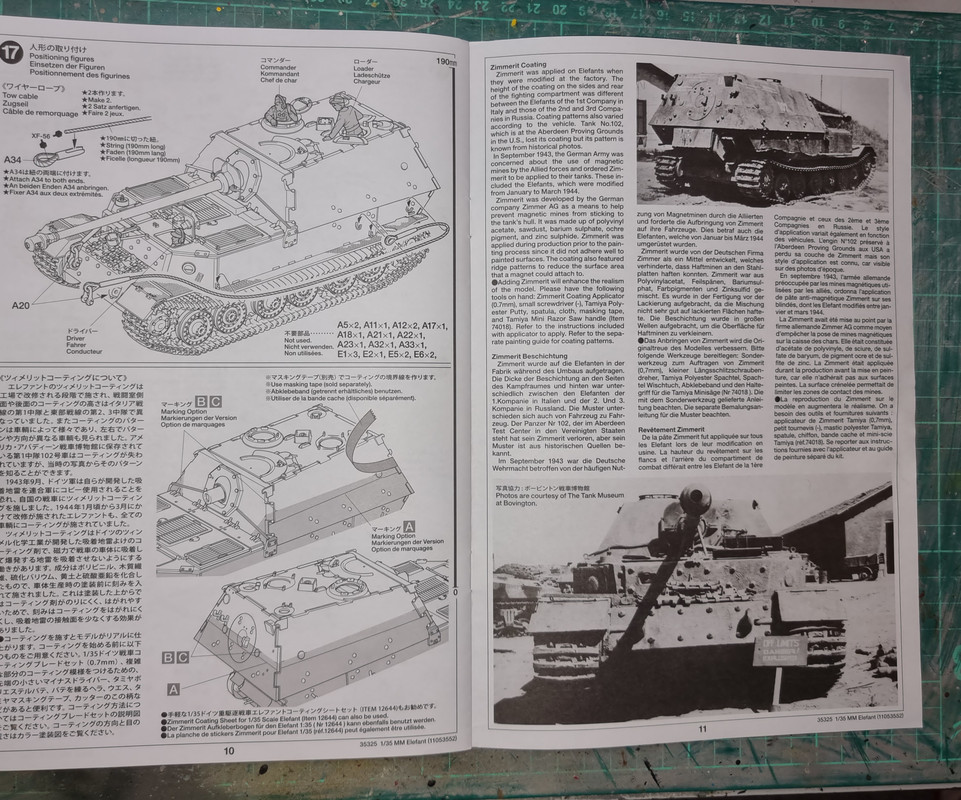
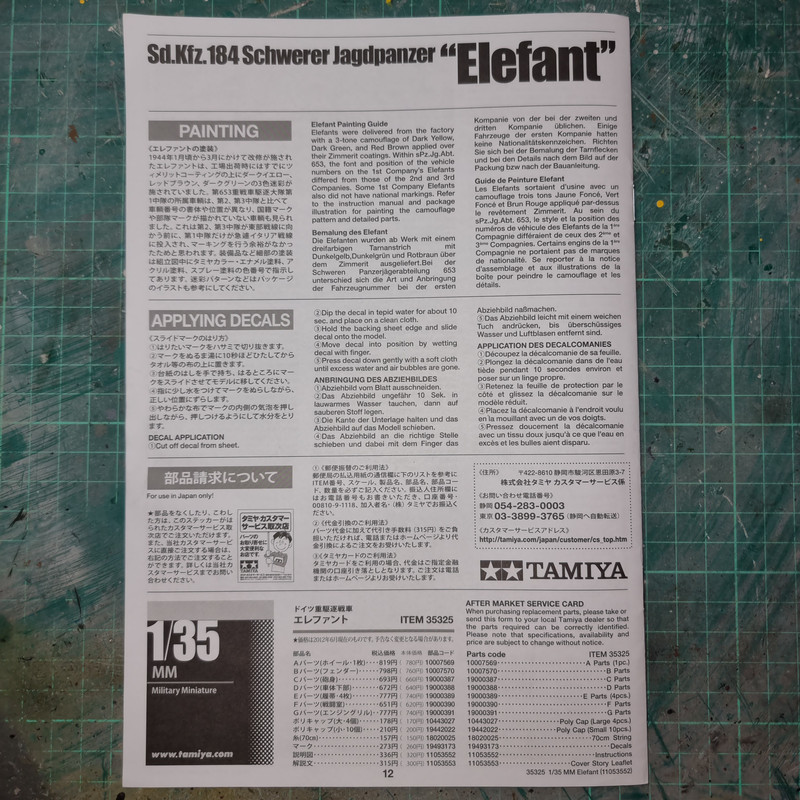
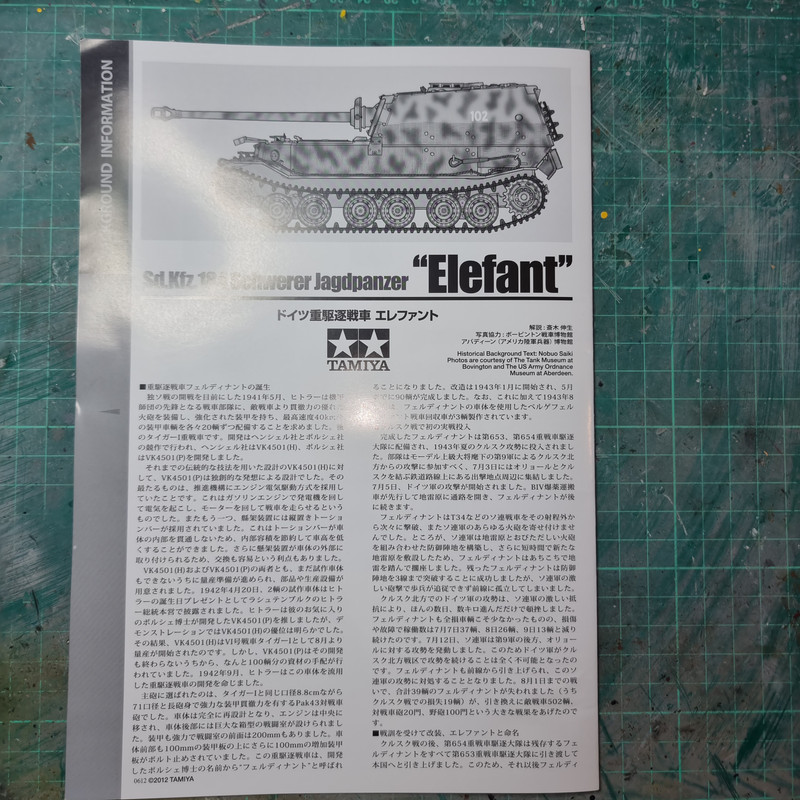
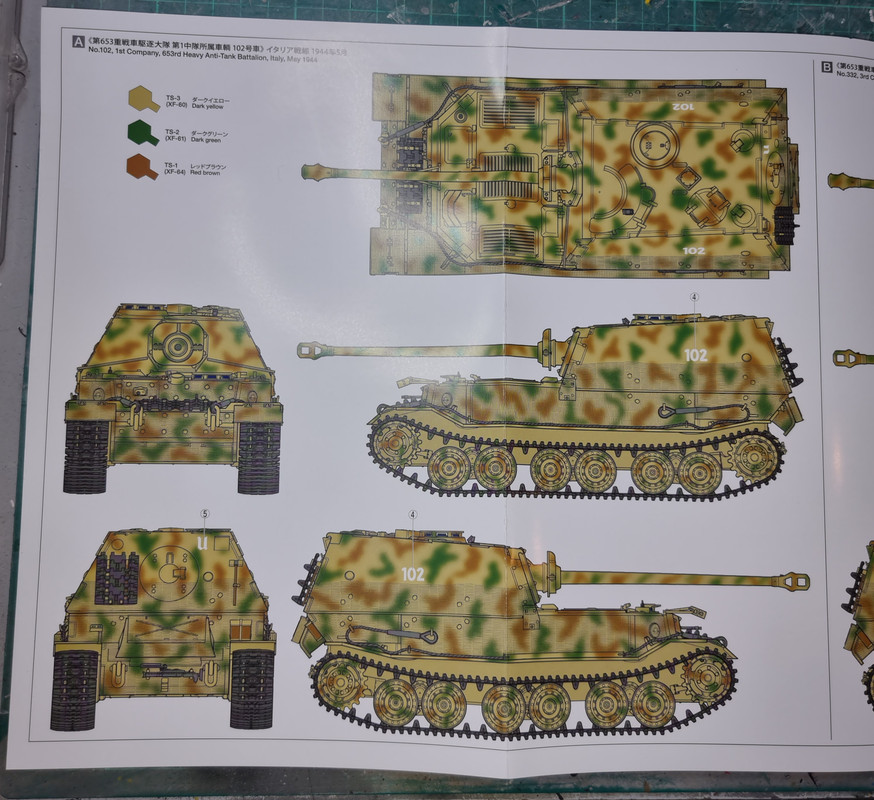
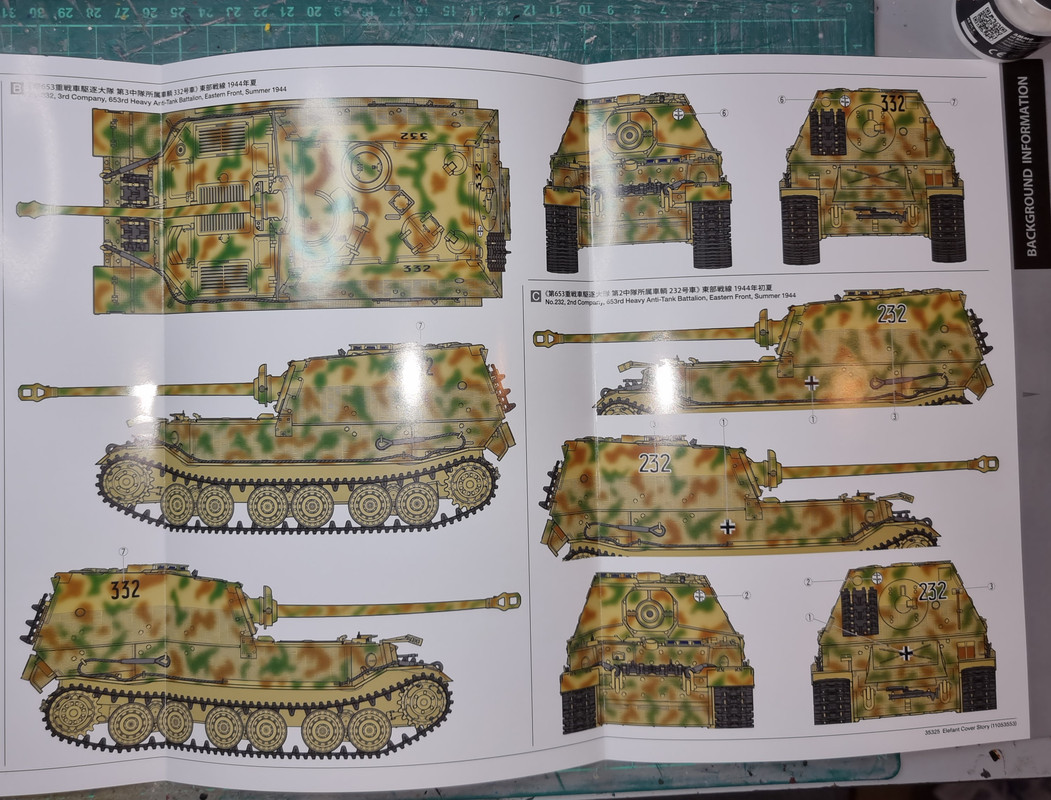
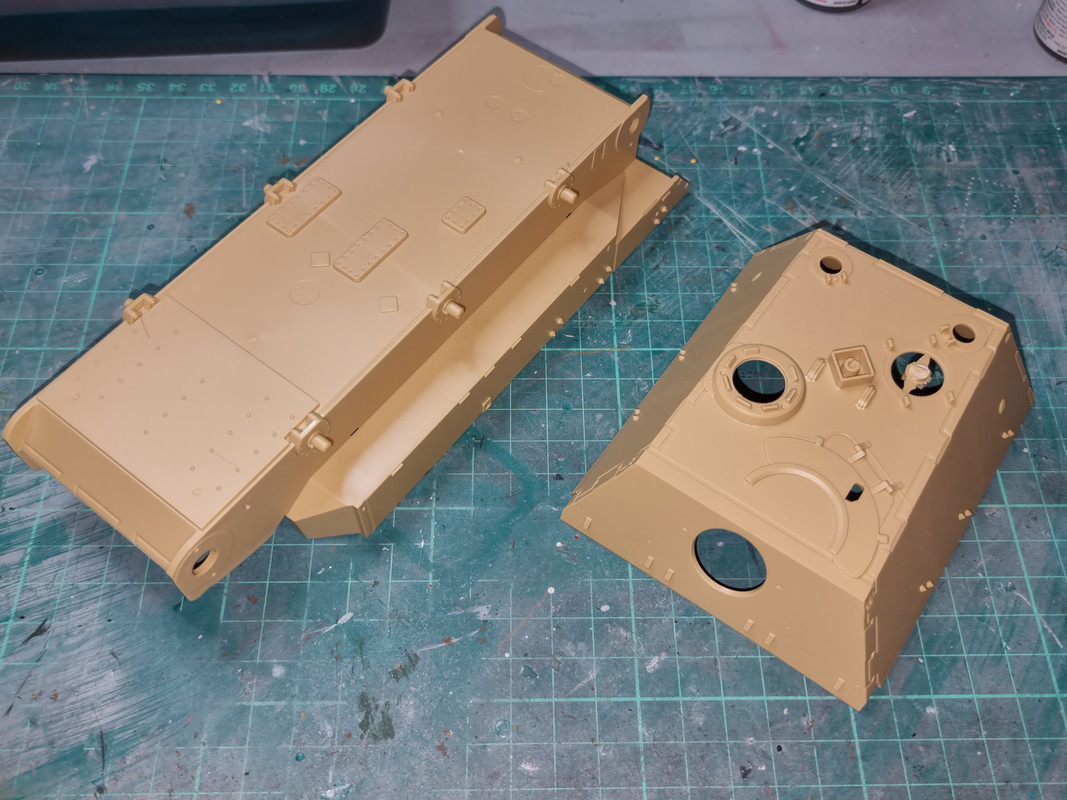
Hull and Casemate
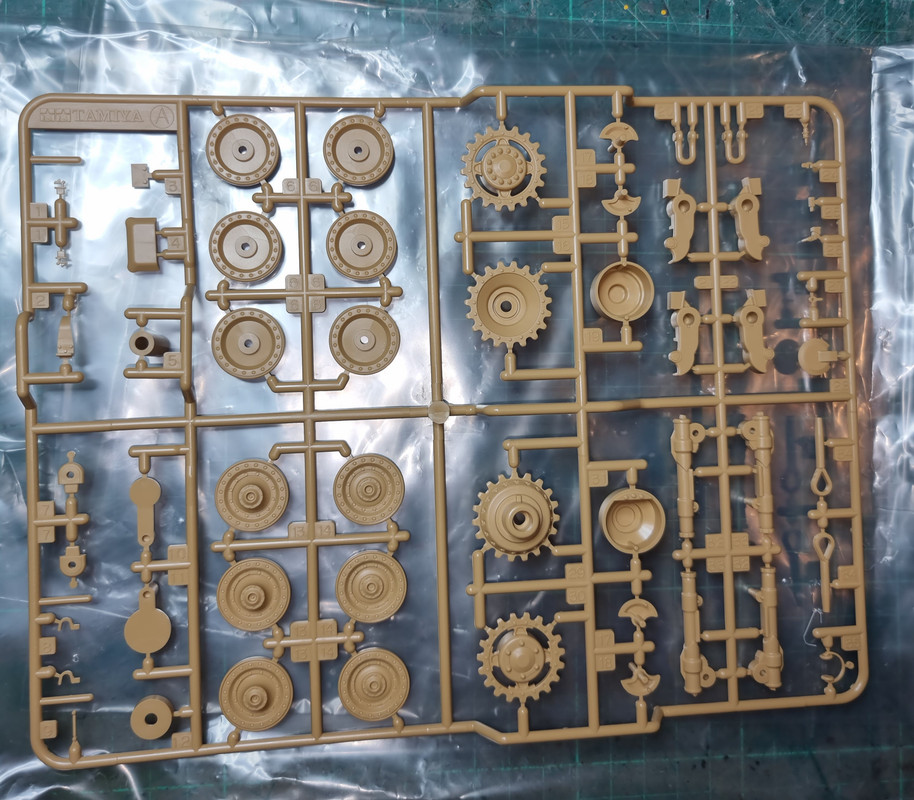
Sprue A (x2)
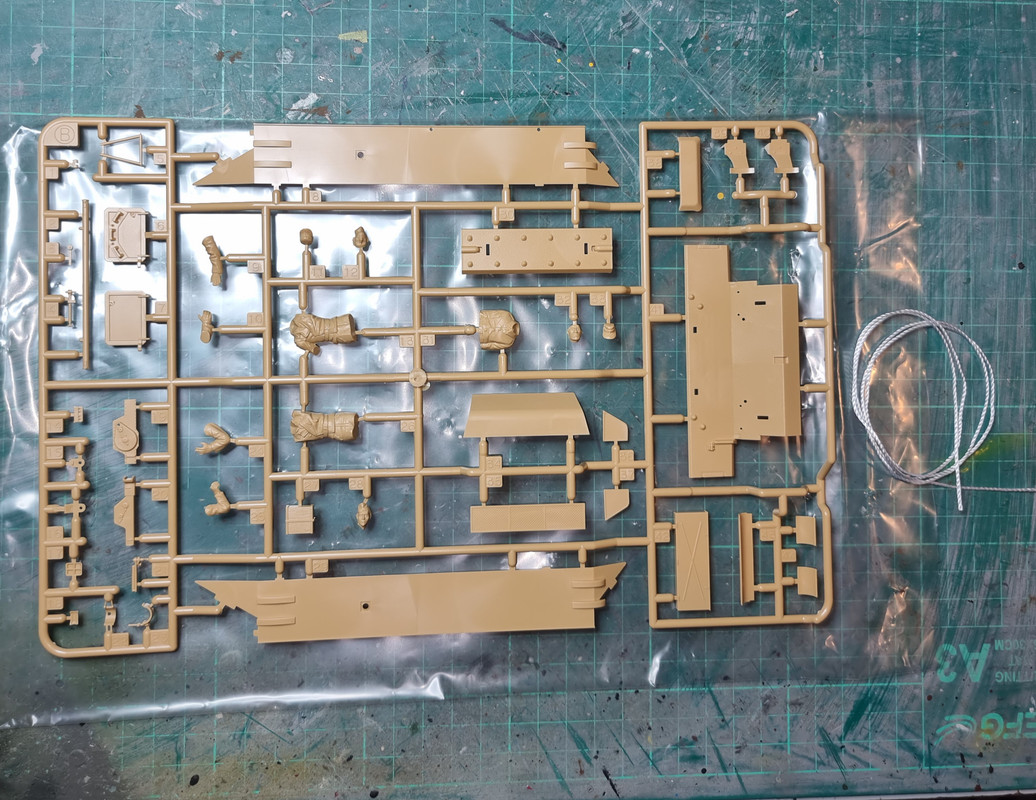
Sprue B
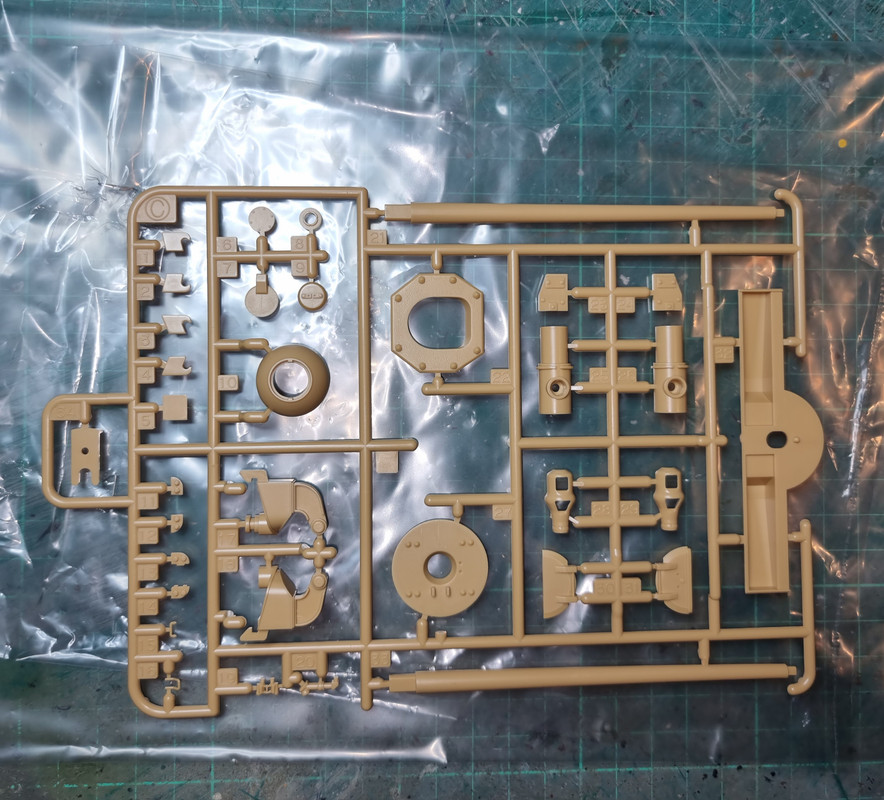
Sprue C
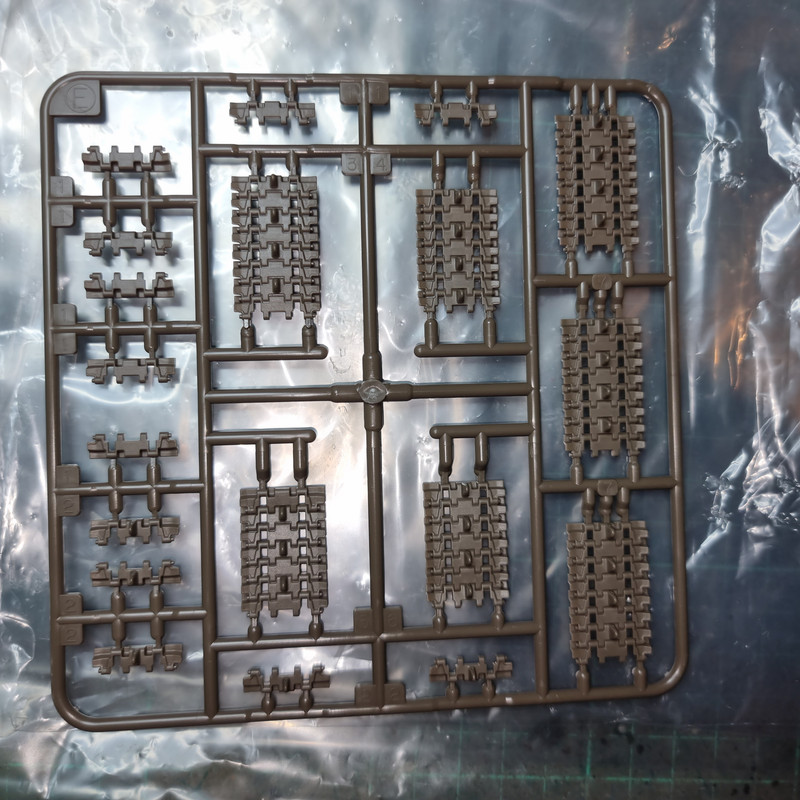
Sprue E (x4)
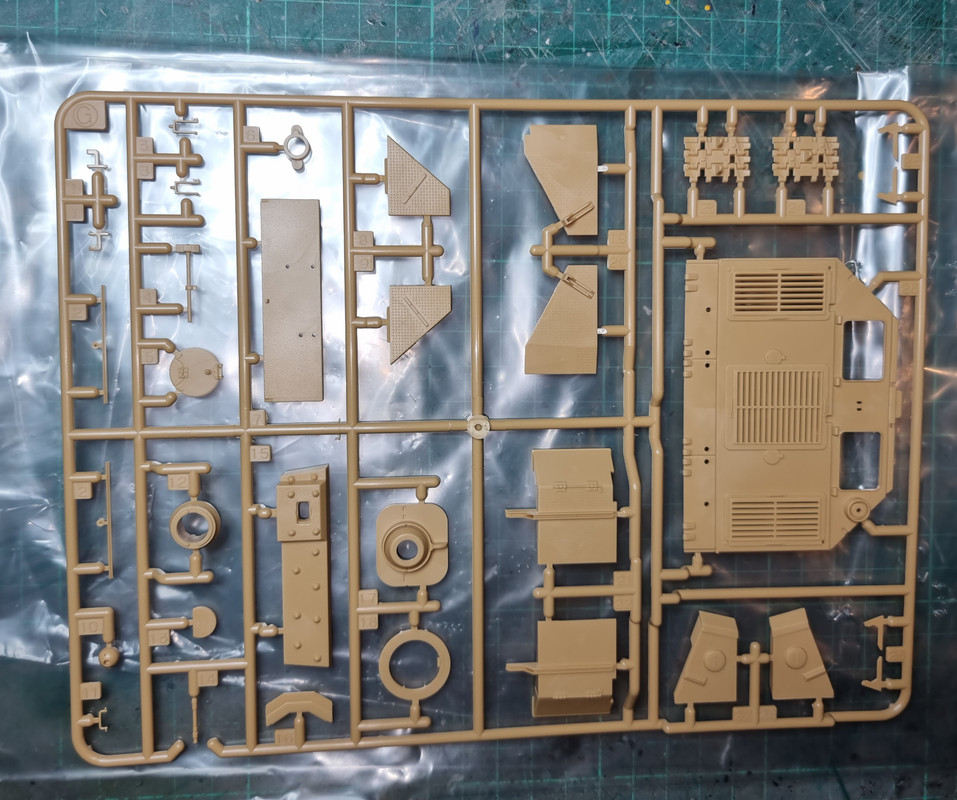
Sprue G
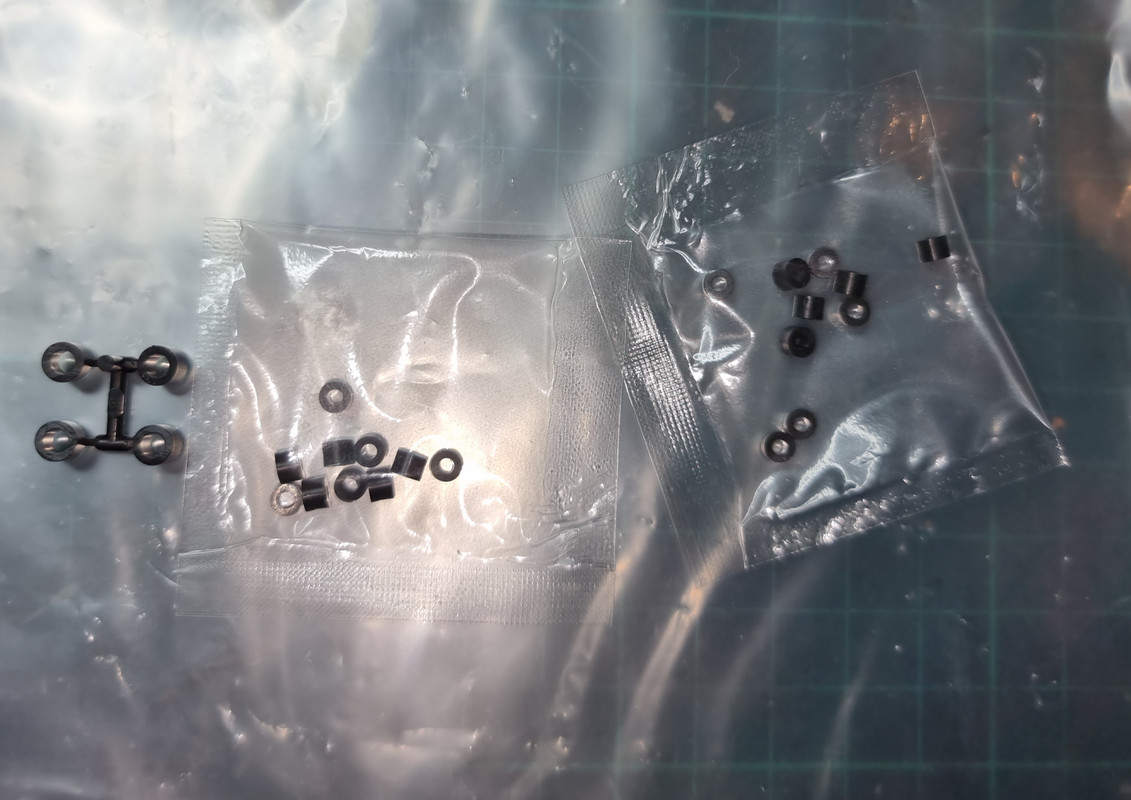
Polycaps
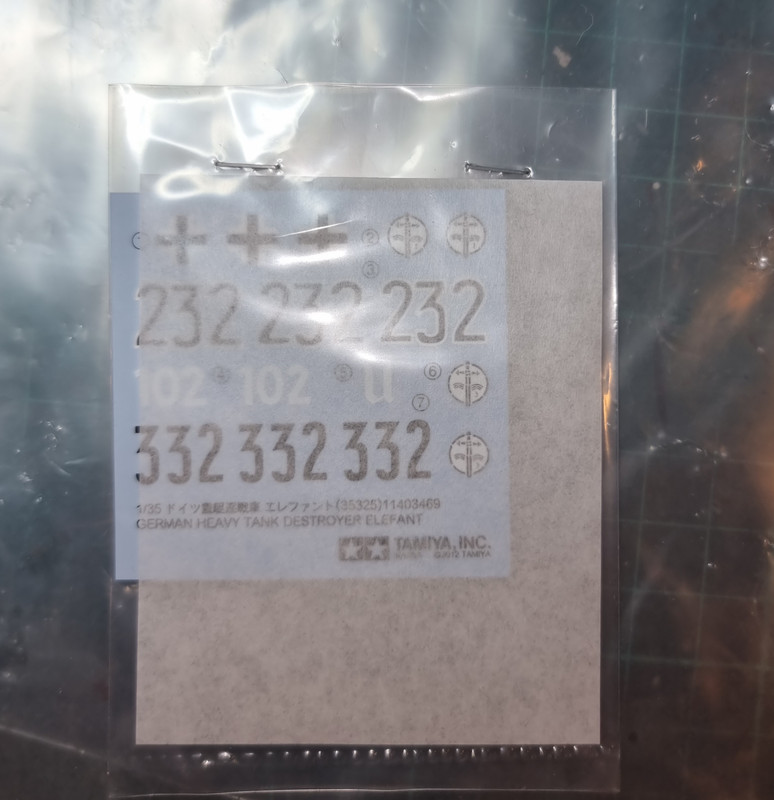
Decals
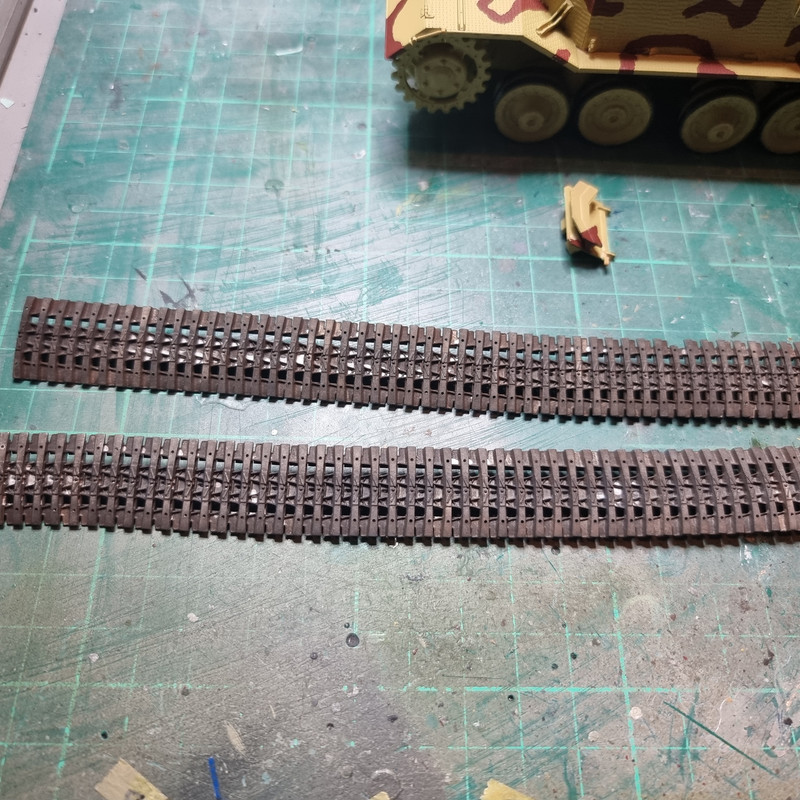
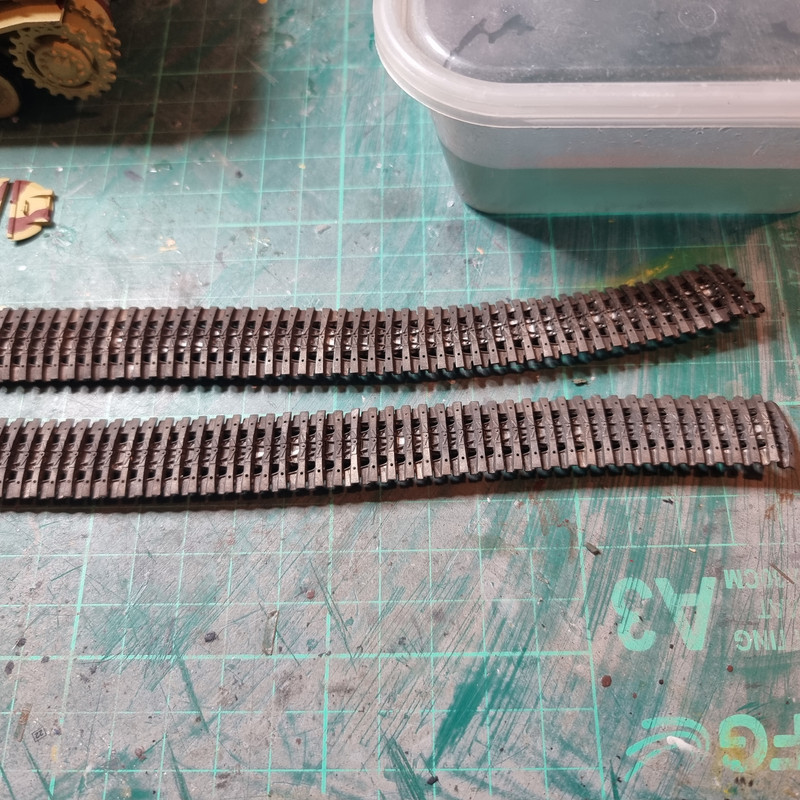
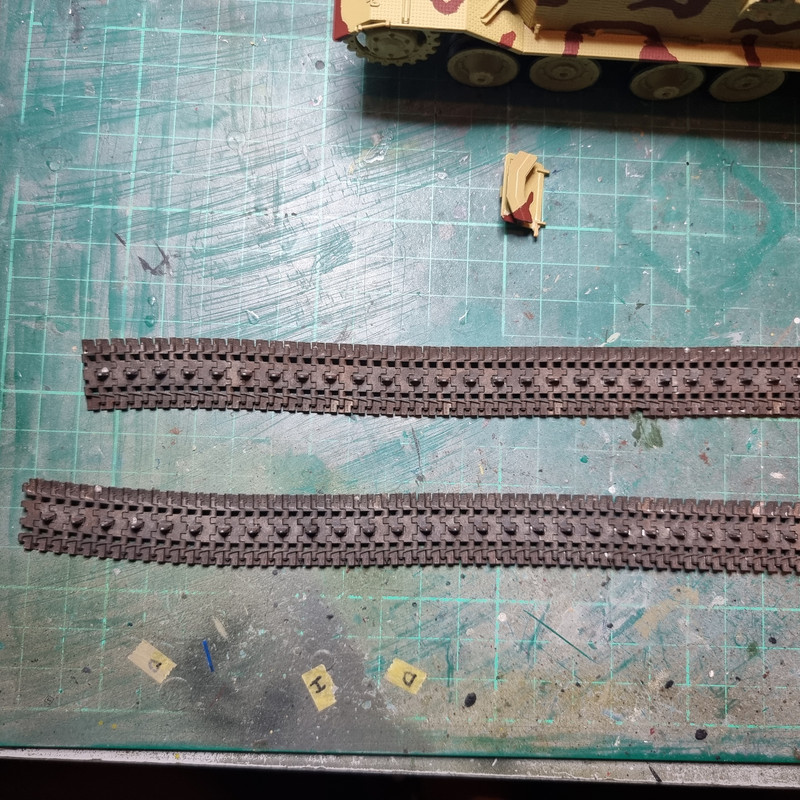
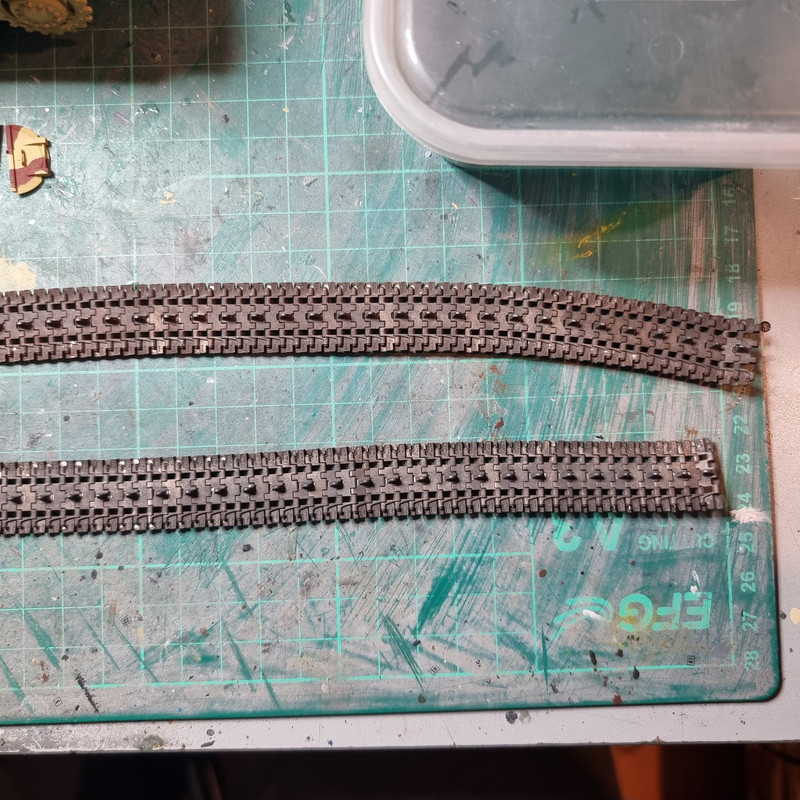
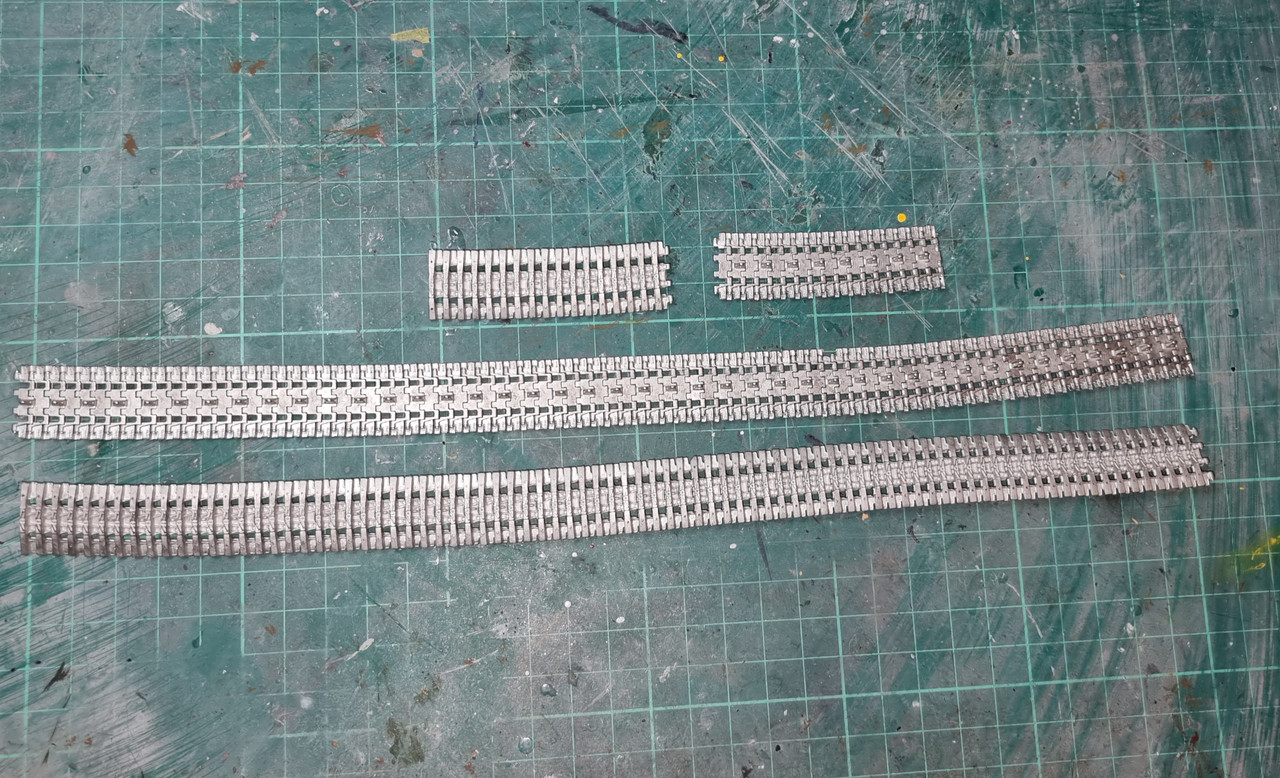
Friuhl metal tracks
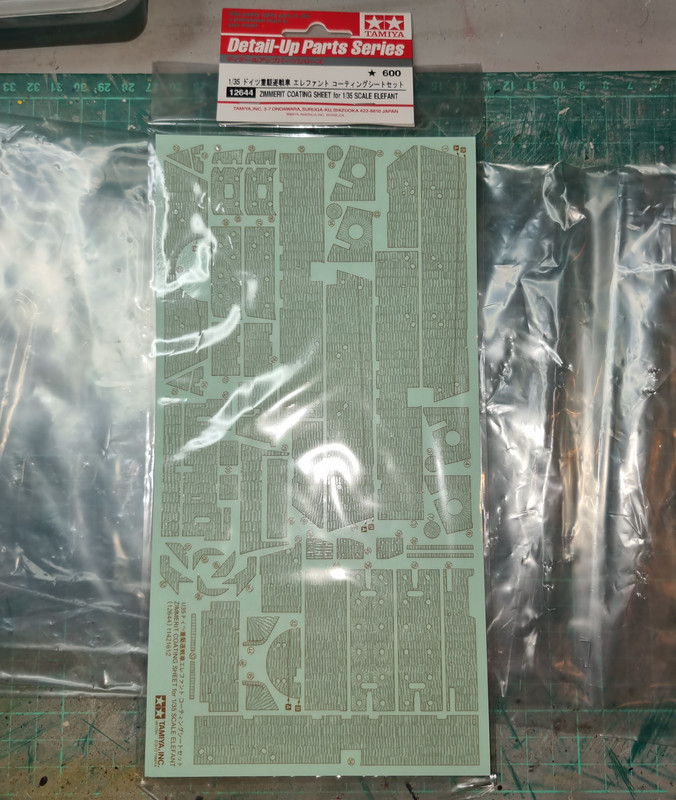
Zimmerit decals
The build.
As ever the quality of Tamiyas kits impresses. Everything goes together without hassle, the instructions even refer to removing the excess from sprue attachment points.
First job was building up the front of the hull where the driver and radio operator are located.
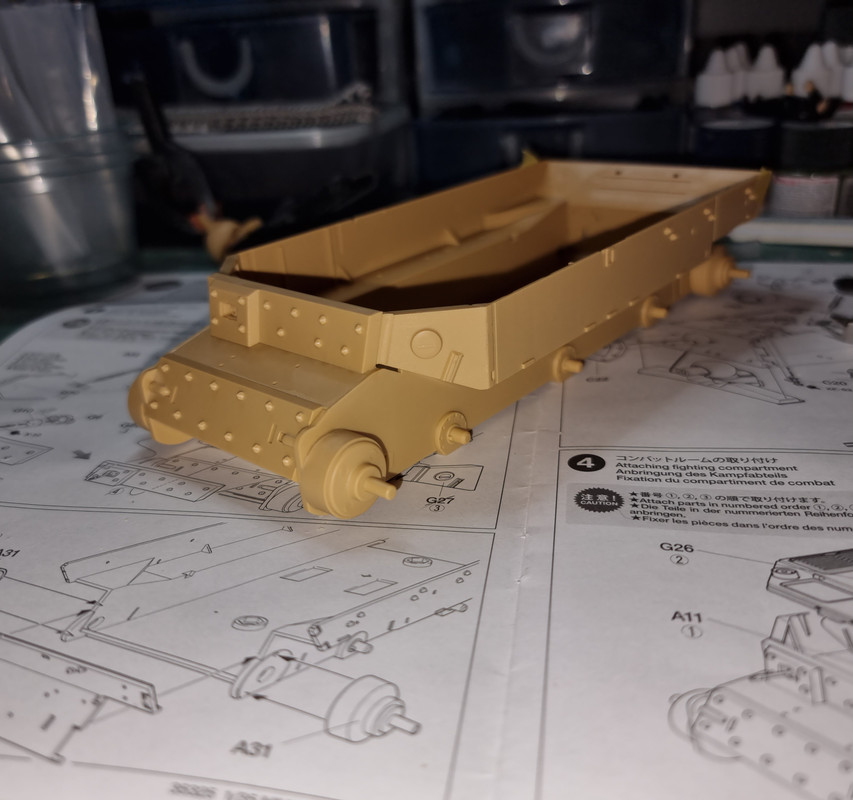
Followed by the gun mount - this uses polycaps on the hinges which - hopefully - will prevent the dreaded "barrel droop"!
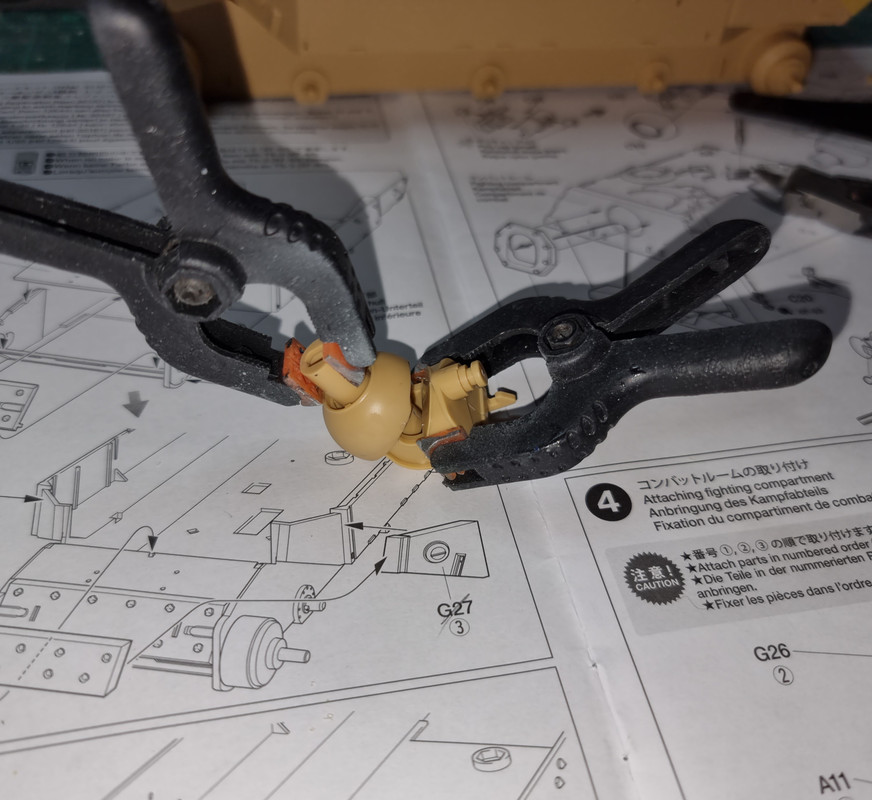
Next up is the casemate - outer collars for the mantlet and shell case ejection port
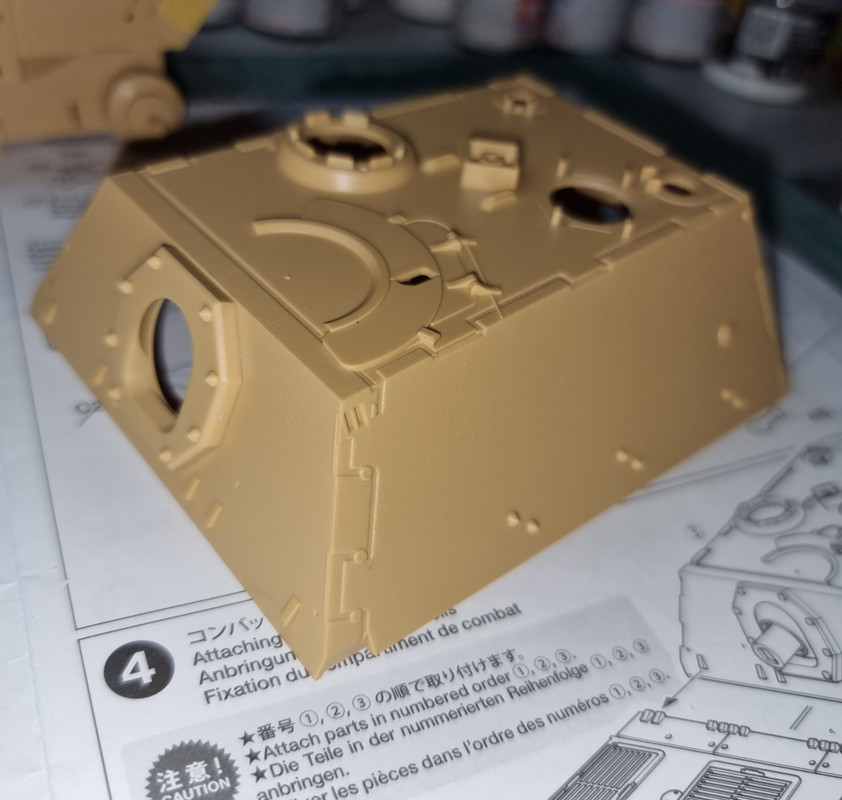
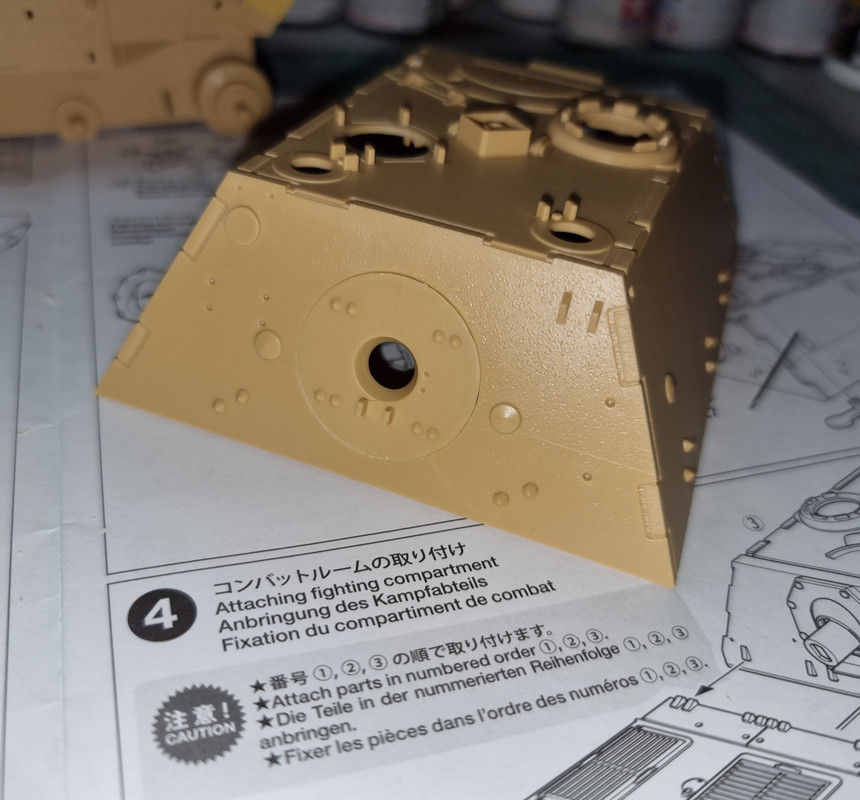
Then the hull, upper front deck and casemate are joined.
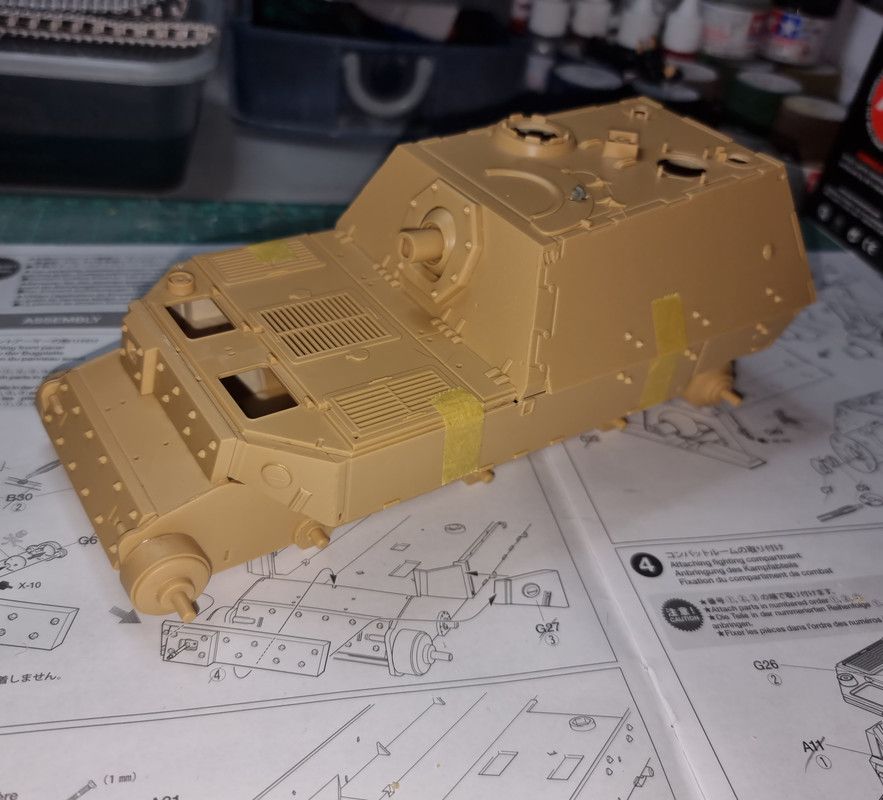
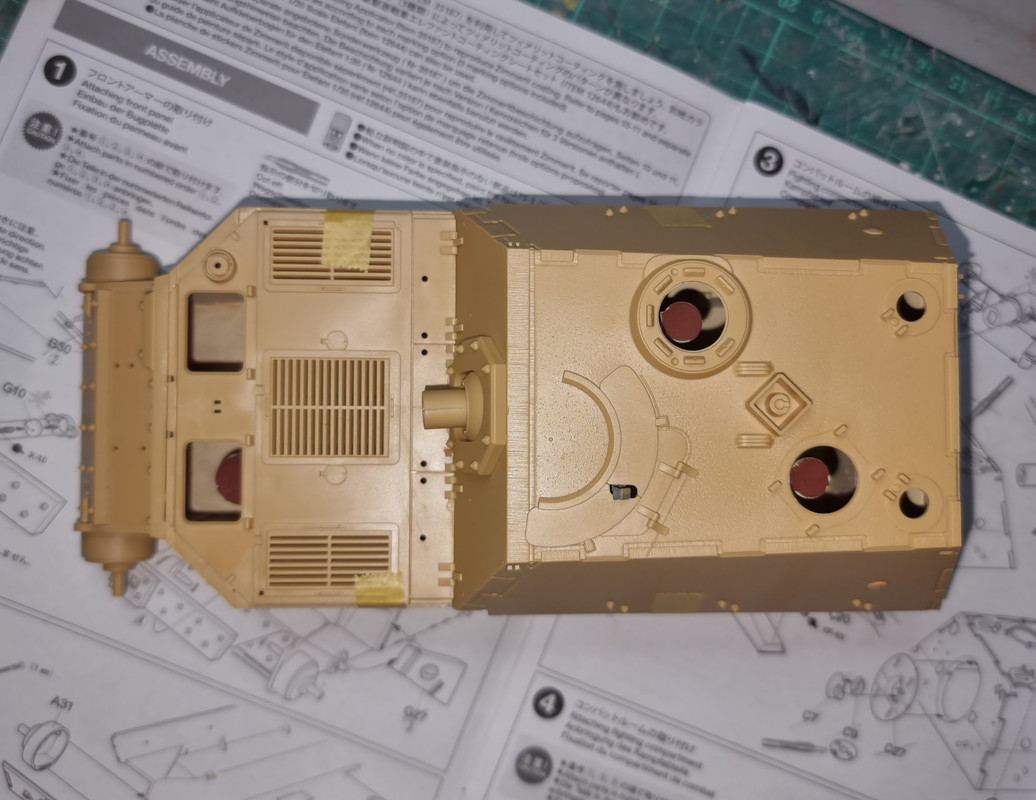
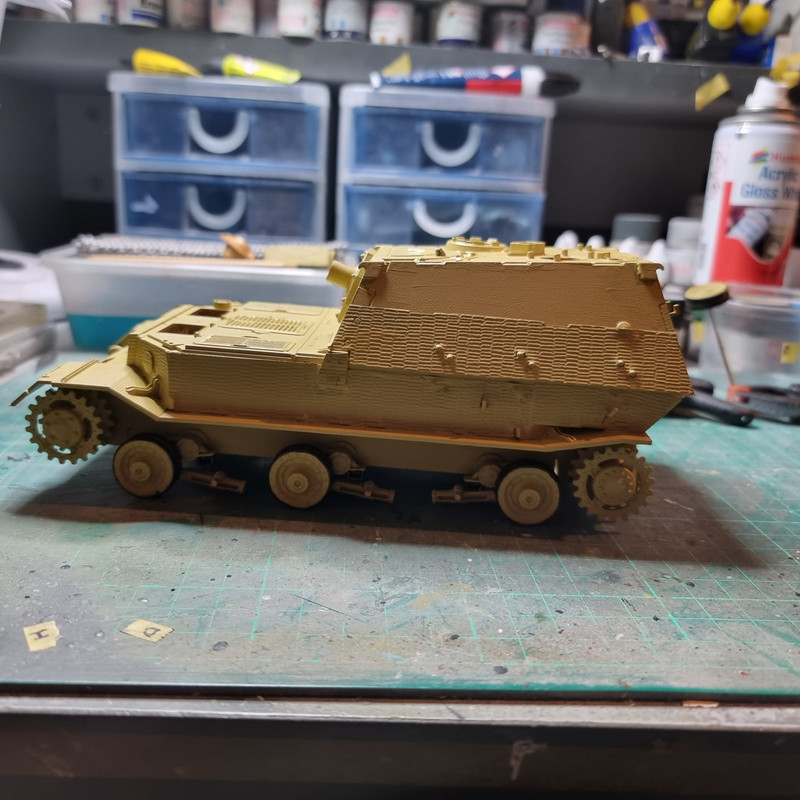
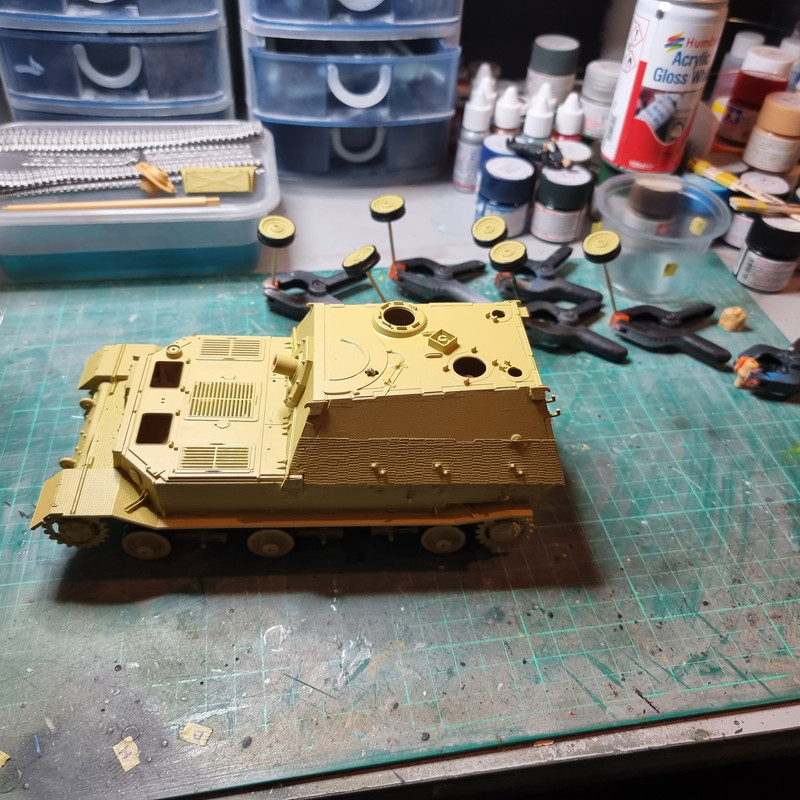
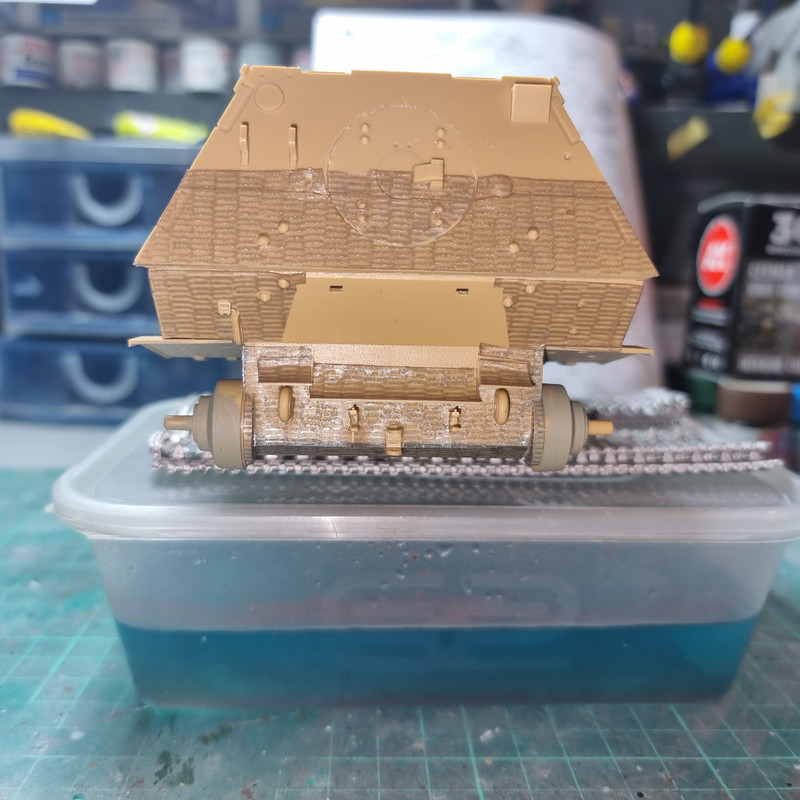
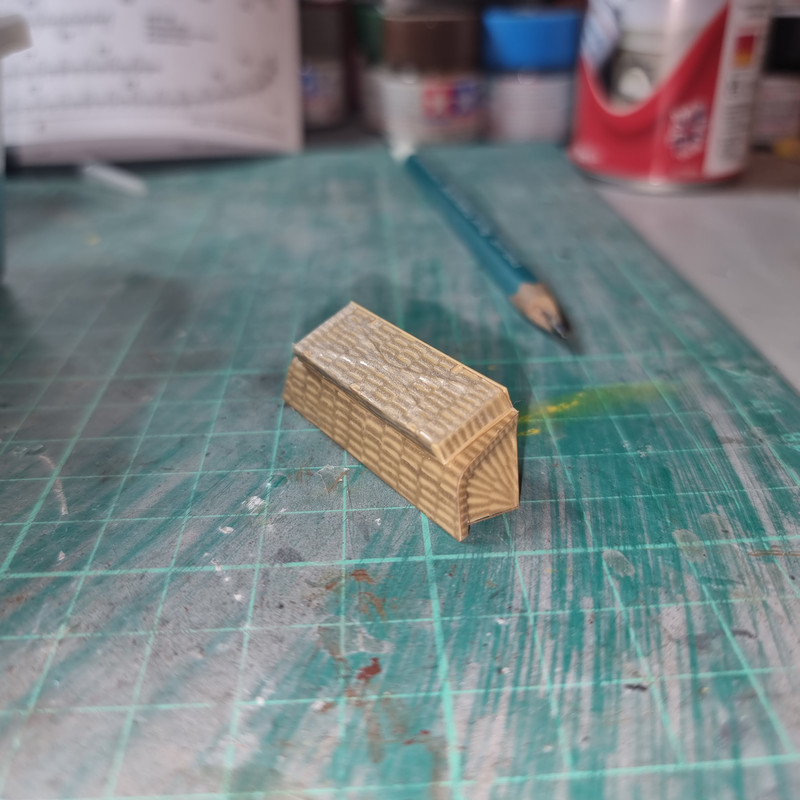
I skipped adding the main gun mount and crew seats to the interior as its getting close to the interesting part of this build - adding the Zimmerit!!
This monster tank hunter had an odd beginning as one of the contenders for the Nazi Schwerer Panzer (Heavy Tank) that became known as the Tiger 1. Two designs were submitted - Henschel submitted design VK4501 with a conventional powerplant/drive train and centrally mounted turret whilst Porsche submitted design VK45-01P with a forward mounted turret and a complex electro-mechanical drive system (later to resurface in the Maus). Although Hitler was fascinated by the Porsche drive system the contract was awarded to the Henschel design in part because it was a less complex system but mainly because the Porsche design required large amounts of copper, a commodity the Reich was short of. However Porsche had completed 100 hulls in anticipation of winning that now had no use as designed and rather than waste these hulls the Oberkommandante des Heer mandated they be converted into casemated tank hunters making them the precursor to the Jagdpanzer and an improvement over the open-topped Panzerjaegers. Conversion was relatively easy, the electro-mechanical drive meaning the engine could be put anywhere, all that needed to be done was change the length of the power cables to the drive motors. In the final design the two engines sat between the driver & radio operator positions and the gun crew & commander in the casemate meaning communication was only poscible whilst the intercom functioned. . Approx. 91 Ferdinands entered service designated Panzerjäger Tiger (P)
In the field the type proved slow and unreliable, the engines tending to overheat, and with high fuel consumption. Recovery of damaged Elefants was another problem - the standard recovery vehicle at the time was the BergePanzer IV. Whilst more than capable of recovering Panthers, to recover a Tiger 1 required 3 Bergepanzers and to recover an Elefant required FIVE!! As a result three of the remaining 9 hulls were converted to Bergepanzer Ferdinand specifications.
Although the Elefant usea the same "slack track" design as the Tiger 1, Panther etc the suspension was much simplified with 6 wheel on 3 suspension units per side as opposed to the complex interleaved "Schachtellaufwerk" design Henschel used on the Tiger 1.
The Pak-43 main gun was very effective with a 28⁰ traverse and an elevation of between -8⁰ to +14⁰ but initially the type lacked any defensive weaponry and Kursk proved them vulnerable to infantry up close. As a result a hull machine gun was installed in front of the radio operator.
Only two Elefants now survive - one in the US Armys Fort Wragg collection that was captured at Anzio - hull number 102 and one in the Kubinka Tank Museum in Russia, captured at Kursk, hull number either 150090 or 501.
The kit
Instructions
Hull and Casemate
Sprue A (x2)
Sprue B
Sprue C
Sprue E (x4)
Sprue G
Polycaps
Decals
Friuhl metal tracks
Zimmerit decals
The build.
As ever the quality of Tamiyas kits impresses. Everything goes together without hassle, the instructions even refer to removing the excess from sprue attachment points.
First job was building up the front of the hull where the driver and radio operator are located.
Followed by the gun mount - this uses polycaps on the hinges which - hopefully - will prevent the dreaded "barrel droop"!
Next up is the casemate - outer collars for the mantlet and shell case ejection port
Then the hull, upper front deck and casemate are joined.
I skipped adding the main gun mount and crew seats to the interior as its getting close to the interesting part of this build - adding the Zimmerit!!


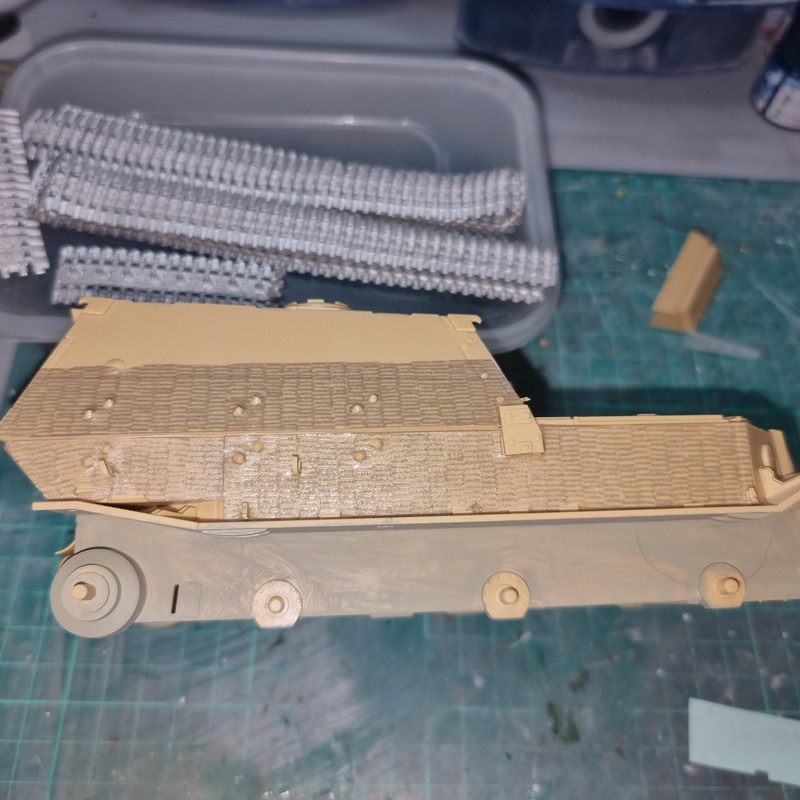
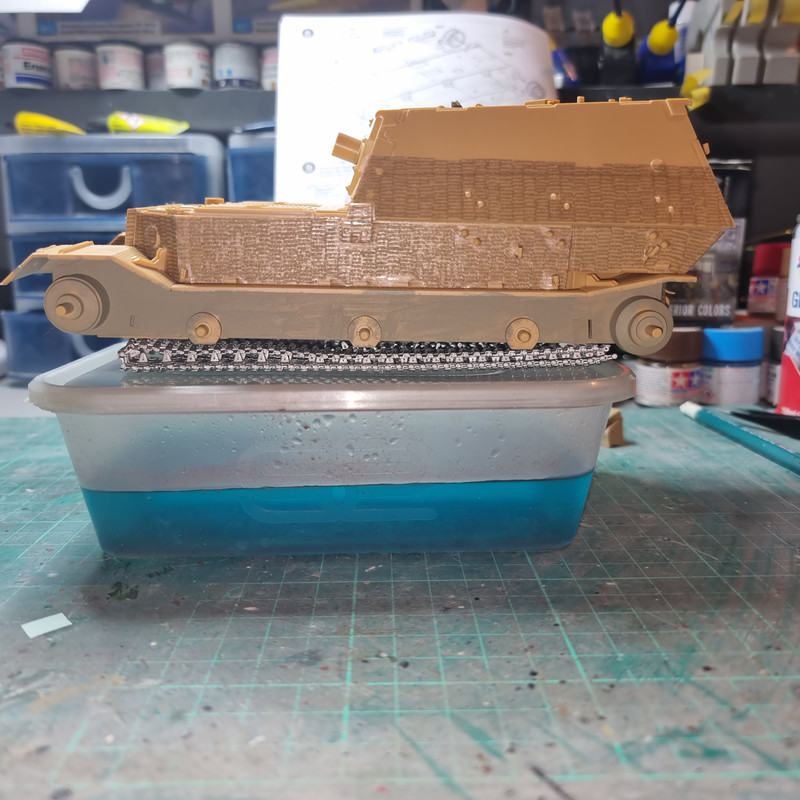
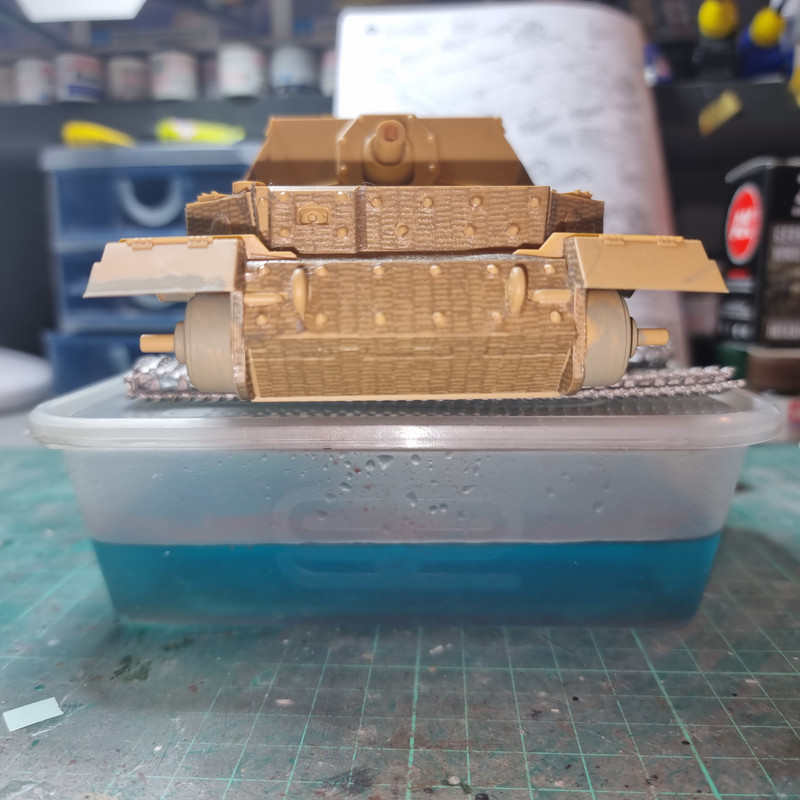
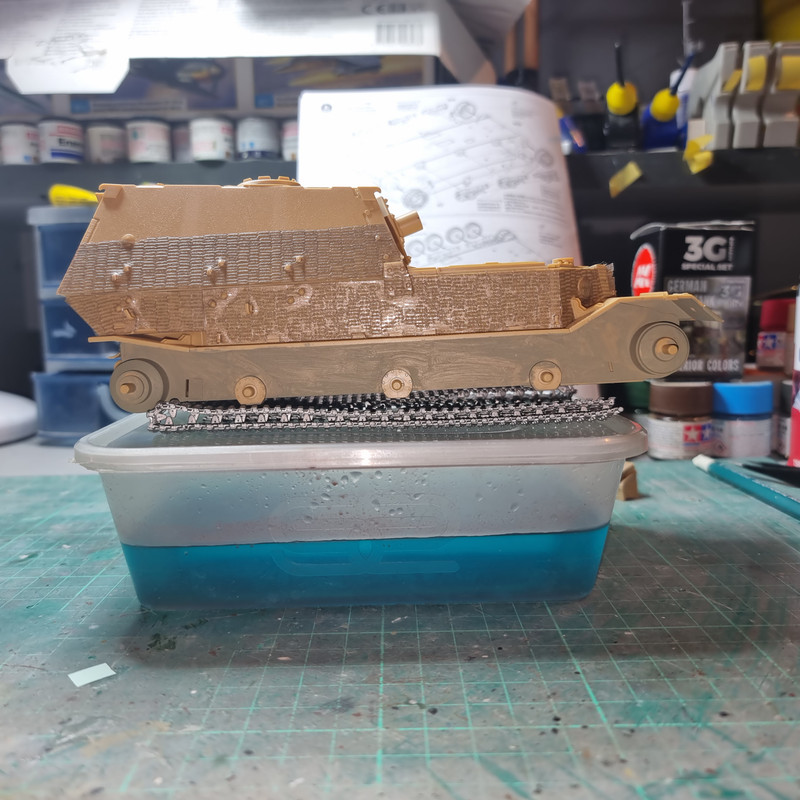


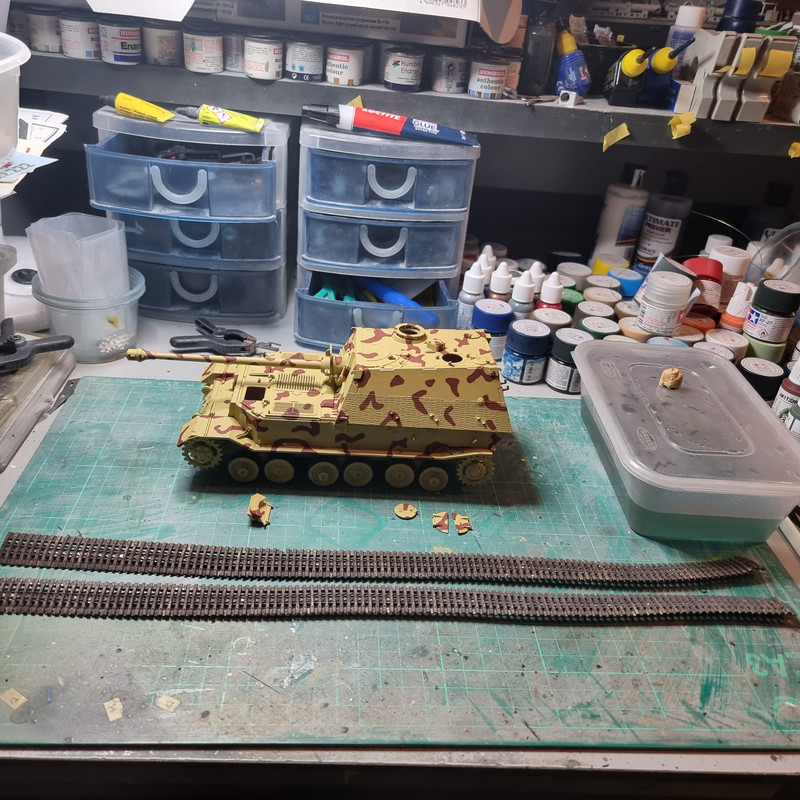
 Any excuse for some Panther Porn!