Crusader MK III tank in 1:35 (Italeri) in a desert-diorama
Posted: Tue May 26, 2026 10:09 pm
I put the model in a self made papier-mâché desert landscape in front of a desert backdrop (last image shows photo setup).
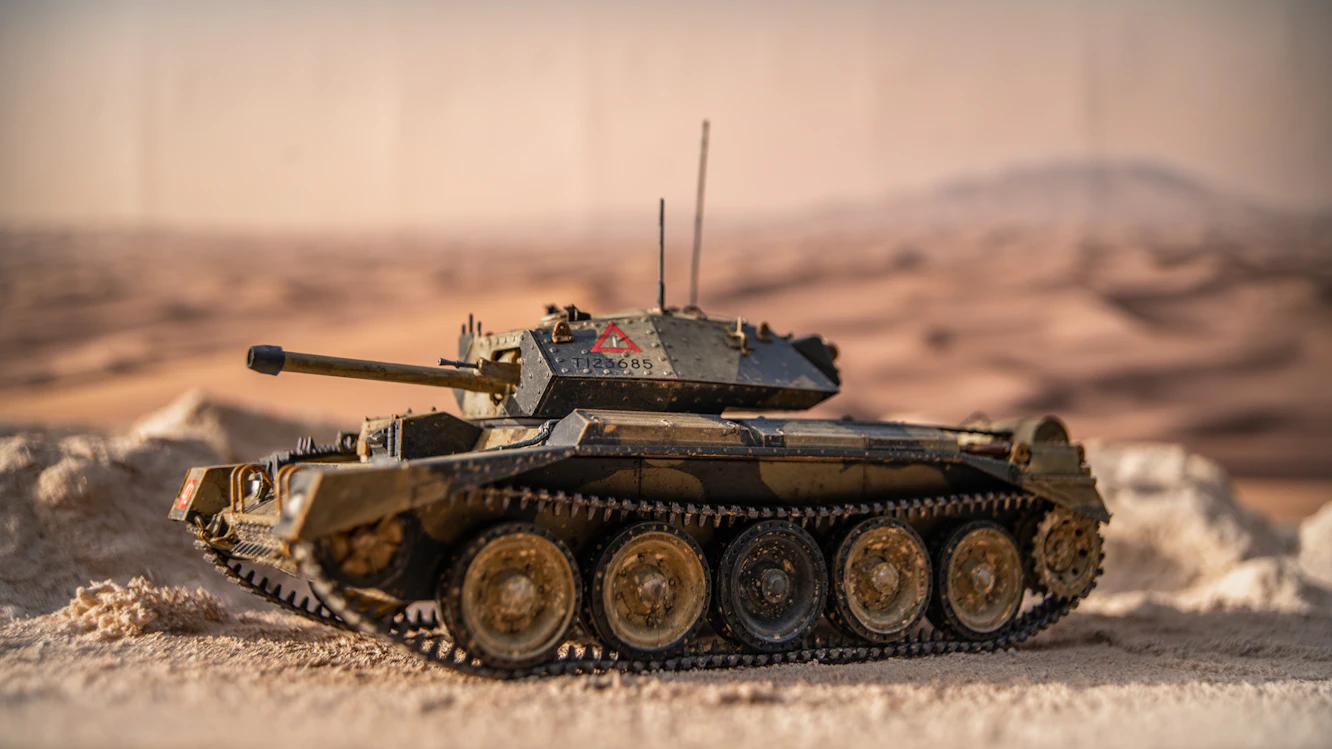
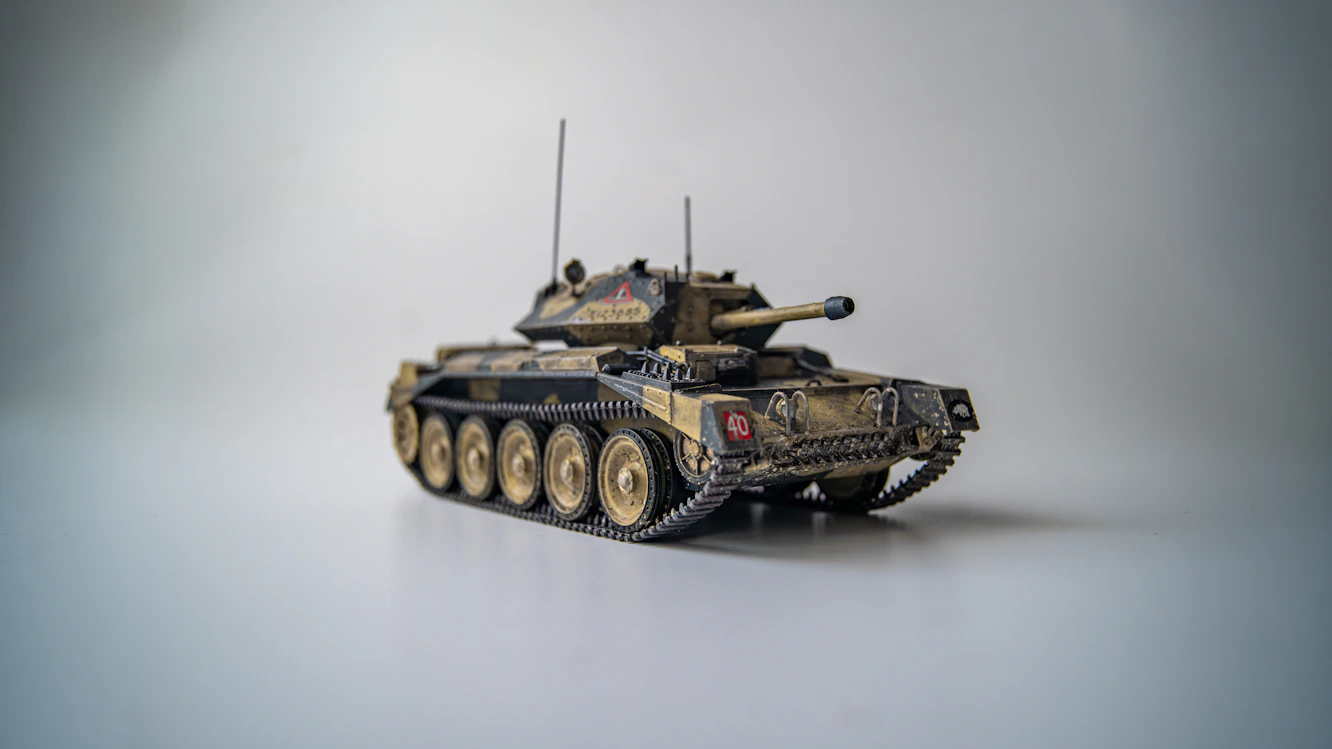
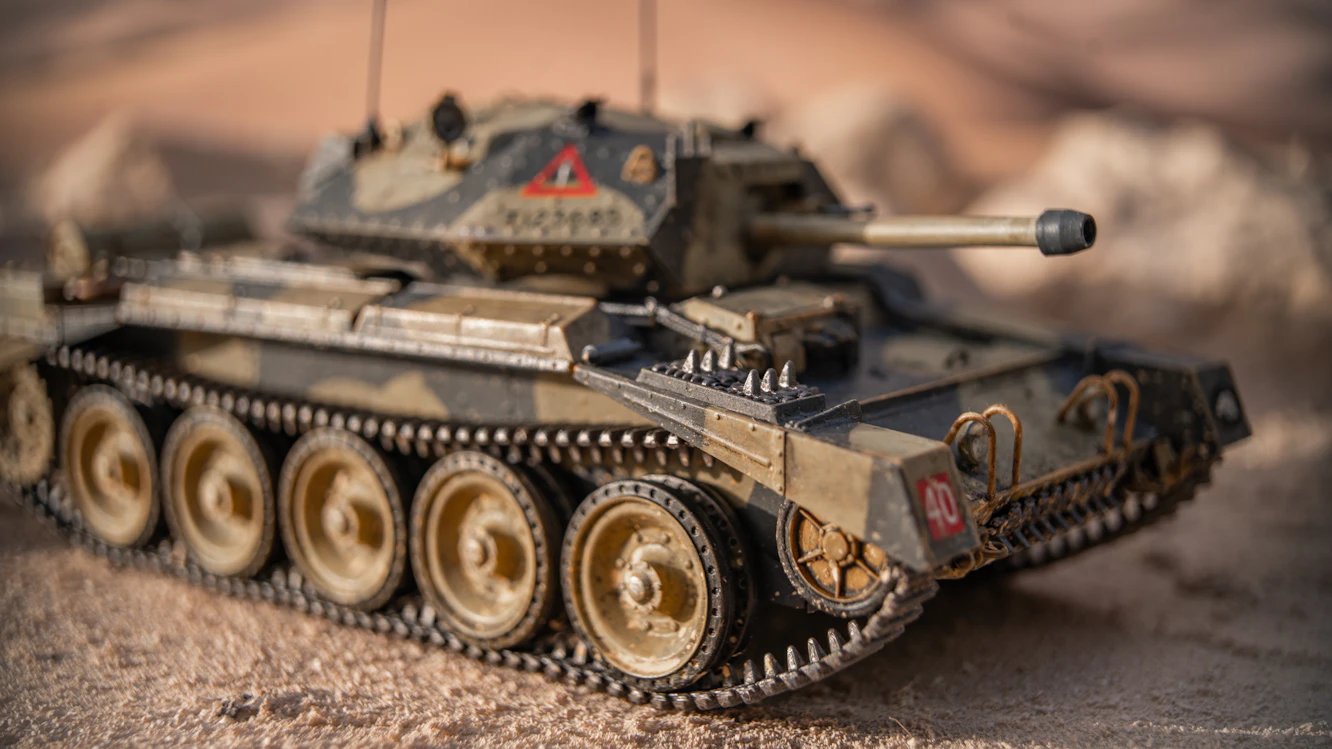
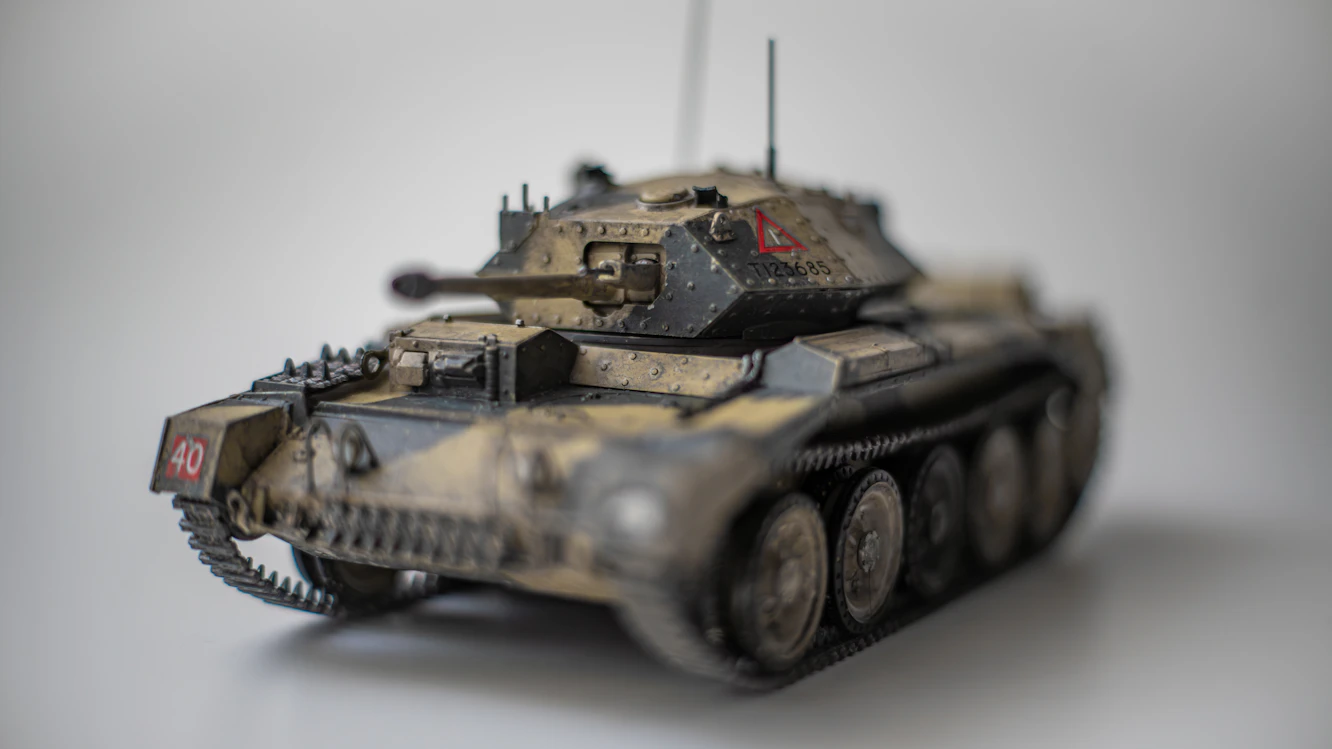
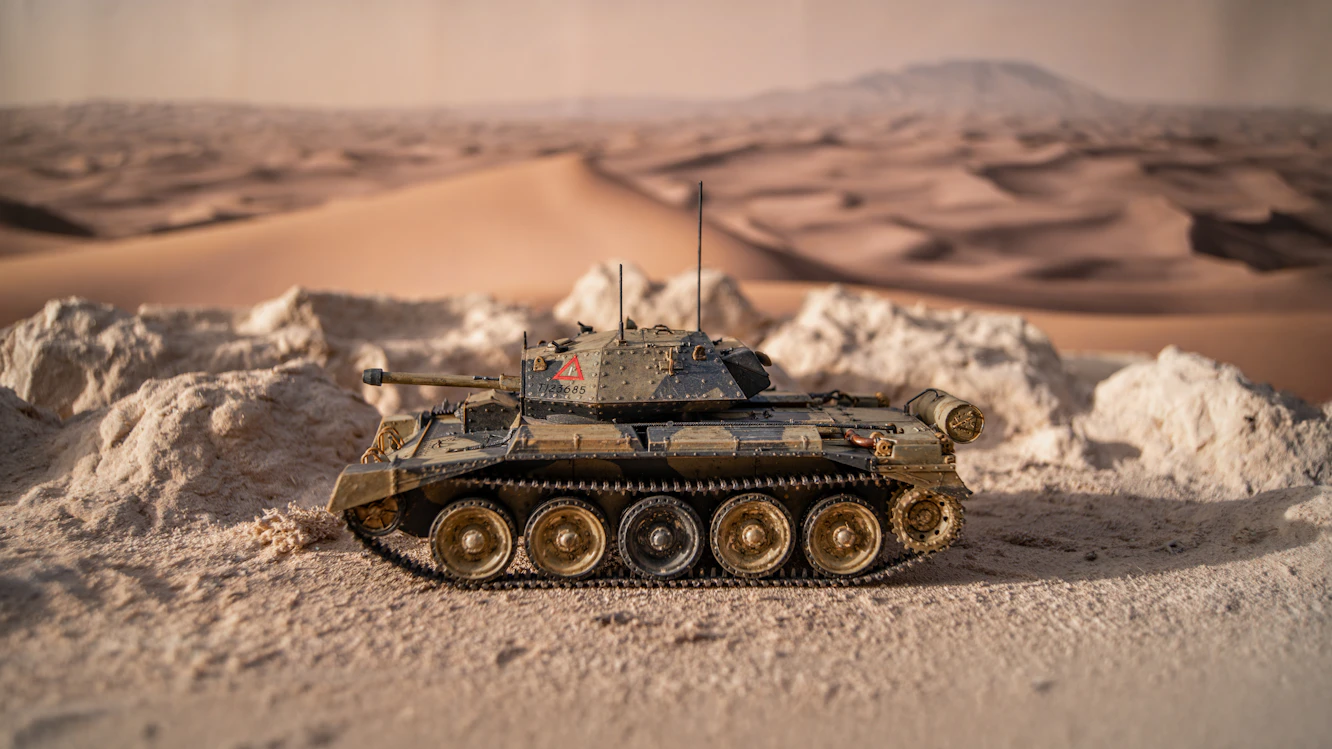

The build went smoothly—as I’ve come to expect from Italeri kits—without any major difficulties. Especially the rubber chains were long enough, so no stretching was needed.
I first applied chrome and rust paint as a primer (all Vallejo paints) and then sprayed it with hairspray. After gluing the parts together, I did the main painting with an airbrush and masking tape, then used damp steel wool to rub away parts of the paint (the hairspray makes the top layer of paint peel off more easily once moistened). Finally, light and dark washes were applied, and desert sand-colored pigment dust was “sprayed on” with a toothbrush to add further weathering. Done
Regarding the history: The Cruiser Tank Mk VI Crusader (shown here in the Mk II version by Italeri) was a British tank that was primarily deployed on the North African theater of war starting in 1941.
From the very beginning, the Crusaders exhibited significant quality defects: On-site in Africa, it took about 200 man-hours per tank just to make the vehicles operational. The range a Crusader could cover before the engine or transmission failed was 400 miles, making the 1942 model the army’s most unreliable tank.
The main problem was the Liberty engine, which lacked a cooling system—a fatal flaw for a tank, especially one deployed in the desert. The factory-installed emergency cooling system, consisting of fans and a water pump, proved disastrous: the necessary crankshaft chain became increasingly worn down by sand until it began to skip, damaging the sprocket on the crankshaft, which required a three-day repair process to replace. The water cooling pump itself was poorly designed and quickly developed leaks.
Combat losses were high, and the tank was unpopular with its crews due to technical problems, even though it was generally a match for German tanks. However, because it was armed with a 40-mm cannon and lacked high-explosive shells, it lacked the ability to effectively combat German anti-tank guns. Due to its own weak armor, the Crusader was virtually defenseless against German anti-tank weapons. With the end of the North African campaign, the Crusader was consequently declared obsolete and taken out of service.
Source: Wikipedia
The build went smoothly—as I’ve come to expect from Italeri kits—without any major difficulties. Especially the rubber chains were long enough, so no stretching was needed.
I first applied chrome and rust paint as a primer (all Vallejo paints) and then sprayed it with hairspray. After gluing the parts together, I did the main painting with an airbrush and masking tape, then used damp steel wool to rub away parts of the paint (the hairspray makes the top layer of paint peel off more easily once moistened). Finally, light and dark washes were applied, and desert sand-colored pigment dust was “sprayed on” with a toothbrush to add further weathering. Done
Regarding the history: The Cruiser Tank Mk VI Crusader (shown here in the Mk II version by Italeri) was a British tank that was primarily deployed on the North African theater of war starting in 1941.
From the very beginning, the Crusaders exhibited significant quality defects: On-site in Africa, it took about 200 man-hours per tank just to make the vehicles operational. The range a Crusader could cover before the engine or transmission failed was 400 miles, making the 1942 model the army’s most unreliable tank.
The main problem was the Liberty engine, which lacked a cooling system—a fatal flaw for a tank, especially one deployed in the desert. The factory-installed emergency cooling system, consisting of fans and a water pump, proved disastrous: the necessary crankshaft chain became increasingly worn down by sand until it began to skip, damaging the sprocket on the crankshaft, which required a three-day repair process to replace. The water cooling pump itself was poorly designed and quickly developed leaks.
Combat losses were high, and the tank was unpopular with its crews due to technical problems, even though it was generally a match for German tanks. However, because it was armed with a 40-mm cannon and lacked high-explosive shells, it lacked the ability to effectively combat German anti-tank guns. Due to its own weak armor, the Crusader was virtually defenseless against German anti-tank weapons. With the end of the North African campaign, the Crusader was consequently declared obsolete and taken out of service.
Source: Wikipedia


