Eduard F-4B Good morning Da Nang! 1/48
Posted: Mon Jun 30, 2014 5:21 pm
Hey guys.
A new build started.
As i always liked the F-4 Phantom II and allready have a bigger one laying around, i picked this one up, to sort of make a dio together with it's largest rival, the Mig-21.
Both will be Vietnam war birds.
This topic is about the Phantom.
F-4 Introduction:
The McDonnell Douglas F-4 Phantom II started as the prototype McDonnell XF4H-1, which made its first flight on May 27, 1958, with crack test pilot Robert Little at the controls. After five years of strenuous effort, a happy combination of brains, determination, timing and luck enabled the McDonnell Corporation to deliver an aircraft that leapfrogged a generation of fighter aircraft in development.
Unlike most fighters, the XF4H-1 looked "all wrong," and over time it would acquire the nickname "Double Ugly." It had a drooped snoot, cranked wings, sagging anhedral tail surfaces and semisubmerged missiles. The cavernous slab-sided holes flanking the cockpit looked more like air brakes than air intakes for the huge General Electric J79 engines.
Despite the plane's ungainly looks, McDonnell hoped that it might sell as many as 376 fighters to the Navy. Twenty-three years later, the last of 5195 F-4s rolled off the production line, the last built under license by Mitsubishi. In numbers and in effect, the Phantom was the most important Western fighter of the Cold War, with 11 countries beside the United States relying on it.
The Phantom II, as it was named by company founder James S. McDonnell, soon set such a galaxy of records that every air force in the world realized that a new and potent player was on the scene. In its first few years, the McDonnell Phantom set eight new aviation records, among them altitude (98,557 feet), speed (1,390 mph), and time to climb (9,000 feet in 34.5 seconds).
This was a breathtaking performance for any plane. It was phenomenal for a big two-seater originally intended to be a missile-equipped fleet-defense fighter for the Navy, but soon was tasked to do every mission in the book.
The performance of the McDonnell Douglas F-4 Phantom II was so exemplary that the United States Air Force selected it to be its front-line fighter. Many other countries soon clamored for a place on the production line. Still, there was some internal opposition to the Phantom within the USAF, for the craft was a two-seat airplane and did not carry a gun. Opposition quickly evaporated in the face of the F-4's (as it was redesignated) blistering Mach 2 speed and its ability to carry huge loads of ordnance.
The Phantom gathered a number of nicknames during its career. Some of these names included "Snoopy", "Rhino", "Double Ugly", "Old Smokey", the "Flying Anvil", "Flying Footlocker", "Flying Brick", "Lead Sled", the "Big Iron Sled" and the "St. Louis Slugger".
In recognition of its record of downing large numbers of Soviet-built MiGs, it was called the "World's Leading Distributor of MiG Parts"
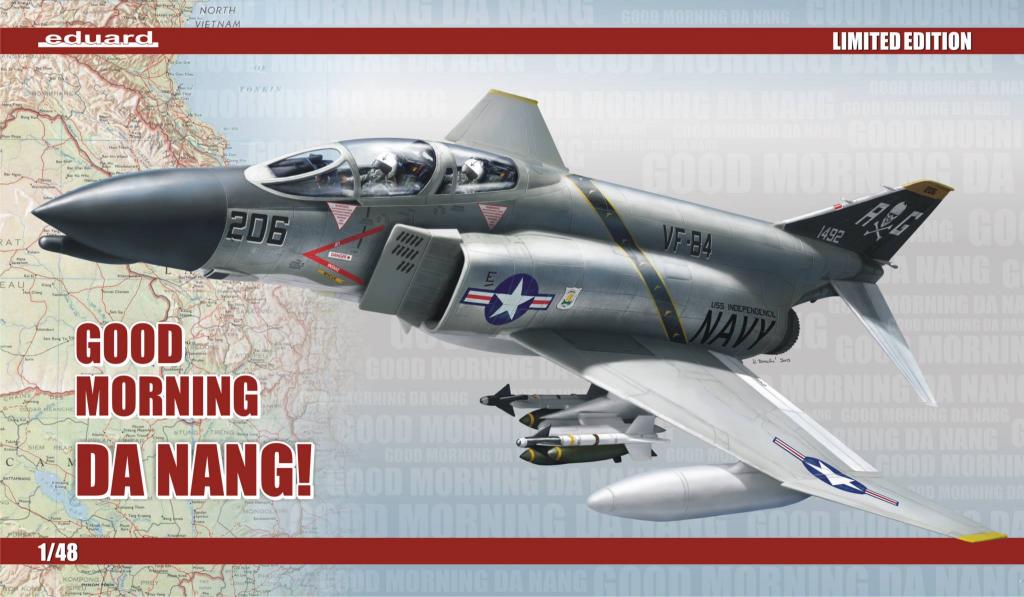
The kit's box art:
What is in the box:

Started with the cockpit offcourse.
First time for me to use photo etch, and i really like it.
Bit fiddly and nerve wrecking, but that's all cool
The parts that need to be painted are all folded and some glued.
Now it's on with the paint and after that the colored PE parts can go on, and everything can be put together.
The progress so far:


A new build started.
As i always liked the F-4 Phantom II and allready have a bigger one laying around, i picked this one up, to sort of make a dio together with it's largest rival, the Mig-21.
Both will be Vietnam war birds.
This topic is about the Phantom.
F-4 Introduction:
The McDonnell Douglas F-4 Phantom II started as the prototype McDonnell XF4H-1, which made its first flight on May 27, 1958, with crack test pilot Robert Little at the controls. After five years of strenuous effort, a happy combination of brains, determination, timing and luck enabled the McDonnell Corporation to deliver an aircraft that leapfrogged a generation of fighter aircraft in development.
Unlike most fighters, the XF4H-1 looked "all wrong," and over time it would acquire the nickname "Double Ugly." It had a drooped snoot, cranked wings, sagging anhedral tail surfaces and semisubmerged missiles. The cavernous slab-sided holes flanking the cockpit looked more like air brakes than air intakes for the huge General Electric J79 engines.
Despite the plane's ungainly looks, McDonnell hoped that it might sell as many as 376 fighters to the Navy. Twenty-three years later, the last of 5195 F-4s rolled off the production line, the last built under license by Mitsubishi. In numbers and in effect, the Phantom was the most important Western fighter of the Cold War, with 11 countries beside the United States relying on it.
The Phantom II, as it was named by company founder James S. McDonnell, soon set such a galaxy of records that every air force in the world realized that a new and potent player was on the scene. In its first few years, the McDonnell Phantom set eight new aviation records, among them altitude (98,557 feet), speed (1,390 mph), and time to climb (9,000 feet in 34.5 seconds).
This was a breathtaking performance for any plane. It was phenomenal for a big two-seater originally intended to be a missile-equipped fleet-defense fighter for the Navy, but soon was tasked to do every mission in the book.
The performance of the McDonnell Douglas F-4 Phantom II was so exemplary that the United States Air Force selected it to be its front-line fighter. Many other countries soon clamored for a place on the production line. Still, there was some internal opposition to the Phantom within the USAF, for the craft was a two-seat airplane and did not carry a gun. Opposition quickly evaporated in the face of the F-4's (as it was redesignated) blistering Mach 2 speed and its ability to carry huge loads of ordnance.
The Phantom gathered a number of nicknames during its career. Some of these names included "Snoopy", "Rhino", "Double Ugly", "Old Smokey", the "Flying Anvil", "Flying Footlocker", "Flying Brick", "Lead Sled", the "Big Iron Sled" and the "St. Louis Slugger".
In recognition of its record of downing large numbers of Soviet-built MiGs, it was called the "World's Leading Distributor of MiG Parts"
The kit's box art:
What is in the box:
Started with the cockpit offcourse.
First time for me to use photo etch, and i really like it.
Bit fiddly and nerve wrecking, but that's all cool
The parts that need to be painted are all folded and some glued.
Now it's on with the paint and after that the colored PE parts can go on, and everything can be put together.
The progress so far:


