Trumpeter 1/72 Hawker Sea Fury FB.11
Posted: Wed Apr 05, 2017 9:45 pm
Hey Guys!
Postie finally showed up with my kit today, so I can start my build-thread;
I will build the Trumpeter 1/72 Hawker Sea Fury Mark 11 (FB.11) with some extra Eduard PE and a masking kit added to the build.
I'm really looking forward to build this awesome aircraft!
I think the paint-scheme looks amazing - I love the Sky/Dark Grey color combination (hope I can do it justice)
Boxart:
 IMG_20170405_183744 by Tommy Killander, on Flickr
Sprues:
 IMG_20170405_184441 by Tommy Killander, on Flickr
 IMG_20170405_184333 by Tommy Killander, on Flickr
 IMG_20170405_184130 by Tommy Killander, on Flickr
Decals:
 IMG_20170405_184115 by Tommy Killander, on Flickr
Instruction manual and paint/decal scheme:
 IMG_20170405_184005 by Tommy Killander, on Flickr
Hawker Sea Fury:
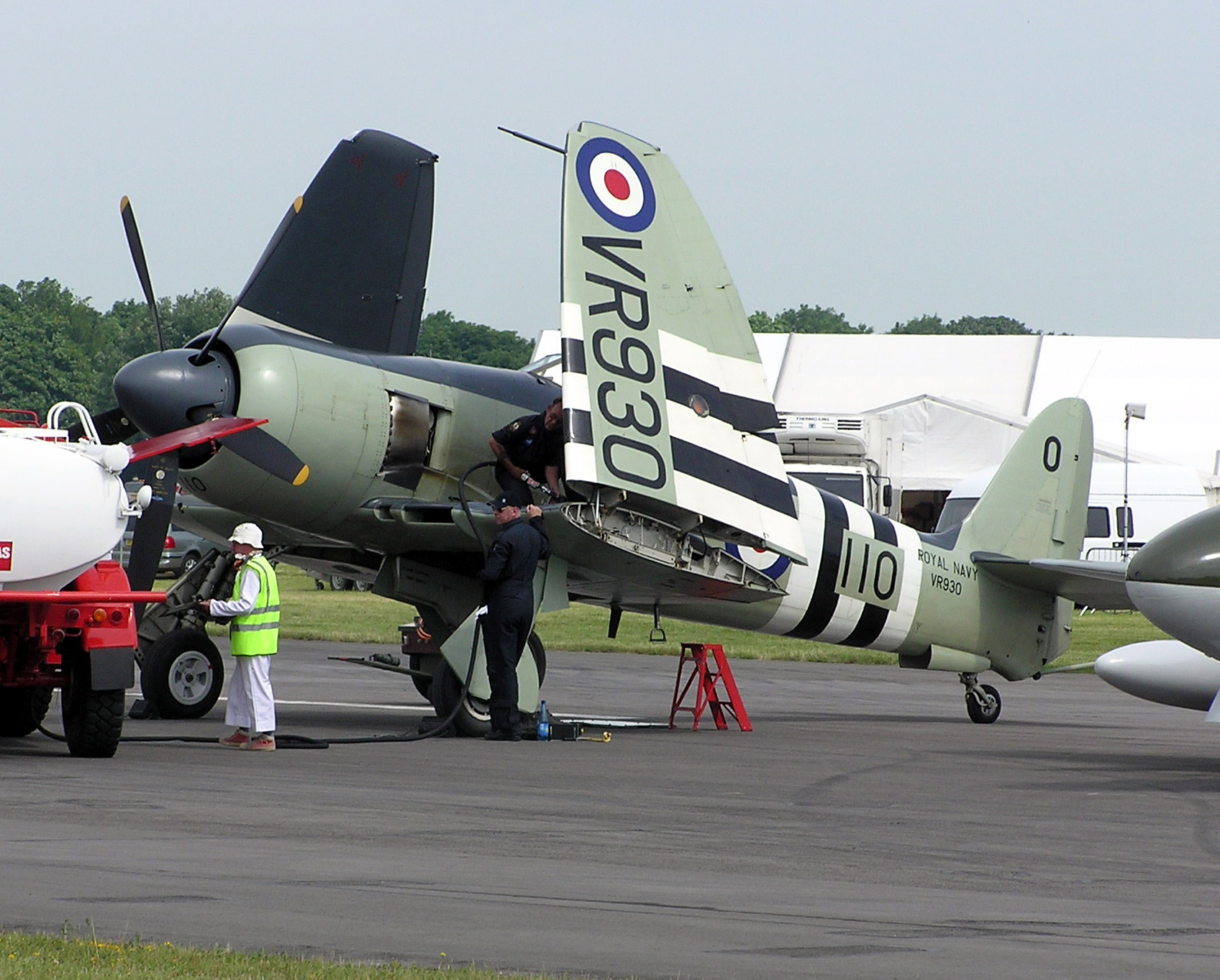
The Hawker Sea Fury was a British fighter aircraft designed and manufactured by Hawker. It was the last propeller-driven fighter to serve with the Royal Navy, and also one of the fastest production single piston-engined aircraft ever built. Developed during the Second World War, the Sea Fury entered service two years after the war ended. The Sea Fury proved to be a popular aircraft with a number of overseas militaries, and was used during the Korean War in the early 1950s, as well as against the 1961 Bay of Pigs Invasion of Cuba.
The Sea Fury attracted international orders as both a carrier and land-based aircraft; it was operated by countries including Australia, Burma, Canada, Cuba, Egypt, West Germany, Iraq, and Pakistan. The type acquitted itself well in the Korean War, fighting effectively even against the MiG-15 jet fighter. Although the Sea Fury was retired by the majority of its military operators in the late 1950s in favour of jet-propelled aircraft, a considerable number of aircraft saw subsequent use in the civil sector, and several remain airworthy in the 21st century both as heritage and racing aircraft.

Background:
With the end of the Second World War in Europe in sight, the RAF began cancelling many aircraft orders. Thus, the RAF's order for the Fury was cancelled before any production examples were built because the RAF already had excessive numbers of late Mark Spitfires and Tempests and viewed the Fury as an additional overlap with these aircraft. Although the RAF had pulled out of the programme, development of the type continued as the Sea Fury. Many of the Navy's carrier fighters were either lend-lease aircraft and thus to be returned, or in the case of the Supermarine Seafire had considerable weaknesses as naval aircraft such as narrow undercarriages. The Admiralty opted to procure the Sea Fury as the successor to these aircraft instead of purchasing the lend-lease aircraft outright.
The first production model, the Sea Fury F Mk X (Fighter, Mk 10), flew in September 1946. With the completion of flight testing at Boscombe Down in 1946, the trials process was repeated aboard the aircraft carrier HMS Victorious. Carrier testing revealed directional stability issues related to rudder effectiveness during landing, and this was resolved by the adoption of a tail wheel lock, which also improved the wheel retraction behaviour. Several rectifying design changes were made by Hawker in response to feedback from the test pilots, including the adoption of a five-bladed Rotol propeller to greatly reduce overspeed tendencies, a re-designed rudder assembly to increase rudder effectiveness, Dynafocal engine mountings to reduce vibration at low speeds, and an improved undercarriage with greater flexibility; these changes greatly improved the aircraft's deck landing characteristics. Arrestor hook trials initially revealed the Sea Fury to be prone to missing the wires, this was rapidly resolved by modifications to the hook dampener mechanism.
By March 1947, production Sea Furies were already being produced for the Fleet Air Arm. The fourth and sixth production aircraft were used in further trials with Illustrious, and the main change from the earlier aircraft was the adoption of a longer, stiffer arrestor hook. Fifty Mk X Sea Furies were produced. These were identical to the SR666 prototype except for the Centaurus 18 engine and four-bladed propeller; at least 20 of the 50 aircraft performed in the aircraft's intensive trials programme. Following the successful completion of weapons trials at the A&AEE Boscombe Down, the Sea Fury was cleared for operational use on 31 July 1947.
Hawker Aircraft continued to develop and refine the Sea Fury Mk X, resulting in the more capable Sea Fury Mk 11, otherwise known as the Sea Fury FB 11. This upgraded model had several improvements, most notable being the hydraulically powered wing folding mechanism which eased flight deck operations and the adoption of new weapons for performing air-to-ground combat. Iraq ordered a two-seat Sea Fury model and the British Admiralty followed suit. During testing, the rear canopy collapsed, leading to a redesign of the type's two-seat cockpit prior to entering service. Designated as the Sea Fury T 20, a total of 60 trainers were manufactured for the Fleet Air Arm between 1950 and 1952. The Royal Navy bought a total of 615 Sea Furies, mostly of the Mk 11 standard.
Specifications:
General characteristics
Crew: One
Length: 34 ft 8 in (10.56 m)
Wingspan: 38 ft 4?3/4 in (11.69 m)
Height: 15 ft 10?1/2 in (4.84 m)
Wing area: 280 ft2 (26.01 m2)
Empty weight: 9,240 lb (4,191 kg)
Loaded weight: 12,350 lb (5,602 kg)
Max. takeoff weight: 14,650 lb (6,645 kg)
Powerplant: 1 × Bristol Centaurus 18 18-cylinder twin-row radial engine, 2,480 hp (1,850 kW) (take-off)
Performance
Maximum speed: 460 mph (400 knots, 740 km/h) at 18,000 ft (5,500 m)
Range: 700 mi (609 nmi, 1,126 km) with internal fuel; 1,040 mi (904 nmi, 1,674 km) with two drop tanks
Service ceiling: 35,800 ft (10,910 m)
Rate of climb: 4,320 ft/min (21.9 m/s)
Armament
Guns: 4 × 20 mm (.79 in) Hispano Mk V cannon
Rockets: 12× 3 in (76.2 mm) rockets or
Bombs: 2,000 lb (907 kg) of bombs
Postie finally showed up with my kit today, so I can start my build-thread;
I will build the Trumpeter 1/72 Hawker Sea Fury Mark 11 (FB.11) with some extra Eduard PE and a masking kit added to the build.
I'm really looking forward to build this awesome aircraft!
I think the paint-scheme looks amazing - I love the Sky/Dark Grey color combination (hope I can do it justice)
Boxart:
IMG_20170405_183744 by Tommy Killander, on FlickrSprues:
IMG_20170405_184441 by Tommy Killander, on FlickrIMG_20170405_184333 by Tommy Killander, on FlickrIMG_20170405_184130 by Tommy Killander, on FlickrDecals:
IMG_20170405_184115 by Tommy Killander, on FlickrInstruction manual and paint/decal scheme:
IMG_20170405_184005 by Tommy Killander, on FlickrHawker Sea Fury:
The Hawker Sea Fury was a British fighter aircraft designed and manufactured by Hawker. It was the last propeller-driven fighter to serve with the Royal Navy, and also one of the fastest production single piston-engined aircraft ever built. Developed during the Second World War, the Sea Fury entered service two years after the war ended. The Sea Fury proved to be a popular aircraft with a number of overseas militaries, and was used during the Korean War in the early 1950s, as well as against the 1961 Bay of Pigs Invasion of Cuba.
The Sea Fury attracted international orders as both a carrier and land-based aircraft; it was operated by countries including Australia, Burma, Canada, Cuba, Egypt, West Germany, Iraq, and Pakistan. The type acquitted itself well in the Korean War, fighting effectively even against the MiG-15 jet fighter. Although the Sea Fury was retired by the majority of its military operators in the late 1950s in favour of jet-propelled aircraft, a considerable number of aircraft saw subsequent use in the civil sector, and several remain airworthy in the 21st century both as heritage and racing aircraft.
Background:
With the end of the Second World War in Europe in sight, the RAF began cancelling many aircraft orders. Thus, the RAF's order for the Fury was cancelled before any production examples were built because the RAF already had excessive numbers of late Mark Spitfires and Tempests and viewed the Fury as an additional overlap with these aircraft. Although the RAF had pulled out of the programme, development of the type continued as the Sea Fury. Many of the Navy's carrier fighters were either lend-lease aircraft and thus to be returned, or in the case of the Supermarine Seafire had considerable weaknesses as naval aircraft such as narrow undercarriages. The Admiralty opted to procure the Sea Fury as the successor to these aircraft instead of purchasing the lend-lease aircraft outright.
The first production model, the Sea Fury F Mk X (Fighter, Mk 10), flew in September 1946. With the completion of flight testing at Boscombe Down in 1946, the trials process was repeated aboard the aircraft carrier HMS Victorious. Carrier testing revealed directional stability issues related to rudder effectiveness during landing, and this was resolved by the adoption of a tail wheel lock, which also improved the wheel retraction behaviour. Several rectifying design changes were made by Hawker in response to feedback from the test pilots, including the adoption of a five-bladed Rotol propeller to greatly reduce overspeed tendencies, a re-designed rudder assembly to increase rudder effectiveness, Dynafocal engine mountings to reduce vibration at low speeds, and an improved undercarriage with greater flexibility; these changes greatly improved the aircraft's deck landing characteristics. Arrestor hook trials initially revealed the Sea Fury to be prone to missing the wires, this was rapidly resolved by modifications to the hook dampener mechanism.
By March 1947, production Sea Furies were already being produced for the Fleet Air Arm. The fourth and sixth production aircraft were used in further trials with Illustrious, and the main change from the earlier aircraft was the adoption of a longer, stiffer arrestor hook. Fifty Mk X Sea Furies were produced. These were identical to the SR666 prototype except for the Centaurus 18 engine and four-bladed propeller; at least 20 of the 50 aircraft performed in the aircraft's intensive trials programme. Following the successful completion of weapons trials at the A&AEE Boscombe Down, the Sea Fury was cleared for operational use on 31 July 1947.
Hawker Aircraft continued to develop and refine the Sea Fury Mk X, resulting in the more capable Sea Fury Mk 11, otherwise known as the Sea Fury FB 11. This upgraded model had several improvements, most notable being the hydraulically powered wing folding mechanism which eased flight deck operations and the adoption of new weapons for performing air-to-ground combat. Iraq ordered a two-seat Sea Fury model and the British Admiralty followed suit. During testing, the rear canopy collapsed, leading to a redesign of the type's two-seat cockpit prior to entering service. Designated as the Sea Fury T 20, a total of 60 trainers were manufactured for the Fleet Air Arm between 1950 and 1952. The Royal Navy bought a total of 615 Sea Furies, mostly of the Mk 11 standard.
Specifications:
General characteristics
Crew: One
Length: 34 ft 8 in (10.56 m)
Wingspan: 38 ft 4?3/4 in (11.69 m)
Height: 15 ft 10?1/2 in (4.84 m)
Wing area: 280 ft2 (26.01 m2)
Empty weight: 9,240 lb (4,191 kg)
Loaded weight: 12,350 lb (5,602 kg)
Max. takeoff weight: 14,650 lb (6,645 kg)
Powerplant: 1 × Bristol Centaurus 18 18-cylinder twin-row radial engine, 2,480 hp (1,850 kW) (take-off)
Performance
Maximum speed: 460 mph (400 knots, 740 km/h) at 18,000 ft (5,500 m)
Range: 700 mi (609 nmi, 1,126 km) with internal fuel; 1,040 mi (904 nmi, 1,674 km) with two drop tanks
Service ceiling: 35,800 ft (10,910 m)
Rate of climb: 4,320 ft/min (21.9 m/s)
Armament
Guns: 4 × 20 mm (.79 in) Hispano Mk V cannon
Rockets: 12× 3 in (76.2 mm) rockets or
Bombs: 2,000 lb (907 kg) of bombs




 looking great